Department of Biomedical and Biotechnological Sciences (BIOMETEC), Medical Molecular Microbiology and Antibiotic Resistance Laboratory (MMARLab), University of Catania, Catania, Italy.
Bio-nanotech Research and Innovation Tower (BRIT), University of Catania, Catania, Italy.
Microbiologyopen. 2020 May;9(5):e1017. doi: 10.1002/mbo3.1017. Epub 2020 Apr 1.
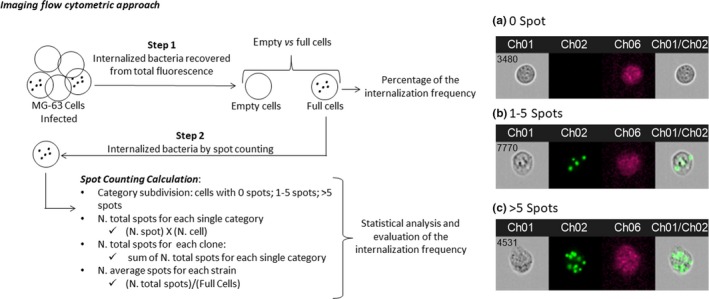
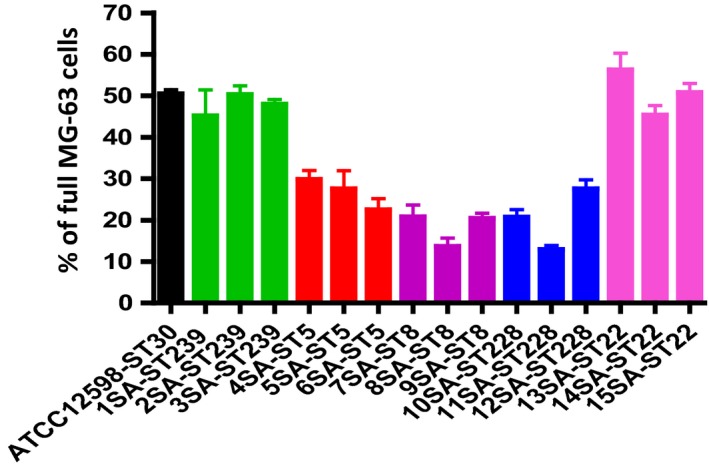
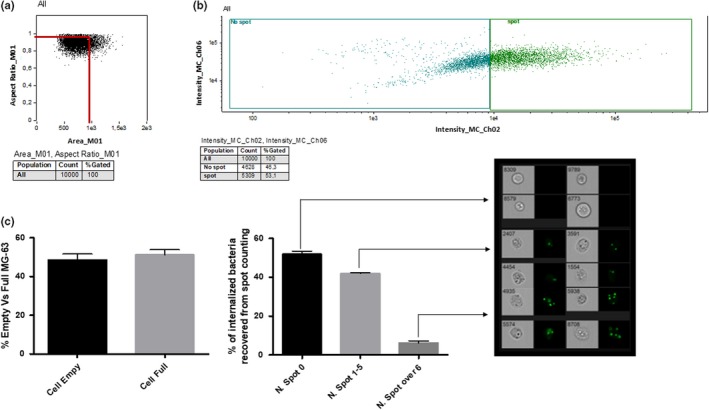
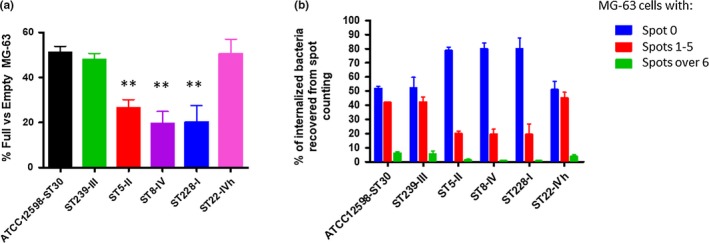
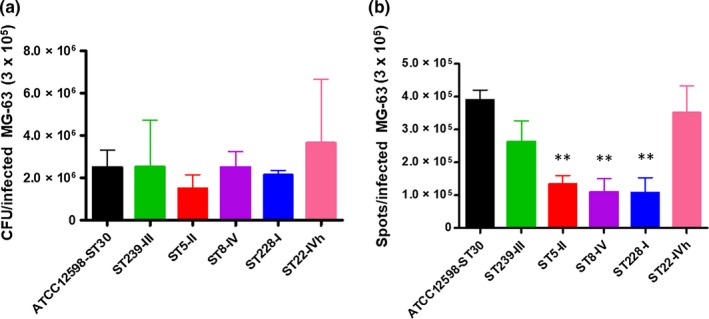
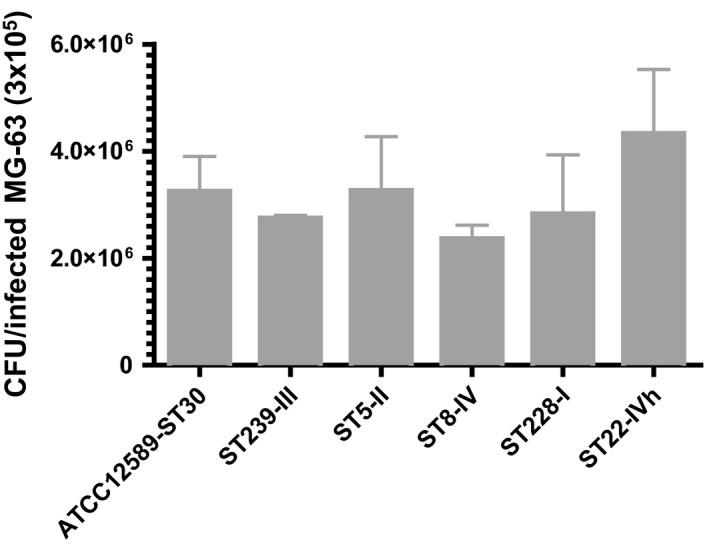
Methicillin-resistant S. aureus has been reported as the main pathogen involved in chronic infections, osteomyelitis, and prosthetic joint infections. The host/pathogen interaction is dynamic and requires several changes to promote bacterial survival. Here, we focused on the internalization and persistence behavior of well-characterized Staphylococcus aureus invasive strains belonging to the main ST-MRSA-SCCmec clones. To overcome the limitations of the cell culture method, we comparatively analyzed the ability of internalization within human MG-63 osteoblasts with imaging flow cytometry (IFC). After evaluation by cell culture assay, the MRSA clones in the study were all able to readily internalize at 3h postinfection, the persistence of intracellular bacteria was evaluated at 24h both by routine cell culture and IFC assay, after vancomycin-BODIPY staining. A statistical difference of persistence was found in ST5-SCCmecII (26.59%), ST228-SCCmecI (20.25%), ST8-SCCmecIV (19.52%), ST239-SCCmecIII (47.82%), and ST22-SCCmecIVh (50.55%) showing the same ability to internalize as ATCC12598 (51%), the invasive isolate used as control strain for invasion and persistence assays. We demonstrated that the intracellular persistence process depends on the total number of infected cells. Comparing our data obtained by IFC with those of the cell culture assay, we obtained greater reproducibility rates and a number of intracellular bacteria, with the advantage of analyzing live host cells. Moreover, with some limitations related to the lack of whole-genome sequencing analysis, we validated the different proclivities to persist in the main Italian HA-MRSA invasive isolates and our results highlighted the heterogeneity of the different clones to persist during cell infection.
耐甲氧西林金黄色葡萄球菌已被报道为慢性感染、骨髓炎和人工关节感染的主要病原体。宿主/病原体的相互作用是动态的,需要发生多种变化以促进细菌存活。在这里,我们专注于具有特征性的金黄色葡萄球菌侵袭株的内化和持续存在行为,这些侵袭株属于主要的 ST-MRSA-SCCmec 克隆。为了克服细胞培养方法的局限性,我们使用成像流式细胞术(IFC)比较分析了它们在人 MG-63 成骨细胞内内化的能力。通过细胞培养测定进行评估后,研究中的 MRSA 克隆在感染后 3 小时即可轻易内化,在万古霉素-BODIPY 染色后,通过常规细胞培养和 IFC 测定评估 24 小时内细胞内细菌的持续存在情况。在 ST5-SCCmecII(26.59%)、ST228-SCCmecI(20.25%)、ST8-SCCmecIV(19.52%)、ST239-SCCmecIII(47.82%)和 ST22-SCCmecIVh(50.55%)中发现了持续性的统计学差异,它们的内化能力与 ATCC12598(51%)相同,后者是作为侵袭和持续存在测定的侵袭分离株的对照菌株。我们证明了细胞内持续存在的过程取决于感染细胞的总数。将我们通过 IFC 获得的数据与细胞培养测定进行比较,我们获得了更高的重现率和更多的细胞内细菌,同时具有分析活宿主细胞的优势。此外,由于缺乏全基因组测序分析的一些限制,我们验证了意大利主要 HA-MRSA 侵袭分离株在持续存在方面的不同倾向,我们的结果突出了不同克隆在细胞感染期间持续存在的异质性。