School of Pharmacy, Shanghai Jiao Tong University, Shanghai, China.
State Key Laboratory of Microbial Metabolism, Shanghai Jiao Tong University, Shanghai, China.
mSphere. 2020 Apr 1;5(2):e00895-19. doi: 10.1128/mSphere.00895-19.
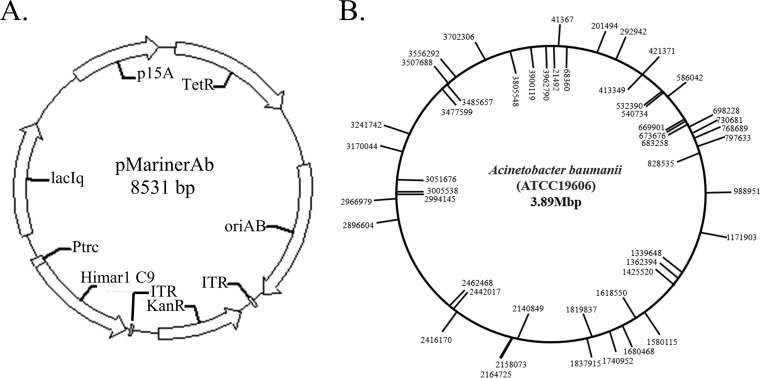
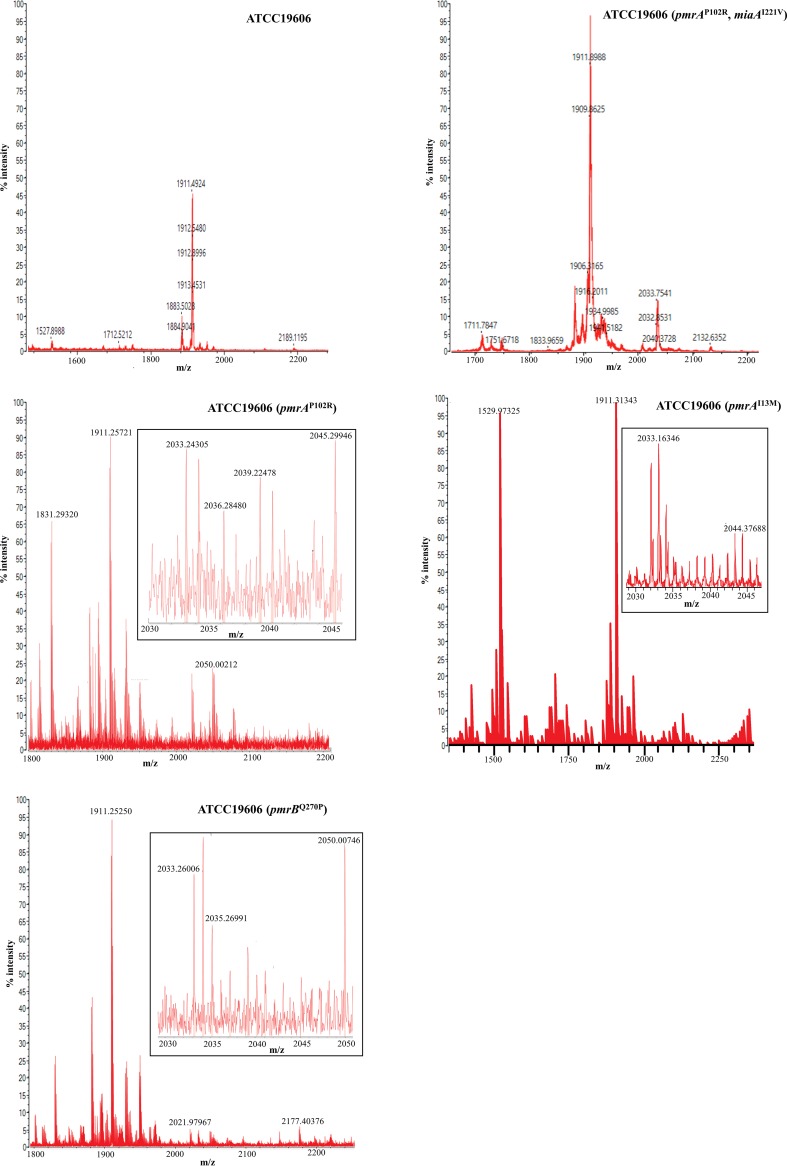
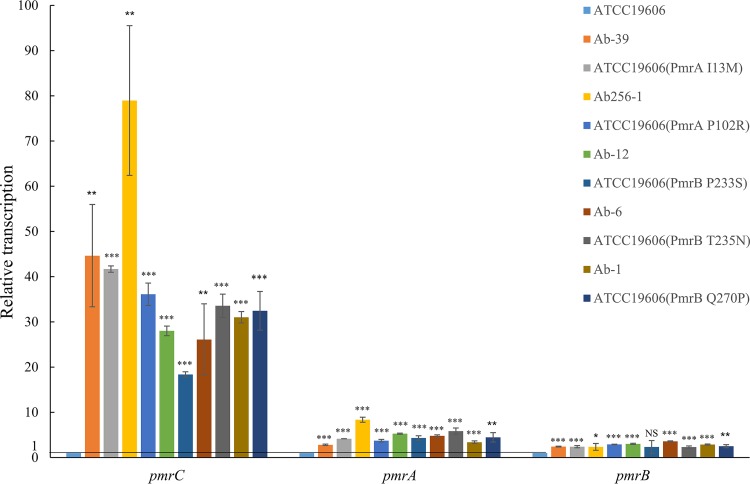
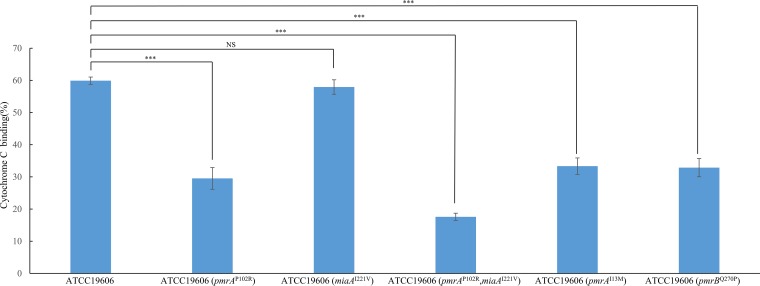
Colistin is used as the "last resort" to treat infections caused by multidrug-resistant , which is at the top of the World Health Organization's list of the most dangerous bacterial species that threaten human health. Unfortunately, colistin resistance has emerged in To broaden the study of the resistance mechanism of colistin in , we obtained colistin-resistant mutants via two methods: (i) screening and isolation from a -based ATCC 19606 transposon mutant library; (ii) selection from challenge of ATCC 19606 with successively increasing concentrations of colistin. A total of 41 mutants with colistin MIC of 4 μg/ml to 64 μg/ml were obtained by transposon mutant library screening. Five highly resistant mutants with colistin MICs ranging from 256 μg/ml to 512 μg/ml were selected from successive colistin challenges. Genotypic complementation and remodeling of the transposon mutants revealed that the genes inactivated by the transposon insertion were not responsible for resistance. Whole-genome sequence analysis of the colistin-resistant strains revealed that the main causes of the resistance to colistin were mutations in the genes, including , , and and the novel alleles and Interestingly, we found that mutation of strain ATCC 19606 () resulted in 4-fold increases in the colistin MIC, which rose from 32 μg/ml to 128 μg/ml. But itself had little effect on the colistin susceptibility of ATCC 19606. These data broaden knowledge of the scope of chromosomally encoded mechanisms of resistance to colistin. is an important Gram-negative opportunistic pathogen commonly infecting critically ill patients. It possesses a remarkable ability to survive in the hospital environment and acquires resistance determinants corresponding to a wide range of antibacterial agents. Given that the current treatment options for multidrug resistant are extremely limited, colistin administration has become the treatment of last resort. However, colistin-resistant strains have recently been reported. The mechanism of resistance to colistin in has rarely been reported. Here, we found two novel mutations in (I13M) and (Q270P) that caused colistin resistance. It is also first reported here that the presence of with a I221V mutation enhanced the colistin resistance of .
黏菌素被用作治疗对多种药物具有耐药性的感染的“最后手段”,而这些感染位列世界卫生组织对人类健康构成威胁的最危险细菌物种名单之首。不幸的是,黏菌素耐药性已经在 中出现。为了扩大对 中黏菌素耐药机制的研究,我们通过两种方法获得了黏菌素耐药突变体:(i)从基于 的 ATCC 19606 转座子突变体文库中筛选和分离;(ii)用递增浓度的黏菌素对 ATCC 19606 进行挑战筛选。通过转座子突变体文库筛选共获得了 41 株黏菌素 MIC 值为 4μg/ml 至 64μg/ml 的突变株。从连续的黏菌素挑战中选择了 5 株黏菌素 MIC 值在 256μg/ml 至 512μg/ml 之间的高度耐药突变株。转座子突变体的基因互补和重塑表明,转座子插入失活的基因不是耐药的原因。对黏菌素耐药株的全基因组序列分析表明,对黏菌素耐药的主要原因是 基因的突变,包括 、 、 和 以及新的等位基因 和 。有趣的是,我们发现 菌株 ATCC 19606 ()中 突变导致黏菌素 MIC 增加 4 倍,从 32μg/ml 增加到 128μg/ml。但 本身对 ATCC 19606 对黏菌素的敏感性影响不大。这些数据扩展了对黏菌素耐药的染色体编码机制的认识范围。 是一种重要的革兰氏阴性机会致病菌,通常感染重症患者。它具有在医院环境中生存的非凡能力,并获得了对应广泛的抗菌药物的耐药决定因素。鉴于目前对多重耐药 的治疗选择极其有限,黏菌素的使用已成为最后的治疗手段。然而,最近已经报道了对黏菌素耐药的 菌株。 中黏菌素耐药的机制很少有报道。在这里,我们发现了两个新的突变 (I13M)和 (Q270P),导致黏菌素耐药。这里也是首次报道,带有 I221V 突变的 存在增强了 的黏菌素耐药性。