Department of Internal Medicine, Hematology/Oncology University of Michigan Medical School, Ann Arbor, 48109, USA.
University of Michigan, Department of Urology, Ann Arbor, 48109, USA.
Sci Rep. 2020 Apr 1;10(1):5781. doi: 10.1038/s41598-020-62516-8.
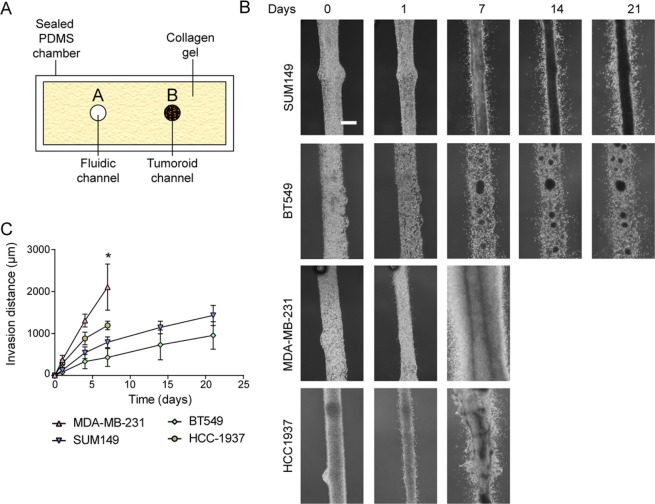
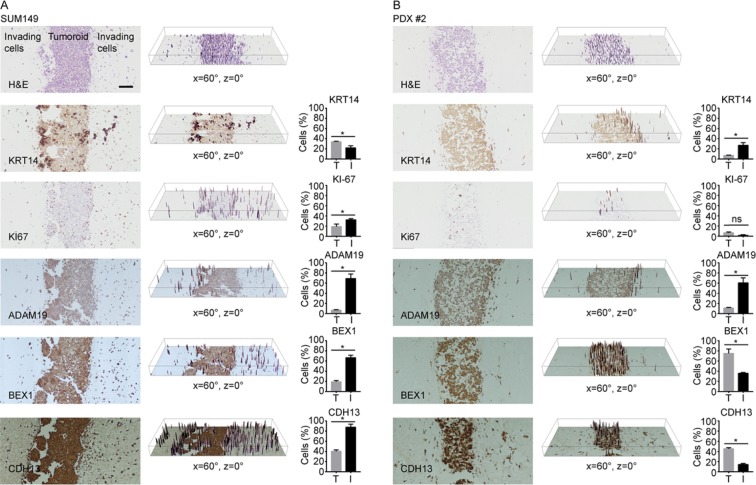
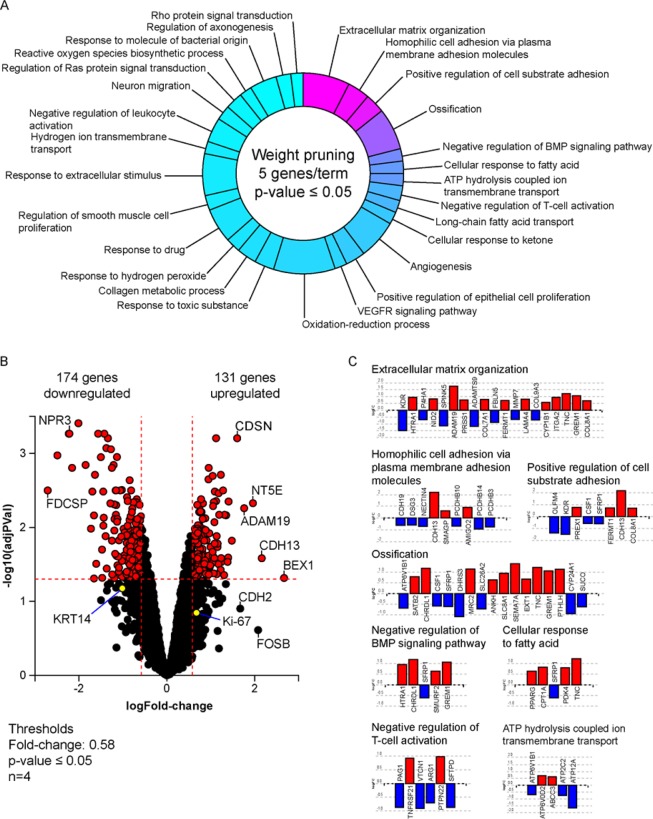
Identifying better predictive and prognostic biomarkers for the diagnosis and treatment of triple negative breast cancer (TNBC) is complicated by tumor heterogeneity ranging from responses to therapy, mutational burden, and clonal evolution. To overcome the gap in our understanding of tumor heterogeneity, we hypothesized that isolating and studying the gene expression profile of invasive tumor cell subpopulations would be a crucial step towards achieving this goal. In this report, we utilized a fluidic device previously reported to be capable of supporting long-term three-dimensional growth and invasion dynamics of cancer cells. Live invading and matched non-invading SUM149 inflammatory breast cancer cells were enriched using this device and these two functionally distinct subpopulations were tested for differences in gene expression using a gene expression microarray. 305 target genes were identified to have altered expression in the invading cells compared to the non-invading tumoroid cells. Gene ontology analysis of the gene panel identified multiple biological roles ranging from extracellular matrix reorganization to modulation of the immune response and Rho signaling. Interestingly, the genes associated with the invasion front differ between different samples, consistent with inter- and intra-tumor heterogeneity. This work suggests the impact of heterogeneity in biomarker discovery should be considered as cancer therapy increasingly heads towards a personalized approach.
确定更好的预测和预后生物标志物,用于三阴性乳腺癌(TNBC)的诊断和治疗,这是复杂的,因为肿瘤异质性范围从对治疗的反应、突变负担和克隆进化。为了克服我们对肿瘤异质性理解的差距,我们假设分离和研究侵袭性肿瘤细胞亚群的基因表达谱将是实现这一目标的关键步骤。在本报告中,我们利用了一种先前报道的能够支持癌细胞长期三维生长和侵袭动力学的流体设备。使用该设备富集活侵袭性和匹配的非侵袭性 SUM149 炎性乳腺癌细胞,然后使用基因表达微阵列测试这两种功能不同的亚群在基因表达上的差异。与非侵袭性肿瘤细胞相比,在侵袭性细胞中鉴定出 305 个靶基因的表达发生改变。基因面板的基因本体分析确定了多个生物学作用,从细胞外基质的重组到免疫反应和 Rho 信号的调节。有趣的是,与侵袭前沿相关的基因在不同样本之间存在差异,这与肿瘤内和肿瘤间异质性一致。这项工作表明,在癌症治疗越来越倾向于个性化方法的情况下,应该考虑到异质性对生物标志物发现的影响。