Department of Nephrology, Osaka Medical College, Osaka, Japan.
Department of Health and Nutrition, Faculty of Health Science, Kio University, Nara, Japan.
Sci Rep. 2020 Apr 1;10(1):5775. doi: 10.1038/s41598-020-62579-7.
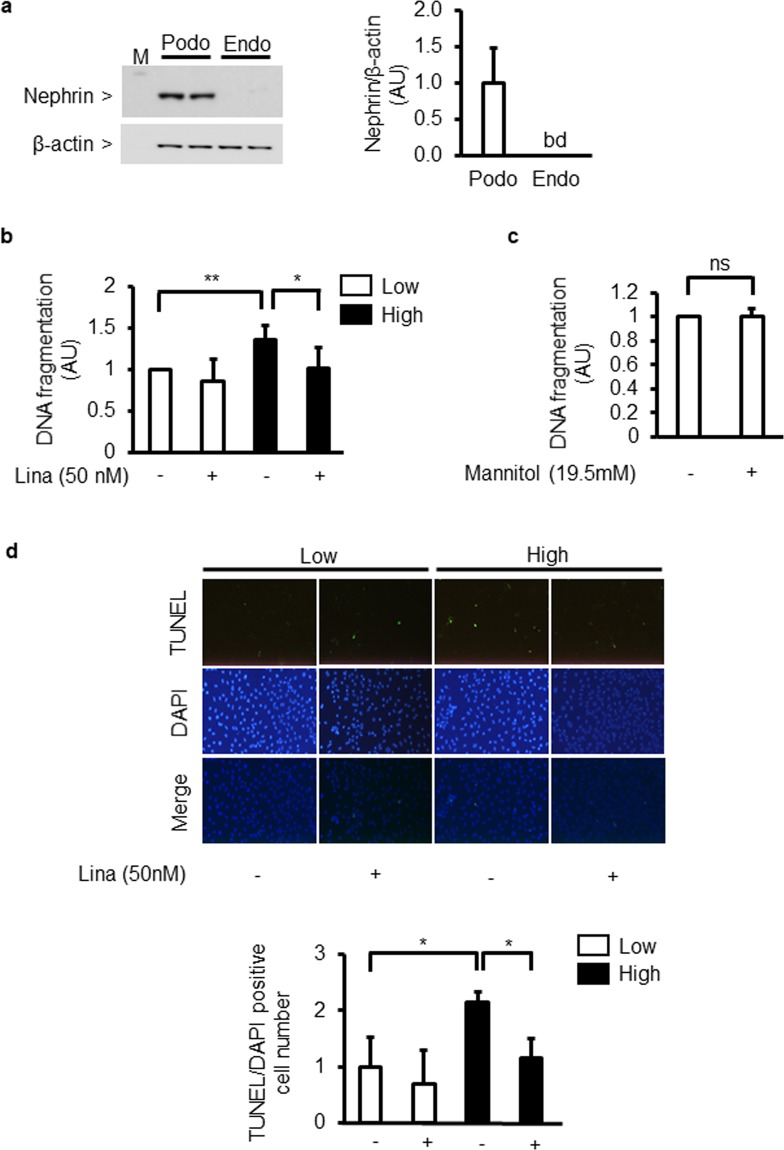
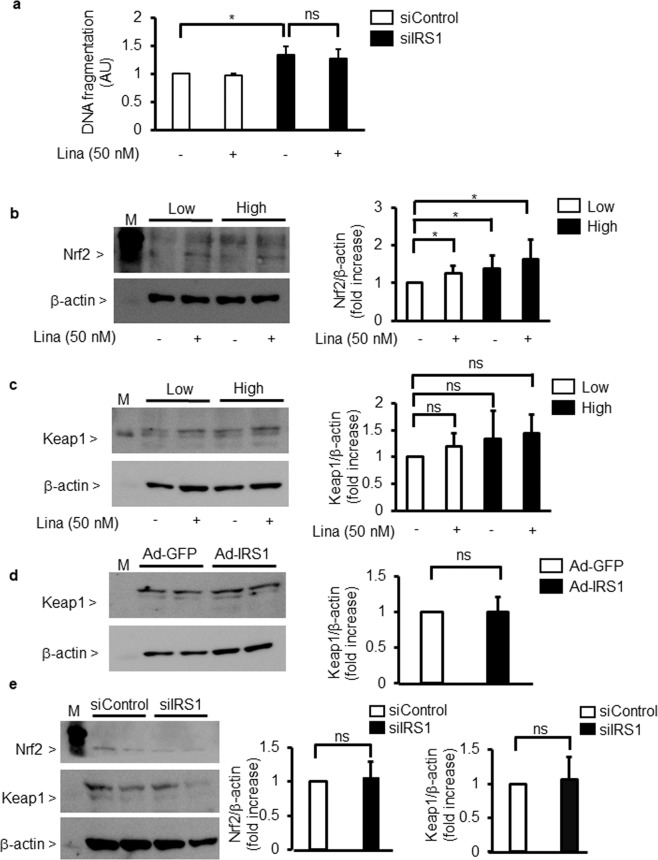
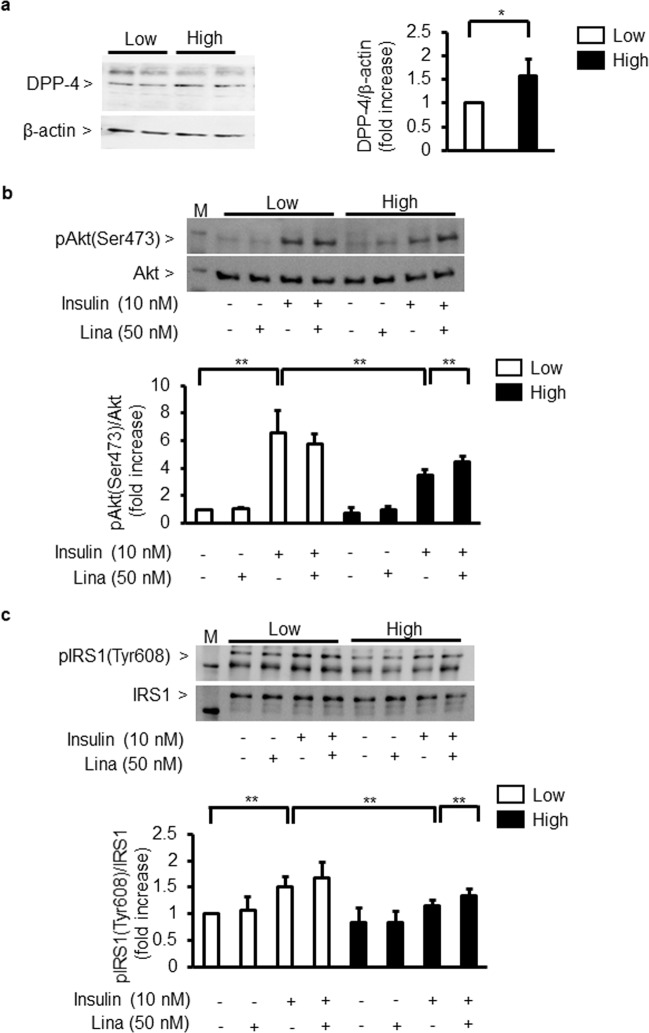
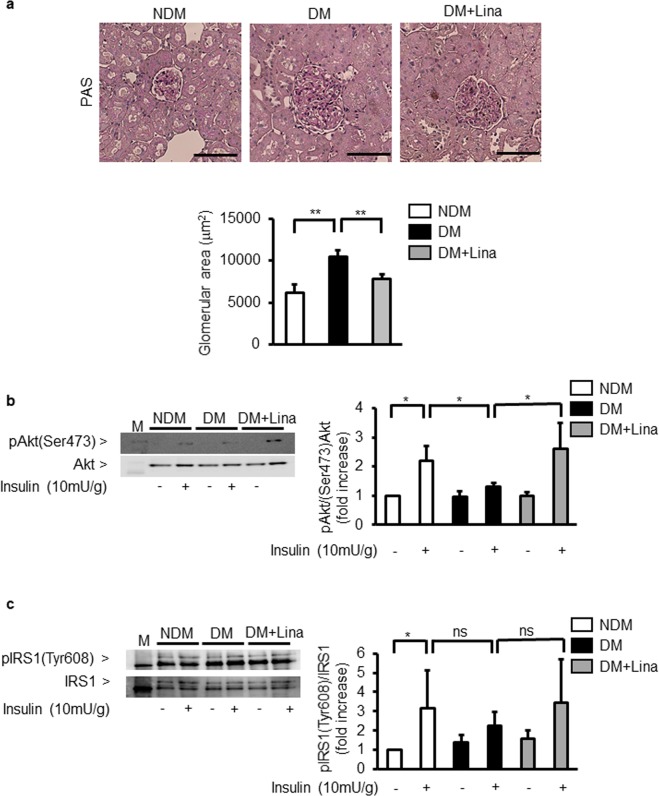
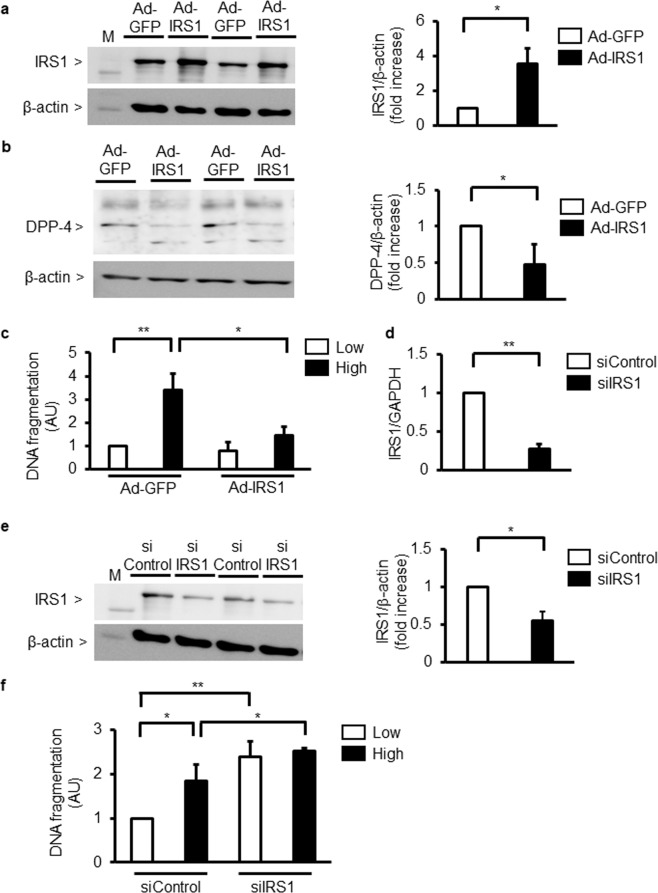
Diabetes-induced podocyte apoptosis is considered to play a critical role in the pathogenesis of diabetic kidney disease (DKD). We proposed that hyperglycaemia can induce podocyte apoptosis by inhibiting the action of podocyte survival factors, thus inactivating the cellular effects of insulin signalling. In this study, we aimed to determine the effects of linagliptin on high glucose-induced podocyte apoptosis. Linagliptin reduced the increase in DNA fragmentation as well as the increase in TUNEL-positive cells in podocytes induced by high-glucose condition. Furthermore, linagliptin improved insulin-induced phosphorylation of insulin receptor substrate 1 (IRS1) and Akt, which was inhibited in high-glucose conditions. Adenoviral vector-mediated IRS1 overexpression in podocytes partially normalised DNA fragmentation in high-glucose conditions, while downregulation of IRS1 expression using small interfering RNA increased DNA fragmentation even in low-glucose conditions. Because reactive oxygen species inhibit glomerular insulin signalling in diabetes and Kelch-like ECH-associated protein 1 (Keap1)/nuclear factor erythroid 2-related factor 2 (Nrf2) pathway is one of the most important intrinsic antioxidative systems, we evaluated whether linagliptin increased Nrf2 in podocytes. High-glucose condition and linagliptin addition increased Nrf2 levels compared to low-glucose conditions. In summary, linagliptin offers protection against DKD by enhancing IRS1/Akt insulin signalling in podocytes and partially via the Keap1/Nrf2 pathway. Our findings suggest that linagliptin may induce protective effects in patients with DKD, and increasing IRS1 levels could be a potential therapeutic target in DKD.
糖尿病引起的足细胞凋亡被认为在糖尿病肾病(DKD)的发病机制中起关键作用。我们提出高血糖可以通过抑制足细胞存活因子的作用诱导足细胞凋亡,从而使胰岛素信号的细胞效应失活。在这项研究中,我们旨在确定利拉利汀对高糖诱导的足细胞凋亡的影响。利拉利汀减少了高糖条件下足细胞中 DNA 片段增加以及 TUNEL 阳性细胞增加。此外,利拉利汀改善了高糖条件下胰岛素受体底物 1(IRS1)和 Akt 的胰岛素诱导磷酸化,而胰岛素信号在高糖条件下受到抑制。在高糖条件下,腺病毒载体介导的 IRS1 过表达部分正常化了 DNA 片段,而使用小干扰 RNA 下调 IRS1 表达甚至在低糖条件下也增加了 DNA 片段。因为活性氧在糖尿病中抑制肾小球胰岛素信号,Kelch 样 ECH 相关蛋白 1(Keap1)/核因子红细胞 2 相关因子 2(Nrf2)途径是最重要的内在抗氧化系统之一,我们评估了利拉利汀是否增加了足细胞中的 Nrf2。与低糖条件相比,高糖条件和利拉利汀的添加增加了 Nrf2 水平。总之,利拉利汀通过增强足细胞中的 IRS1/Akt 胰岛素信号,部分通过 Keap1/Nrf2 途径,为 DKD 提供保护。我们的研究结果表明,利拉利汀可能在 DKD 患者中诱导保护作用,增加 IRS1 水平可能是 DKD 的潜在治疗靶点。