Institute of Genomics, University of Tartu, Riia 23b, 51010, Tartu, Estonia.
Institute of Molecular and Cell Biology, University of Tartu, Riia 23, 51010, Tartu, Estonia.
Nat Commun. 2020 Apr 2;11(1):1628. doi: 10.1038/s41467-020-15464-w.
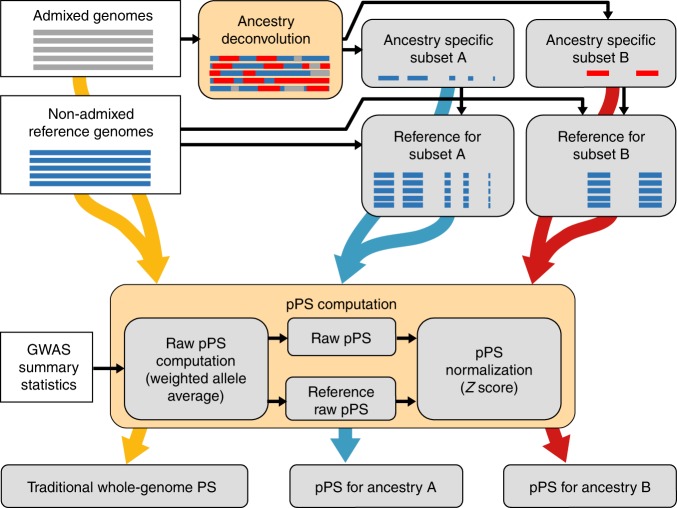
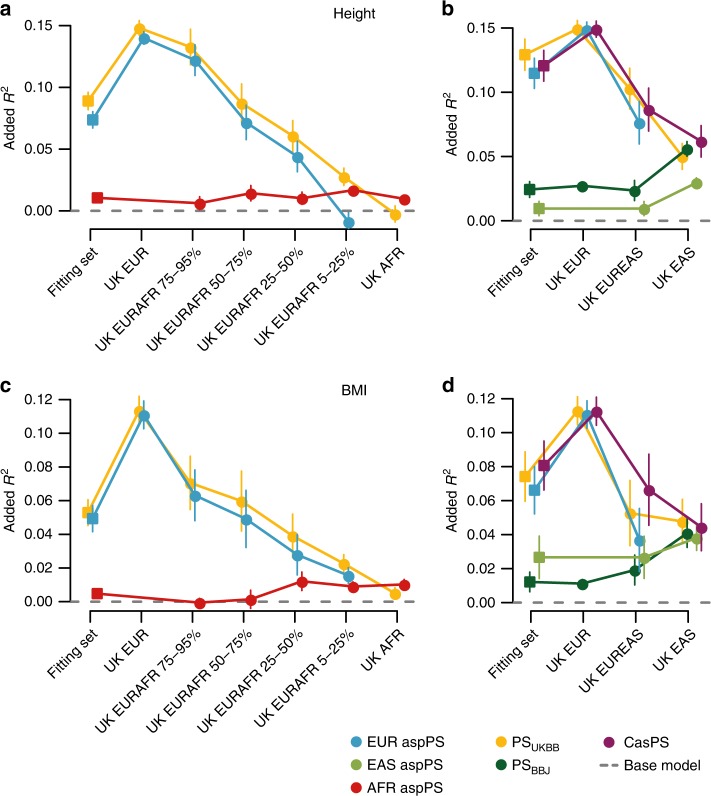
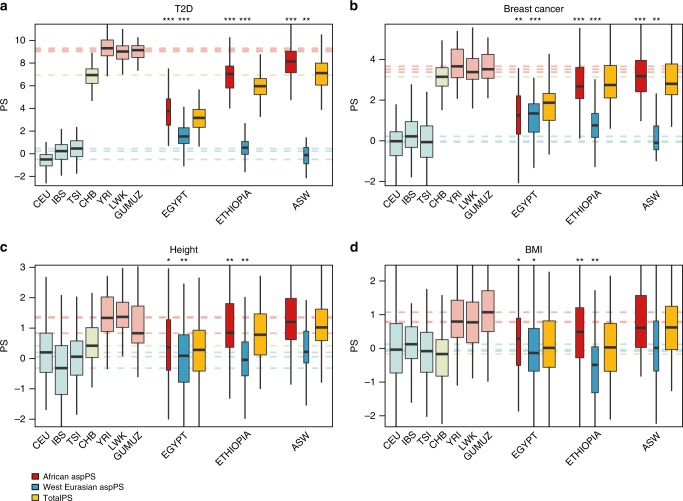
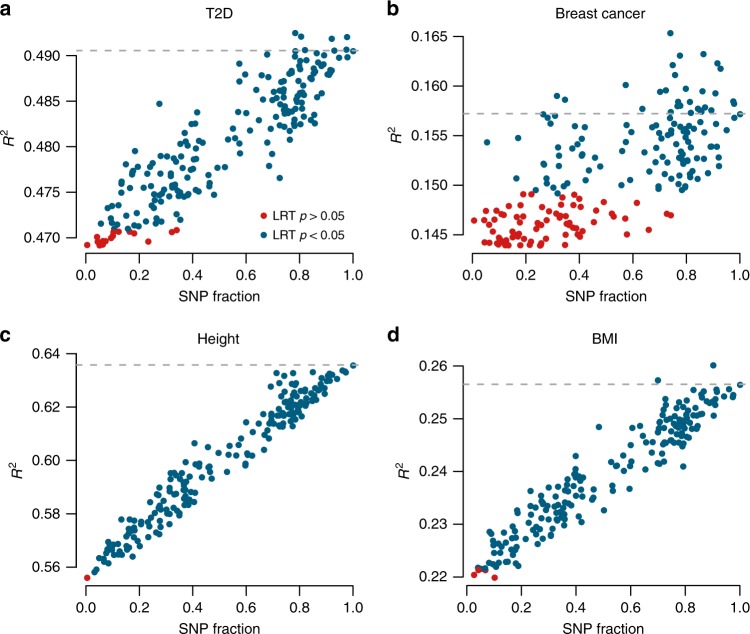
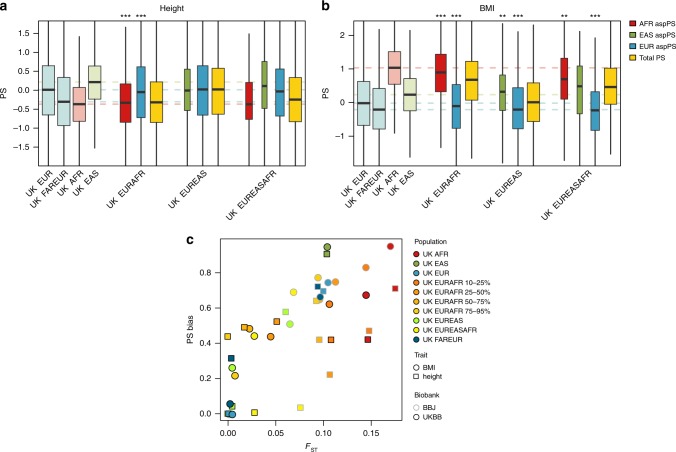
Polygenic Scores (PSs) describe the genetic component of an individual's quantitative phenotype or their susceptibility to diseases with a genetic basis. Currently, PSs rely on population-dependent contributions of many associated alleles, with limited applicability to understudied populations and recently admixed individuals. Here we introduce a combination of local ancestry deconvolution and partial PS computation to account for the population-specific nature of the association signals in individuals with admixed ancestry. We demonstrate partial PS to be a proxy for the total PS and that a portion of the genome is enough to improve susceptibility predictions for the traits we test. By combining partial PSs from different populations, we are able to improve trait predictability in admixed individuals with some European ancestry. These results may extend the applicability of PSs to subjects with a complex history of admixture, where current methods cannot be applied.
多基因评分 (PSs) 描述了个体数量表型的遗传成分或他们对具有遗传基础的疾病的易感性。目前,PSs 依赖于许多相关等位基因的基于群体的贡献,对研究较少的人群和最近混合的个体的适用性有限。在这里,我们引入了局部祖先去卷积和部分 PS 计算的组合,以解释具有混合祖先个体中关联信号的特定于群体的性质。我们证明部分 PS 是总 PS 的代理,并且基因组的一部分足以提高我们测试的性状的易感性预测。通过结合来自不同人群的部分 PS,我们能够提高具有一些欧洲血统的混合个体的性状可预测性。这些结果可能会扩展 PS 在具有复杂混合史的受试者中的适用性,而目前的方法无法应用于这些受试者。