delMoral-Sanchez Jose-Manuel, Gonzalez-Alvarez Isabel, Gonzalez-Alvarez Marta, Navarro-Ruiz Andres, Bermejo Marival
Department of Pharmacokinetics and Pharmaceutical Technology, Miguel Hernandez University, 03550 San Juan de Alicante, Spain.
Institute of Molecular and Cellular Biology of Miguel Hernandez University, 03202 Elche, Spain.
Pharmaceutics. 2020 Apr 1;12(4):316. doi: 10.3390/pharmaceutics12040316.
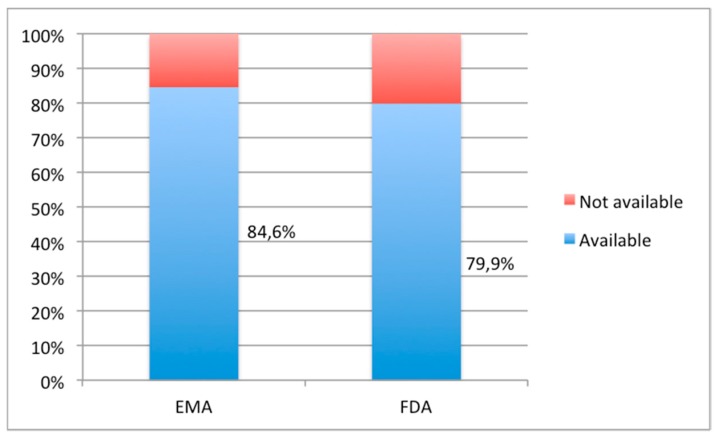
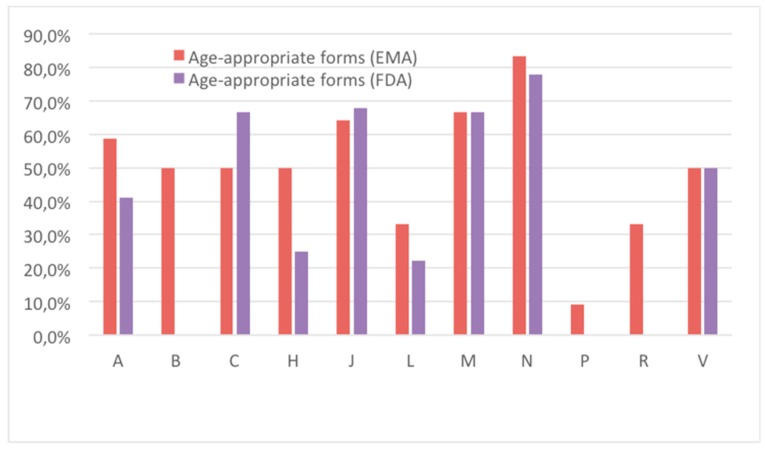
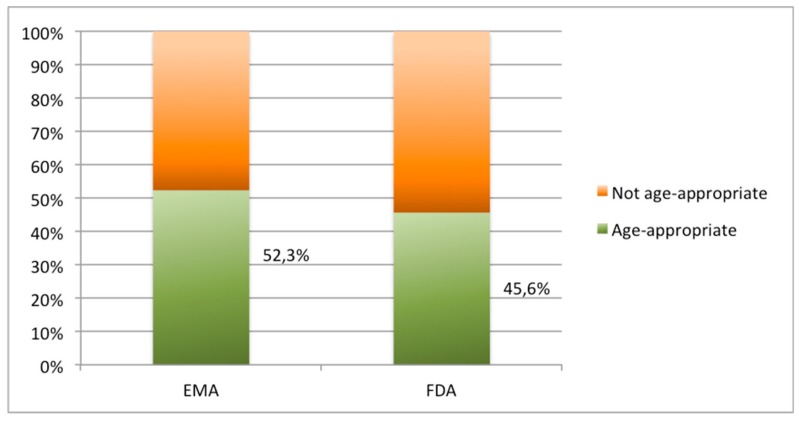
Lack of age-appropriate commercially drug products availability is a common problem in pediatric therapeutics; this population needs improved and safer drug delivery. In addition, biopharmaceutic aspects, dosage requirements, and swallowing abilities demand pediatric forms different to adult formulations. The objective of this study was to evaluate the authorization availability from United States Food and Drug Administration (FDA) and European Medicines Agency (EMA) of oral essential medicines for children and analyze its age-appropriateness for oral administration in children. All oral drugs from 7th List of Essential Medicines for Children by World Health Organization (WHO) were selected. Availability of commercial drug products was collected from OrangeBook, Spanish drug product catalogue, British electronic Medicines Compendium, and the International Vademecum. Tablets, effervescent tablets, and capsules were considered as not age-appropriate forms. Liquid forms, powder for oral suspension, mini tablets, granules, and soluble films were considered as age-appropriate forms due to their flexibility. More than 80% of the studied drugs possess a commercial authorization in oral forms in both EMA and FDA. Nevertheless, around 50% of these formulations are not age-appropriate for most pediatric groups. This study shows the lack of age-appropriate medicines for children. More efforts are needed to improve development and approval of pediatric medicines.
缺乏适合儿童年龄的商用药品是儿科治疗中的常见问题;这一群体需要改进且更安全的给药方式。此外,生物药剂学方面、剂量要求和吞咽能力使得儿科剂型与成人剂型不同。本研究的目的是评估美国食品药品监督管理局(FDA)和欧洲药品管理局(EMA)对儿童口服基本药物的批准情况,并分析其在儿童口服给药方面的年龄适宜性。选取了世界卫生组织(WHO)《儿童基本药物清单》第7版中的所有口服药物。从《橙皮书》、西班牙药品目录、英国电子药品手册和《国际药典》中收集商用药品的可得性信息。片剂、泡腾片和胶囊被视为不适合儿童年龄的剂型。液体制剂、口服混悬剂用粉末、迷你片、颗粒剂和可溶薄膜因其灵活性被视为适合儿童年龄的剂型。超过80%的研究药物在EMA和FDA均有口服剂型的商业授权。然而,这些制剂中约50%对大多数儿科群体来说年龄不适宜。本研究表明儿童缺乏适合其年龄的药物。需要做出更多努力来改进儿科药物的研发和审批。