Department of Environmental Chemistry and Bioanalysis, Faculty of Chemistry, Nicolaus Copernicus University, Gagarina 7, 87-100 Toruń, Poland.
Centre for Modern Interdisciplinary Technologies, Nicolaus Copernicus University, Wileńska 4, 87-100 Toruń, Poland.
Int J Mol Sci. 2020 Mar 20;21(6):2156. doi: 10.3390/ijms21062156.
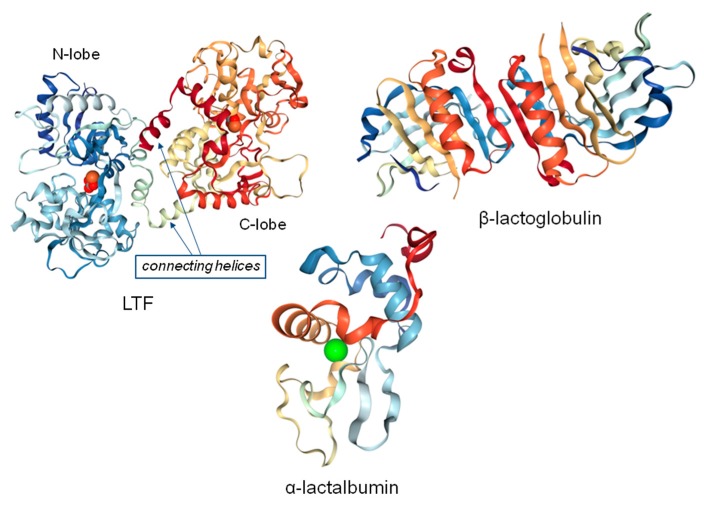
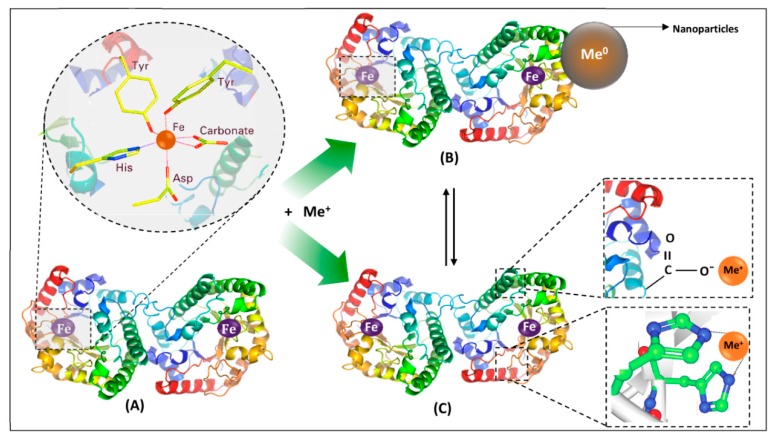
Whey proteins tend to interact with metal ions, which have implications in different fields related to human life quality. There are two impacts of such interactions: they can provide opportunities for applications in food and nutraceuticals, but may lead to analytical challenges related to their study and outcomes for food processing, storage, and food interactions. Moreover, interactions of whey proteins with metal ions are complicated, requiring deep understanding, leading to consequences, such as metalloproteins, metallocomplexes, nanoparticles, or aggregates, creating a biologically active system. To understand the phenomena of metal-protein interactions, it is important to develop analytical approaches combined with studies of changes in the biological activity and to analyze the impact of such interactions on different fields. The aim of this review was to discuss chemistry of β-lactoglobulin, α-lactalbumin, and lactotransferrin, their interactions with different metal ions, analytical techniques used to study them and the implications for food and nutraceuticals.
乳清蛋白往往与金属离子相互作用,这对与人类生活质量相关的不同领域都有影响。这种相互作用有两个影响:它们可以为食品和营养保健品的应用提供机会,但可能导致与食品加工、储存和食品相互作用相关的研究和结果的分析挑战。此外,乳清蛋白与金属离子的相互作用很复杂,需要深入了解,导致产生如金属蛋白酶、金属配合物、纳米粒子或聚集体等生物活性系统。为了理解金属-蛋白质相互作用的现象,重要的是要开发分析方法,结合对生物活性变化的研究,并分析这种相互作用对不同领域的影响。本综述的目的是讨论β-乳球蛋白、α-乳白蛋白和乳转铁蛋白的化学性质,它们与不同金属离子的相互作用,用于研究它们的分析技术以及对食品和营养保健品的影响。