Karim Muhammad Fazal, Hao Pengfei, Nordin Nur Hazidah Binti, Qiu Chengwei, Zeeshan Muhammad, Khan Alamgir Akhtar, Shamsi Imran Haider
Department of Agronomy, College of Agriculture and Biotechnology, Zijingang Campus, Zhejiang University, Hangzhou 310058, People's Republic of China.
Department of Agriculture Engineering, MNS-University of Agriculture, Multan, Pakistan.
Saudi J Biol Sci. 2020 Apr;27(4):1041-1048. doi: 10.1016/j.sjbs.2020.02.020. Epub 2020 Mar 4.
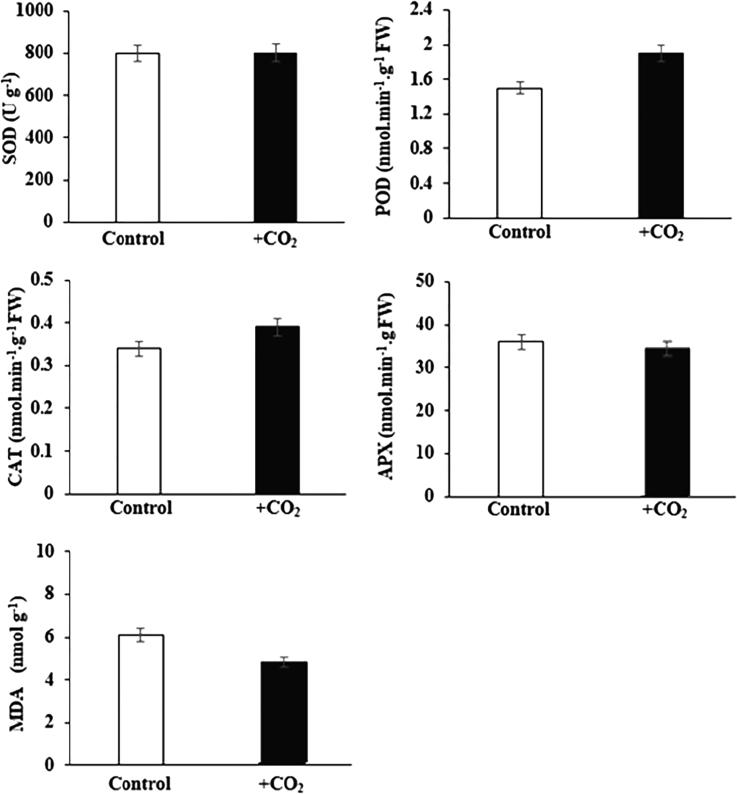
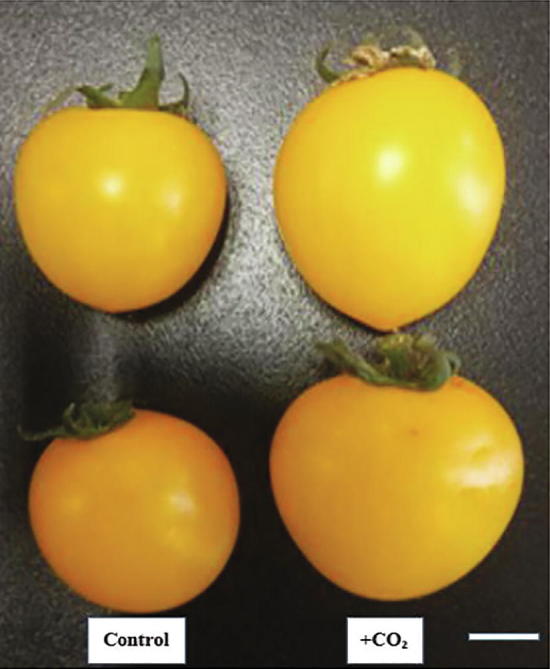
Carbon dioxide (CO) concentration in greenhouses is sub-optimal for vegetable production. Many techniques have been used to increase CO concentration in greenhouses but most of them are expensive with certain limitations and drawbacks. We adopted a new strategy to elevate CO concentration in the greenhouse throughout the day via crop residues and animal manure composting (CRAM). During the whole cultivation period, CRAM-treated greenhouse had doubled CO concentration which significantly increased the yield of cherry tomatoes ( L.) i.e. up to 38%. The influence of CRAM procedure on cherry tomato quality was also investigated and the concentrations of total soluble solids (TSS) and soluble sugar were found to be significantly higher in cherry tomatoes grown under composting greenhouse than that of non-composting greenhouse. Additionally, CRAM-CO enrichment also resulted in increased concentrations of ascorbic acid (Vitamin C) and titrate acid as compared with the control. In contrast, the concentration of nitrate was considerably decreased in cherry tomato grown under CO enriched condition than that of control. The increase in active oxygen metabolisms such as POD, CAT and SOD while a decrease in MDA, as well as APX was observed for cherry tomatoes grown under CO enriched condition. Hence, CO fertilization by using CRAM in greenhouse significantly improved quality and increased the yield of cherry tomatoes.
温室中的二氧化碳(CO₂)浓度对于蔬菜生产而言并非最佳。人们已采用多种技术来提高温室中的CO₂浓度,但其中大多数成本高昂,且存在一定的局限性和缺点。我们采用了一种新策略,即通过作物残茬和动物粪便堆肥(CRAM)来全天提高温室中的CO₂浓度。在整个种植期间,经过CRAM处理的温室中CO₂浓度翻倍,显著提高了樱桃番茄(L.)的产量,即高达38%。我们还研究了CRAM程序对樱桃番茄品质的影响,发现堆肥温室中种植的樱桃番茄的总可溶性固形物(TSS)和可溶性糖浓度显著高于非堆肥温室中的樱桃番茄。此外,与对照相比,CRAM-CO₂富集还导致抗坏血酸(维生素C)和滴定酸浓度增加。相反,在CO₂富集条件下种植的樱桃番茄中硝酸盐浓度比对照显著降低。在CO₂富集条件下种植的樱桃番茄中,观察到过氧化物酶(POD)、过氧化氢酶(CAT)和超氧化物歧化酶(SOD)等活性氧代谢增加,而丙二醛(MDA)以及抗坏血酸过氧化物酶(APX)减少。因此,在温室中使用CRAM进行CO₂施肥显著提高了樱桃番茄的品质并增加了产量。