Liu Xuejiao, Tu Yiming, Wang Yifeng, Zhou Di, Chong Yulong, Shi Lin, Liu Guanzheng, Zhang Xu, Wu Sijin, Li Huan, Gao Shangfeng, Niu Mingshan, Yu Rutong
Insititute of Nervous System Diseases, Affiliated Hospital of Xuzhou Medical University, Xuzhou Medical University, Xuzhou, Jiangsu China.
2Department of Neurosurgery, Affiliated Hospital of Xuzhou Medical University, Xuzhou, Jiangsu China.
Cancer Cell Int. 2020 Mar 30;20:97. doi: 10.1186/s12935-020-01186-y. eCollection 2020.
Activation of nuclear factor-kappa B (NF-κΒ) through DNA damage is one of the causes of tumor cell resistance to radiotherapy. Chromosome region 1 (CRM1) regulates tumor cell proliferation, drug resistance, and radiation resistance by regulating the nuclear-cytoplasmic translocation of important tumor suppressor proteins or proto-oncoproteins. A large number of studies have reported that inhibition of CRM1 suppresses the activation of NF-κΒ. Thus, we hypothesize that the reversible CRM1 inhibitor S109 may induce radiosensitivity in glioblastoma (GBM) by regulating the NF-κΒ signaling pathway.
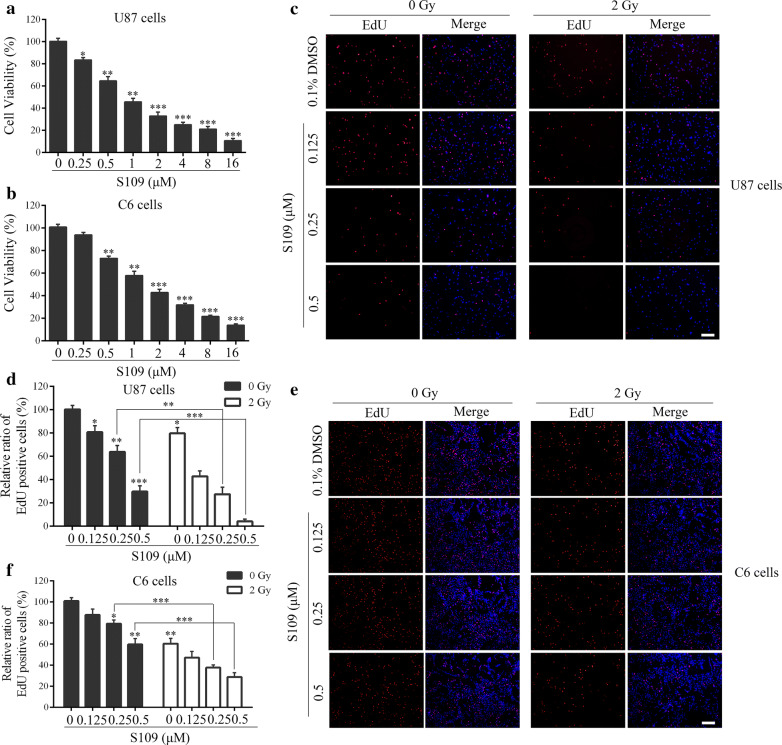
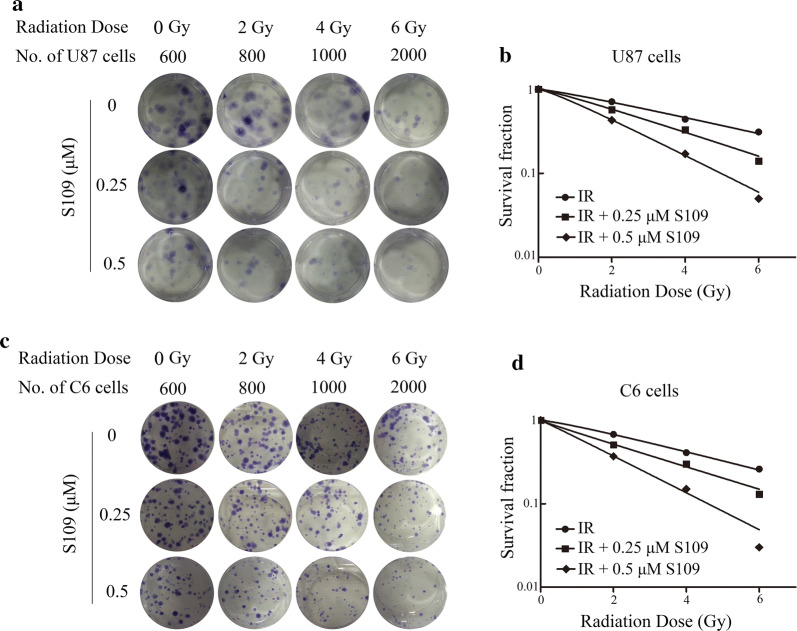
This study utilized the cell counting kit-8 (CCK-8), 5-ethynyl-2'-deoxyuridine (EdU), and colony formation assay to evaluate the effect of S109 combined with radiotherapy on the proliferation and survival of GBM cells. The therapeutic efficacy of S109 combined with radiotherapy was evaluated in vivo to explore the therapeutic mechanism of S109-induced GBM radiosensitization.
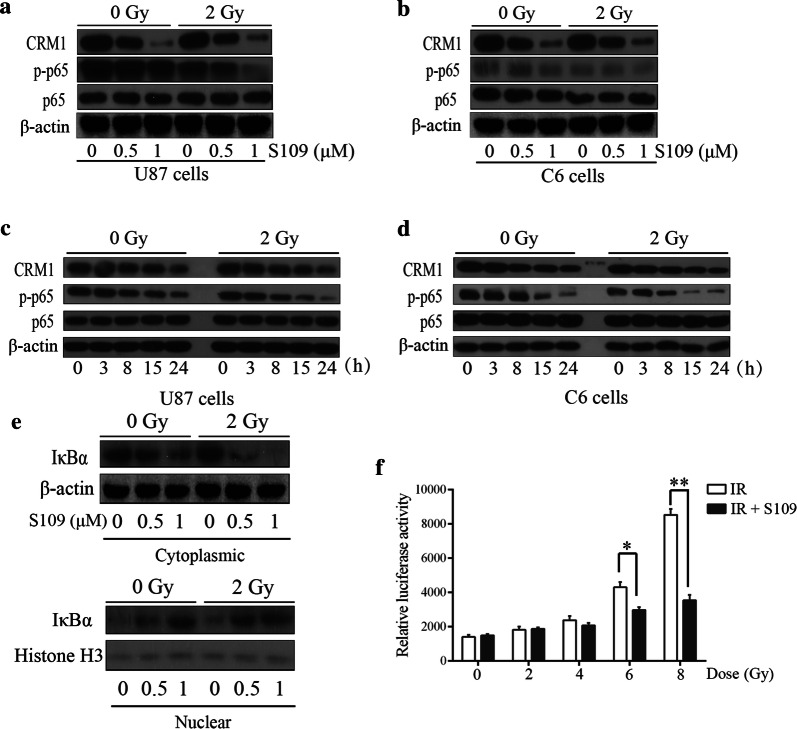
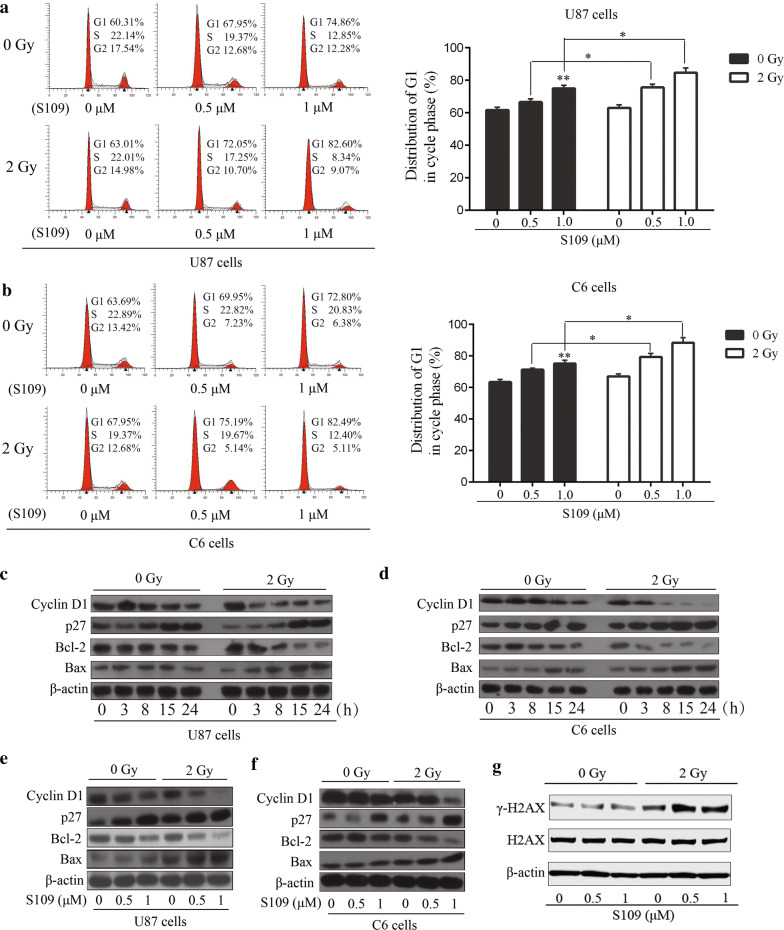
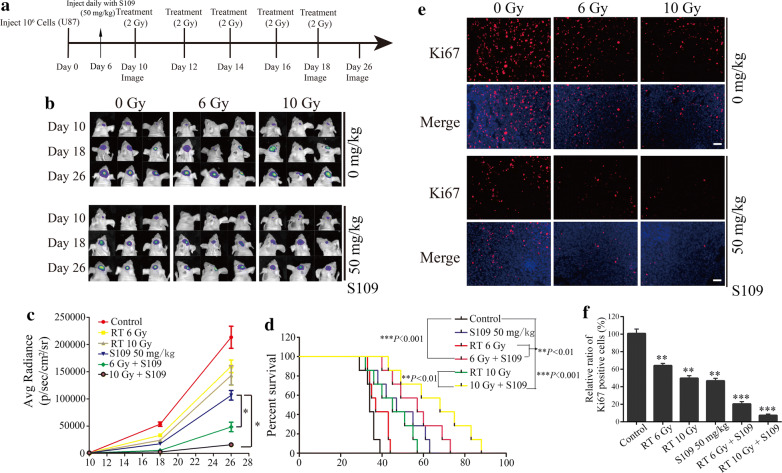
We found that S109 combined with radiotherapy significantly inhibited GBM cell proliferation and colony formation. By regulating the levels of multiple cell cycle- and apoptosis-related proteins, the combination therapy induced G1 cell cycle arrest in GBM cells. In vivo studies showed that S109 combined with radiotherapy significantly inhibited the growth of intracranial GBM and prolonged survival. Importantly, we found that S109 combined with radiotherapy promoted the nuclear accumulation of IκΒα, and inhibited phosphorylation of p65 and the transcriptional activation of NF-κΒ.
Our findings provide a new therapeutic regimen for improving GBM radiosensitivity as well as a scientific basis for further clinical trials to evaluate this combination therapy.
通过DNA损伤激活核因子-κB(NF-κB)是肿瘤细胞对放疗产生抗性的原因之一。染色体区域1(CRM1)通过调节重要肿瘤抑制蛋白或原癌蛋白的核质转运来调控肿瘤细胞增殖、耐药性和辐射抗性。大量研究报道,抑制CRM1可抑制NF-κB的激活。因此,我们推测可逆性CRM1抑制剂S109可能通过调节NF-κB信号通路诱导胶质母细胞瘤(GBM)的放射敏感性。
本研究利用细胞计数试剂盒-8(CCK-8)、5-乙炔基-2'-脱氧尿苷(EdU)和集落形成试验来评估S109联合放疗对GBM细胞增殖和存活的影响。在体内评估S109联合放疗的治疗效果,以探索S109诱导GBM放射增敏的治疗机制。
我们发现S109联合放疗显著抑制GBM细胞增殖和集落形成。通过调节多种细胞周期和凋亡相关蛋白的水平,联合治疗诱导GBM细胞G1期细胞周期阻滞。体内研究表明,S109联合放疗显著抑制颅内GBM的生长并延长生存期。重要的是,我们发现S109联合放疗促进IκBα的核内积累,并抑制p65的磷酸化和NF-κB的转录激活。
我们的研究结果为提高GBM放射敏感性提供了一种新的治疗方案,并为进一步评估这种联合治疗的临床试验提供了科学依据。