
微小RNA-24-3p抑制通过靶向Bcl-2样蛋白11来阻止血管平滑肌细胞的生长。
MicroRNA-24-3p inhibition prevents cell growth of vascular smooth muscle cells by targeting Bcl-2-like protein 11.
作者信息
Zhang Huanxin, Xue Shizhen, Feng Yi, Shen Jun, Zhao Jixian
机构信息
Department of Cardiology, Renmin Hospital, Hubei University of Medicine, Shiyan, Hubei 442000, P.R. China.
出版信息
Exp Ther Med. 2020 Apr;19(4):2467-2474. doi: 10.3892/etm.2020.8517. Epub 2020 Feb 11.
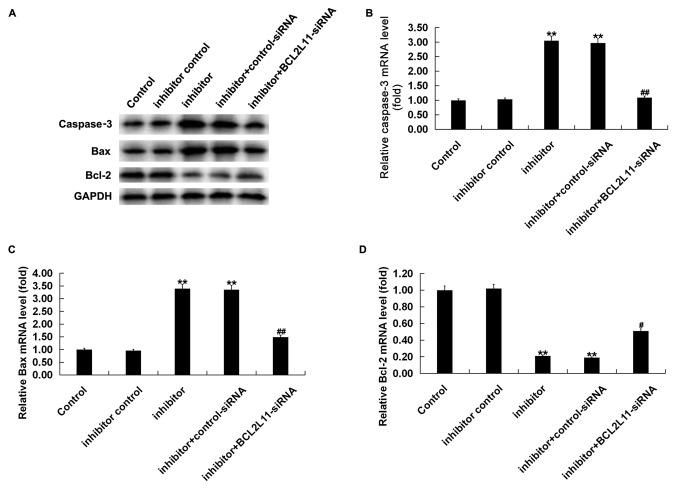
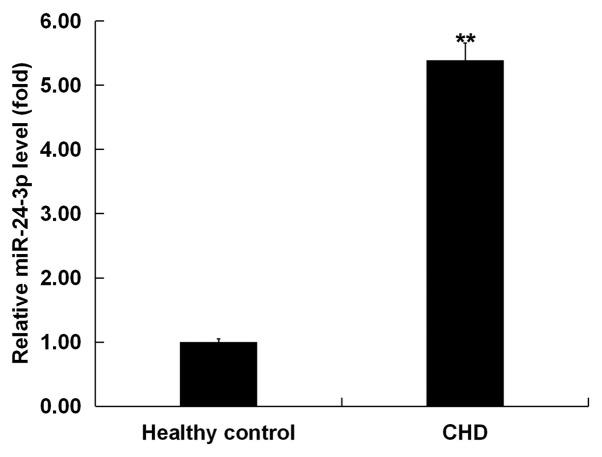
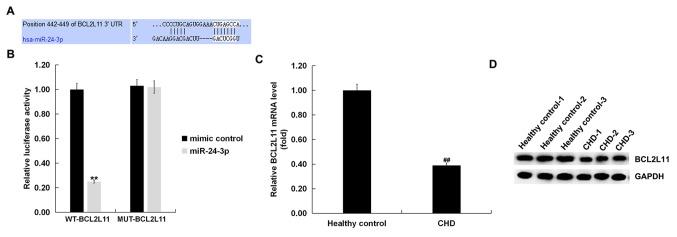
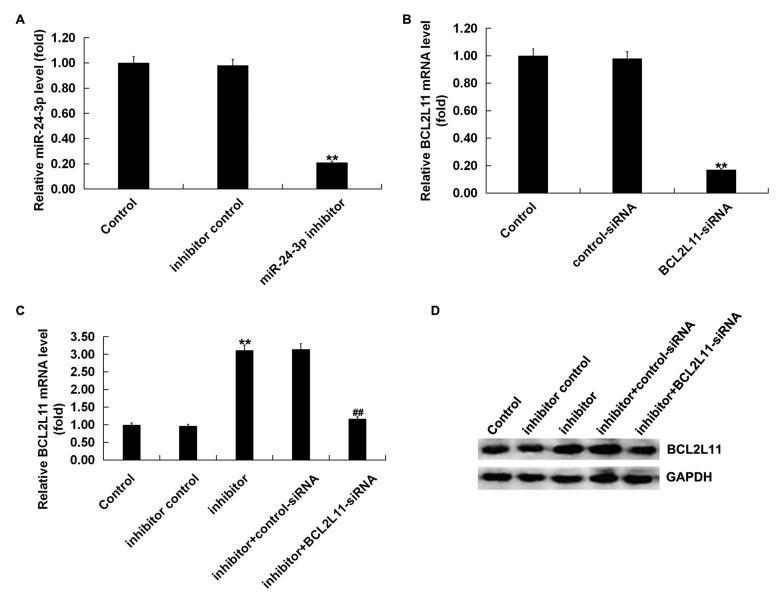
Numerous reports have shown that dysfunction of vascular smooth muscle cells (VSMCs) serves a critical function in the development of cardiovascular disease, including coronary heart disease (CHD). microRNAs (miRNAs/miRs) have been reported to play important roles in regulating the function of VSMCs. The present study aimed to determine the role of miR-24-3p in VSMCs and to uncover the underlying mechanism. The expression of miR-24-3p in the peripheral blood samples of CHD patients was measured by reverse transcription-quantitative (RT-q)PCR. It was found that the level of miR-24-3p in the peripheral blood of patients with CHD was significantly upregulated compared with that in healthy controls. A dual luciferase reporter assay was performed to determine whether Bcl-2-like protein 11 (Bcl-2L11) was a target gene of miR-24-3p, and it was identified that Bcl-2L11 was a direct target of miR-24-3p. The mRNA level and protein expression of Bcl-2L11 in the peripheral blood of patients with CHD were measured by RT-qPCR and western blotting, respectively. The findings suggested that Bcl-2L11 was downregulated in the peripheral blood of patients with CHD. In addition, it was found that downregulation of miR-24-3p suppressed VSMC proliferation and promoted VSMC apoptosis, while the effects of the miR-24-3p inhibitor on cell viability and apoptosis were reversed by Bcl-2L11-small interfering (si)RNA. Additionally, downregulation of miR-24-3p increased the levels of Bcl-2L11, caspase-3 and Bax, and decreased Bcl-2 expression in VSMCs; these changes were abolished by Bcl-2L11-siRNA. In conclusion, the aforementioned results indicated that miR-24-3p was an important regulator in VSMC proliferation and apoptosis by targeting Bcl-2L11, which suggested that miR-24-3p might be a potential therapeutic target for the treatment of CHD.
大量报告表明,血管平滑肌细胞(VSMC)功能障碍在包括冠心病(CHD)在内的心血管疾病发展中起关键作用。据报道,微小RNA(miRNA/miR)在调节VSMC功能中发挥重要作用。本研究旨在确定miR-24-3p在VSMC中的作用,并揭示其潜在机制。通过逆转录定量(RT-q)PCR检测冠心病患者外周血样本中miR-24-3p的表达。结果发现,冠心病患者外周血中miR-24-3p水平较健康对照者显著上调。进行双荧光素酶报告基因检测以确定Bcl-2样蛋白11(Bcl-2L11)是否为miR-24-3p的靶基因,结果确定Bcl-2L11是miR-24-3p的直接靶标。分别通过RT-qPCR和蛋白质印迹法检测冠心病患者外周血中Bcl-2L11的mRNA水平和蛋白表达。结果表明,冠心病患者外周血中Bcl-2L11表达下调。此外,发现miR-24-3p的下调抑制VSMC增殖并促进VSMC凋亡,而Bcl-2L11小干扰(si)RNA可逆转miR-24-3p抑制剂对细胞活力和凋亡的影响。此外,miR-24-3p的下调增加了VSMC中Bcl-2L11、半胱天冬酶-3和Bax的水平,并降低了Bcl-2的表达;这些变化被Bcl-2L11-siRNA消除。总之,上述结果表明,miR-24-3p通过靶向Bcl-2L11是VSMC增殖和凋亡的重要调节因子,这表明miR-24-3p可能是治疗冠心病的潜在治疗靶点。

 Zotero 插件