Li Junjian, Lin Wei, Zhuang Lei
Department of Hepatobiliary Surgery, The First Affiliated Hospital, Wenzhou Medical University, Wenzhou, Zhejiang 325000, P.R. China.
Science and Technology Information Center, Wenzhou Medical University Library, Wenzhou, Zhejiang 325000, P.R. China.
Exp Ther Med. 2020 Apr;19(4):2588-2596. doi: 10.3892/etm.2020.8497. Epub 2020 Feb 7.
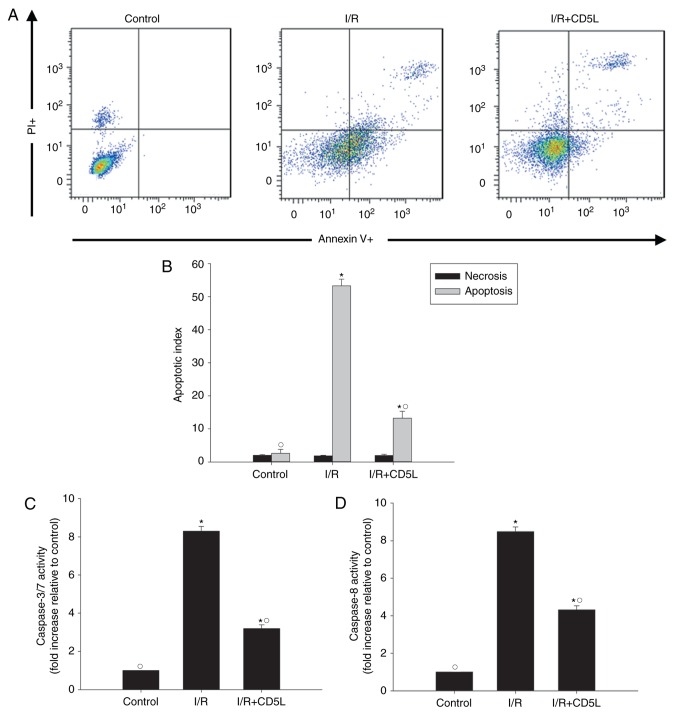
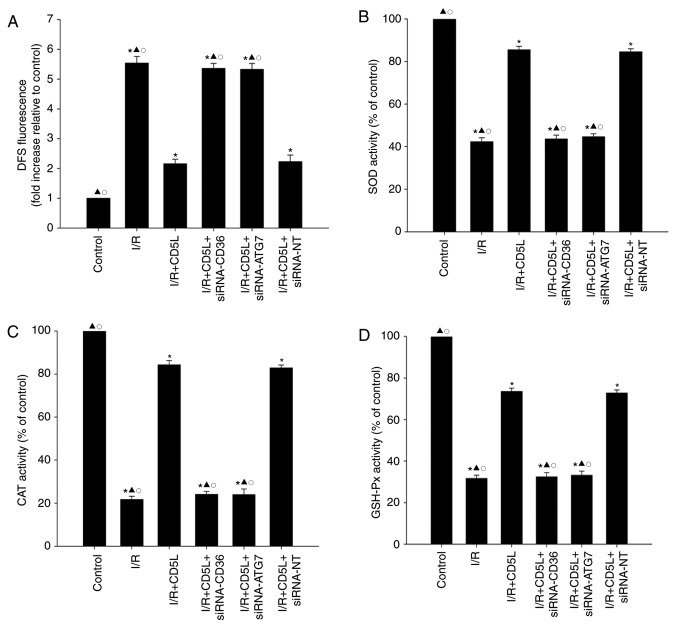
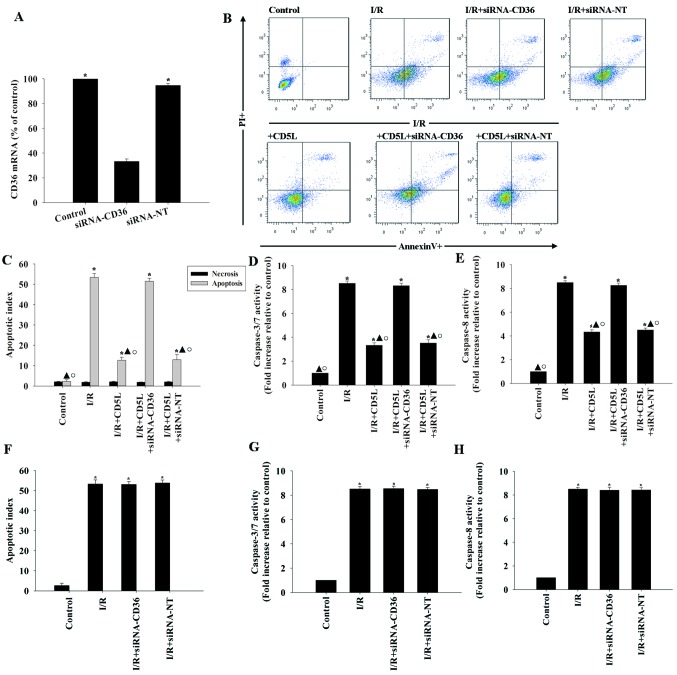
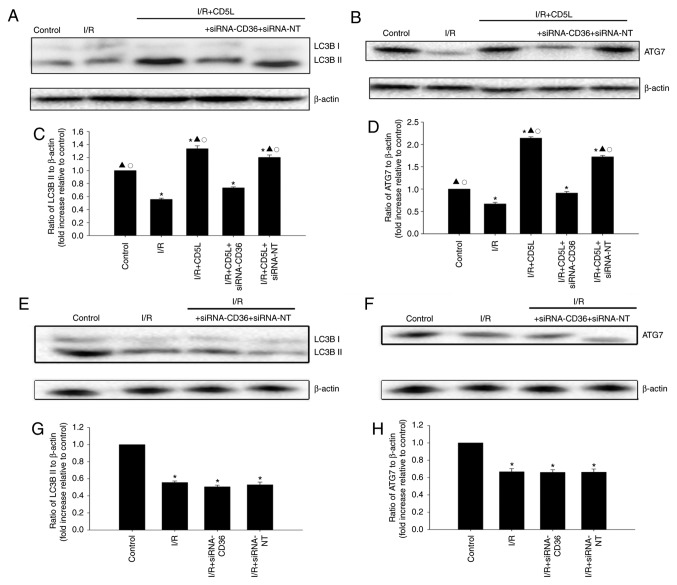
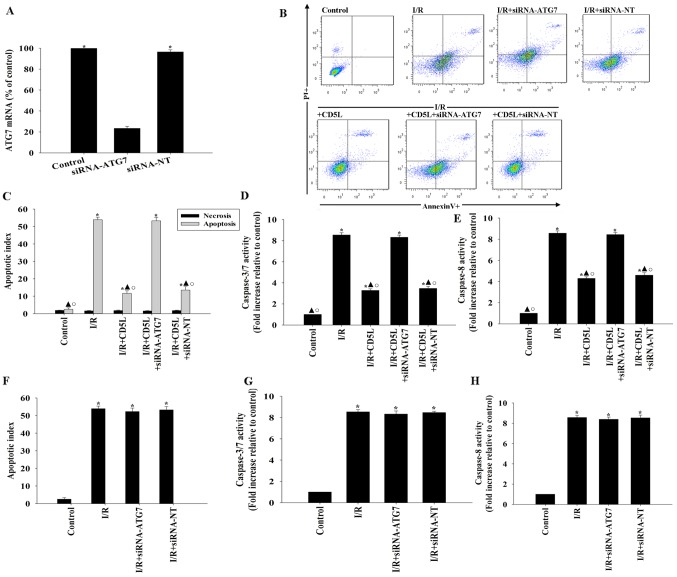
Hepatic ischemia/reperfusion (I/R) injury is a side effect of major liver surgery that is difficult to prevent. I/R injury induces metabolic strain on hepatocytes and limits the tolerable ischemia during liver resection, as well as preservation times during transplantation. Additionally, I/R injury induces apoptosis in hepatocytes. CD5-like (CD5L), an inducer of autophagy, is a soluble scavenger cysteine-rich protein that modulates hepatocyte apoptosis. The aim of the present study was to determine if pharmacologic CD5L was protective against hepatic ischemia-reperfusion injury. Hepatocytes were subjected to I/R culture conditions, and apoptosis and caspase family activity were measured after I/R to model hepatic injury. Treatment with recombinant CD5L significantly suppressed apoptosis and caspase activity through modulating cellular autophagy to maintain activation of the cluster of differentiation 36 (CD36)-dependent autophagy-related 7 (ATG7) signaling pathway. The regulation loop between CD5L and the autophagy signaling pathway was identified to be associated with the inhibition of oxidative stress. Treatment with CD5L significantly inhibited cellular oxidative stress, which was confirmed by silencing the CD36 receptor or the autophagy related protein ATG7 using small interfering RNA, which reversed the antiapoptotic and antioxidative effects of CD5L on hepatocytes under I/R conditions. The results of the present study suggested that CD5L-mediated attenuation of hepatic I/R injury occurs through the CD36-dependent ATG7 pathway, accompanied by the inhibition of oxidative stress, which is associated with enhanced autophagy. In conclusion, the present study identifies CD5L as a novel therapeutic agent for hepatic I/R injury.
肝缺血/再灌注(I/R)损伤是大型肝脏手术难以预防的一种副作用。I/R损伤会给肝细胞带来代谢压力,并限制肝切除术中可耐受的缺血时间以及移植过程中的保存时间。此外,I/R损伤会诱导肝细胞凋亡。CD5样蛋白(CD5L)作为自噬诱导剂,是一种可调节肝细胞凋亡的可溶性富含半胱氨酸的清道夫蛋白。本研究的目的是确定药理学上的CD5L是否对肝缺血再灌注损伤具有保护作用。将肝细胞置于I/R培养条件下,在I/R后测量细胞凋亡和半胱天冬酶家族活性以模拟肝损伤。重组CD5L处理通过调节细胞自噬以维持分化簇36(CD36)依赖性自噬相关蛋白7(ATG7)信号通路的激活,从而显著抑制细胞凋亡和半胱天冬酶活性。CD5L与自噬信号通路之间的调控环被确定与氧化应激的抑制有关。CD5L处理显著抑制细胞氧化应激,使用小干扰RNA沉默CD36受体或自噬相关蛋白ATG7证实了这一点,这逆转了CD5L在I/R条件下对肝细胞的抗凋亡和抗氧化作用。本研究结果表明,CD5L介导的肝I/R损伤减轻是通过CD36依赖性ATG7途径发生的,同时伴有氧化应激的抑制,这与自噬增强有关。总之,本研究确定CD5L为肝I/R损伤的一种新型治疗药物。