Li Xiaowen, Zhang Weiwei, Liang Lingli, Duan Xiaoqun, Deng Jianzhi, Zhou Yuehan
Department of Pharmacology, College of Pharmacy, Guilin Medical University, Guilin, Guangxi 541004, P.R. China.
Department of Medical Oncology, The Affiliated Yantai Yuhuangding Hospital, Medical College of Qingdao University, Yantai, Shandong 264000, P.R. China.
Exp Ther Med. 2020 Apr;19(4):2841-2850. doi: 10.3892/etm.2020.8571. Epub 2020 Feb 27.
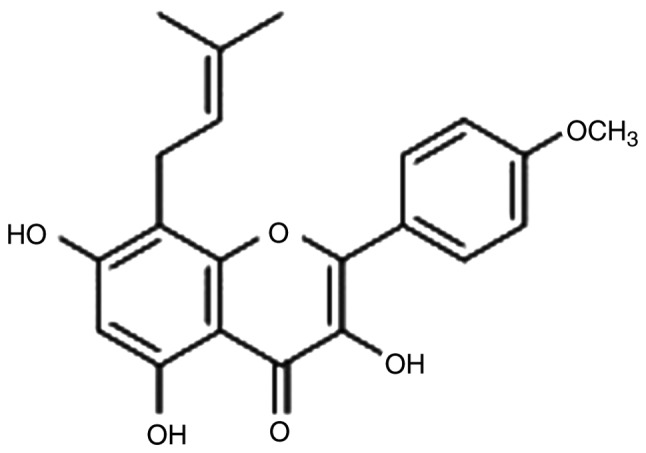
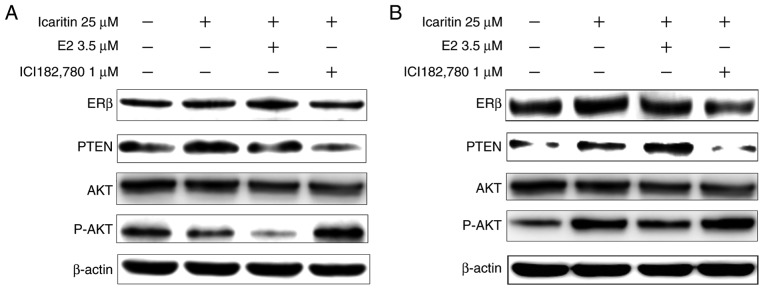
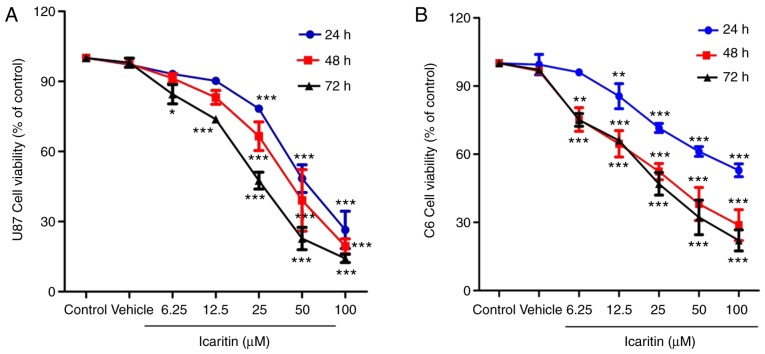
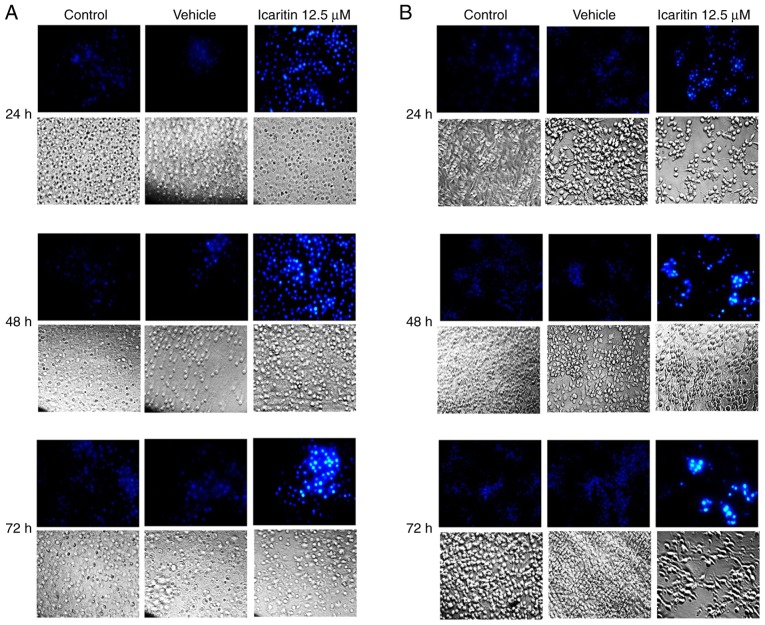
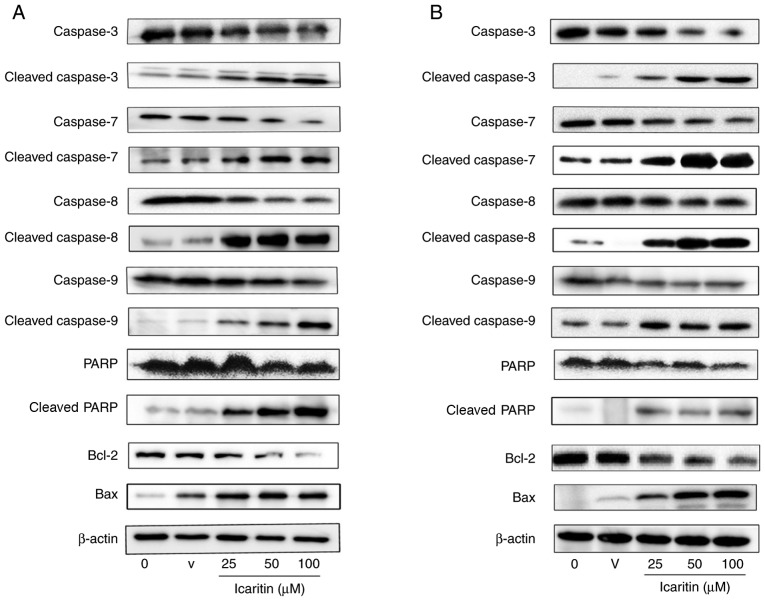
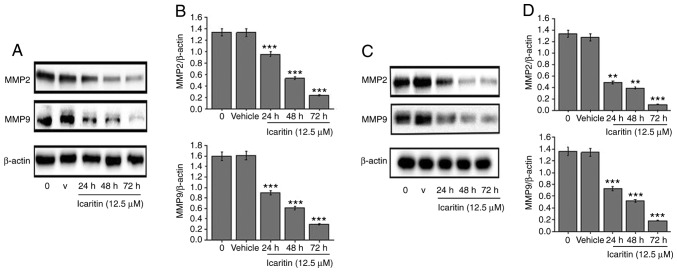
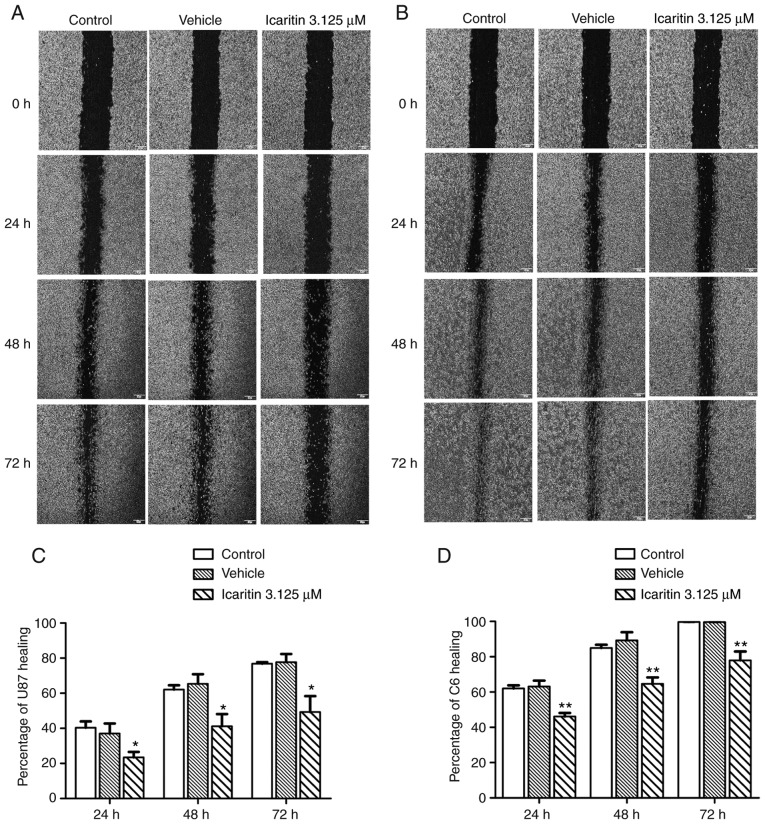
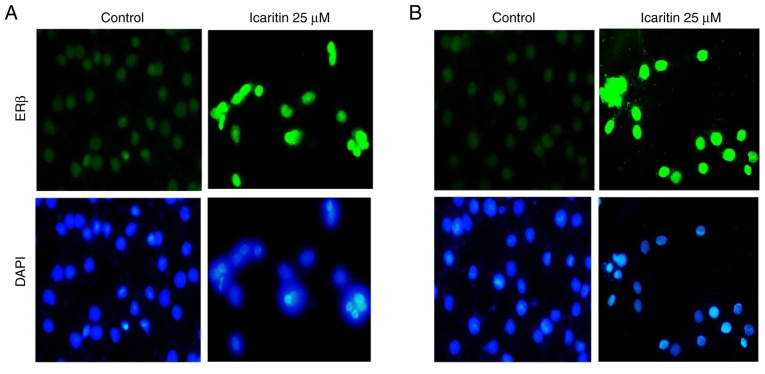
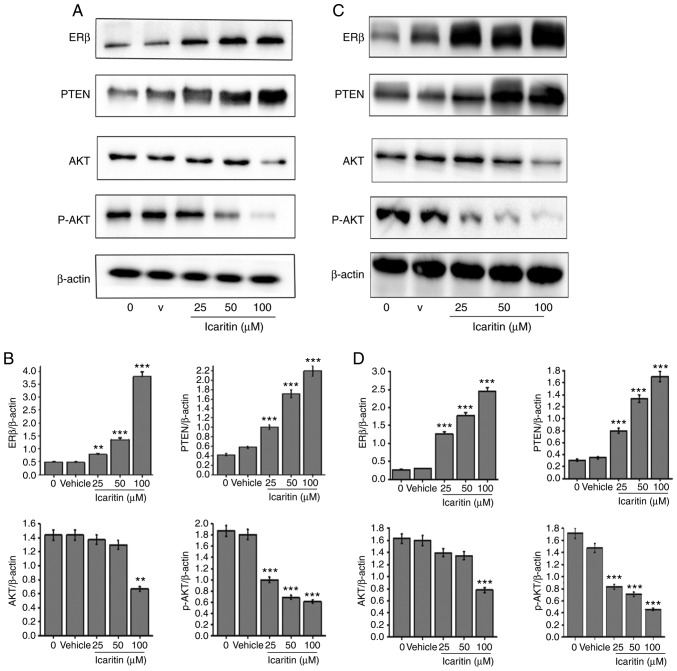
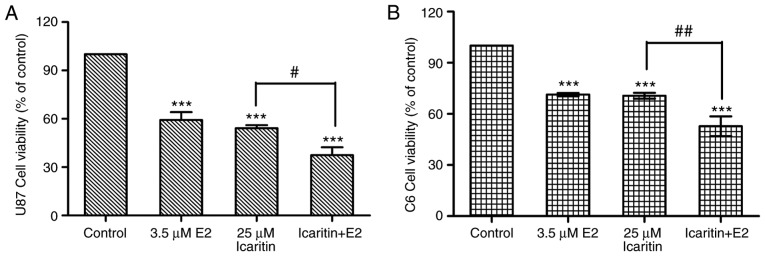
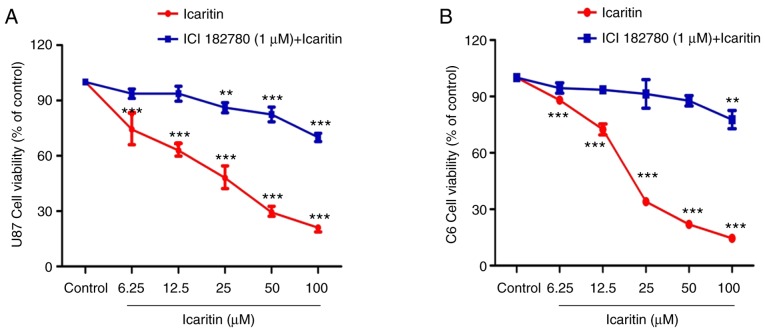
Glioblastoma is the most common malignancy of the central nervous system, and patients typically have a poor prognosis. Previous studies indicate a gender bias in the development of glioblastoma; women are at a lower risk compared with men, suggesting that estrogen may confer protective effects. Icaritin, a prenylflavonoid derivative from a Chinese herb of the , selectively regulates the estrogen receptor (ER) and possesses anti-cancer properties. The aim of the present study was to investigate the protective effects of icaritin on glioblastoma and its underlying mechanisms, with a particular focus on its association with the ER. The results demonstrated that icaritin inhibited the growth of C6 and U87-MG glioblastoma cells in a dose- and time-dependent manner. At a concentration of 12.5 µM, icaritin induced apoptosis, which was characterized by the increased expression of the cleaved forms of caspases 3, 7, 8 and 9 and poly (ADP-ribose) polymerase, downregulation of BCL2 apoptosis regulator and upregulation of BCL2-associated X, apoptosis regulator expression. Additionally, icaritin inhibited the migration of C6 and U87-MG cells. The protein expression levels of matrix metalloproteinase (MMP)-2 and MMP-9 were also downregulated following icaritin treatment. Furthermore, icaritin treatment increased the expression of estrogen receptor (ER)β and the phosphatase and tensin (PTEN) homolog oncoprotein, thus reducing the expression of downstream targets of PTEN; protein kinase B (Akt) and phosphorylated Akt. Subsequent experiments demonstrated that icaritin cooperates with 17β-estradiol to inhibit the growth of glioblastoma cells, and the inhibition of ERβ with the ERβ-specific antagonist ICI 182,780, attenuated the anti-glioblastoma effects of icaritin. In conclusion, the results of the present study demonstrate that the anti-glioblastoma effects of icaritin may be mediated by its modulation of ERβ.
胶质母细胞瘤是中枢神经系统最常见的恶性肿瘤,患者的预后通常较差。先前的研究表明胶质母细胞瘤的发生存在性别差异;与男性相比,女性患病风险较低,这表明雌激素可能具有保护作用。淫羊藿素是一种来源于中国草本植物的异戊烯基黄酮衍生物,可选择性调节雌激素受体(ER)并具有抗癌特性。本研究的目的是探讨淫羊藿素对胶质母细胞瘤的保护作用及其潜在机制,特别关注其与雌激素受体的关系。结果表明,淫羊藿素以剂量和时间依赖性方式抑制C6和U87 - MG胶质母细胞瘤细胞的生长。在浓度为12.5 μM时,淫羊藿素诱导细胞凋亡,其特征为半胱天冬酶3、7、8和9以及聚(ADP - 核糖)聚合酶的裂解形式表达增加,凋亡调节蛋白BCL2下调以及凋亡调节蛋白BCL2相关X上调。此外,淫羊藿素抑制C6和U87 - MG细胞的迁移。淫羊藿素处理后,基质金属蛋白酶(MMP)-2和MMP - 9的蛋白表达水平也下调。此外,淫羊藿素处理增加了雌激素受体(ER)β和磷酸酶及张力蛋白同源物(PTEN)癌蛋白的表达,从而降低了PTEN下游靶点蛋白激酶B(Akt)和磷酸化Akt的表达。随后的实验表明,淫羊藿素与17β - 雌二醇协同抑制胶质母细胞瘤细胞的生长,用ERβ特异性拮抗剂ICI 182,780抑制ERβ可减弱淫羊藿素的抗胶质母细胞瘤作用。总之,本研究结果表明淫羊藿素的抗胶质母细胞瘤作用可能是通过其对ERβ的调节介导的。