Higham James P, Stahl-Hennig Christiane, Heistermann Michael
Department of Anthropology, New York University, 25 Waverly Place, New York, NY 10003, USA.
Unit of Infection Models, German Primate Center, Leibniz Institute for Primate Research, Kellnerweg 4, Göttingen 37077, Germany.
R Soc Open Sci. 2020 Feb 12;7(2):191825. doi: 10.1098/rsos.191825. eCollection 2020 Feb.
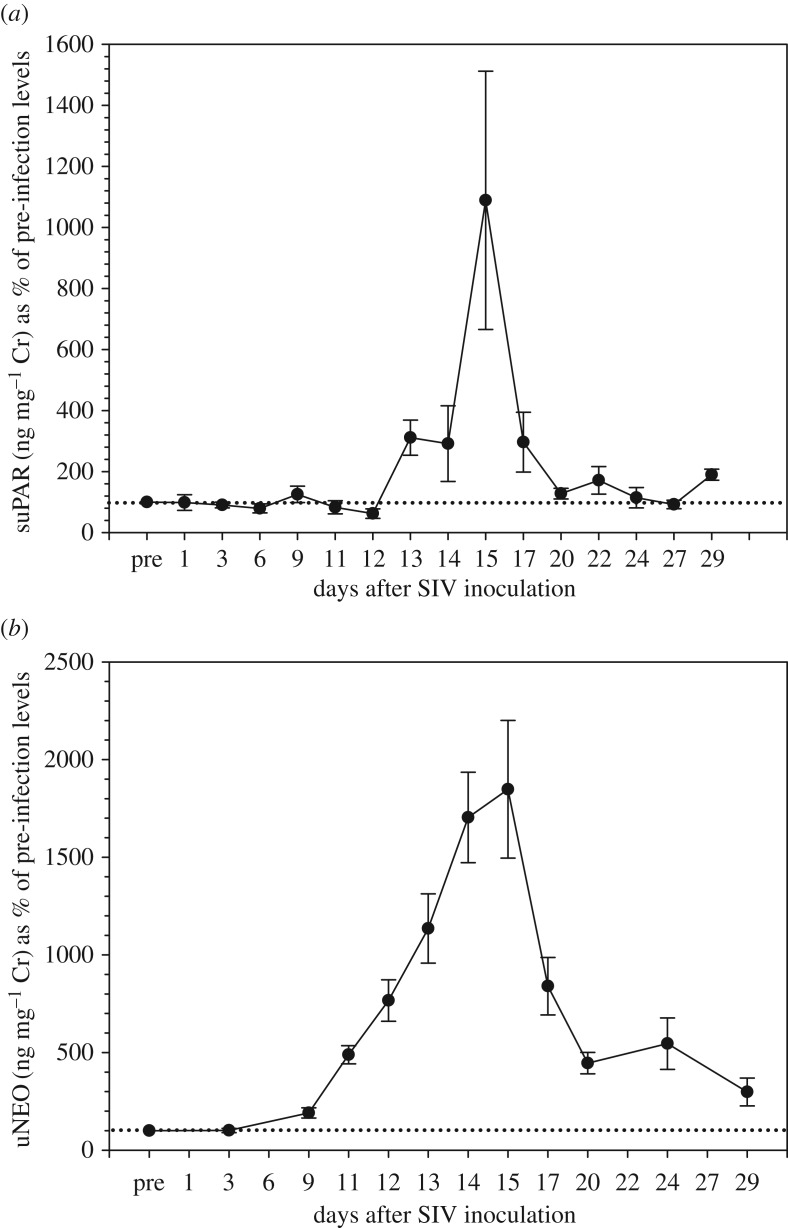
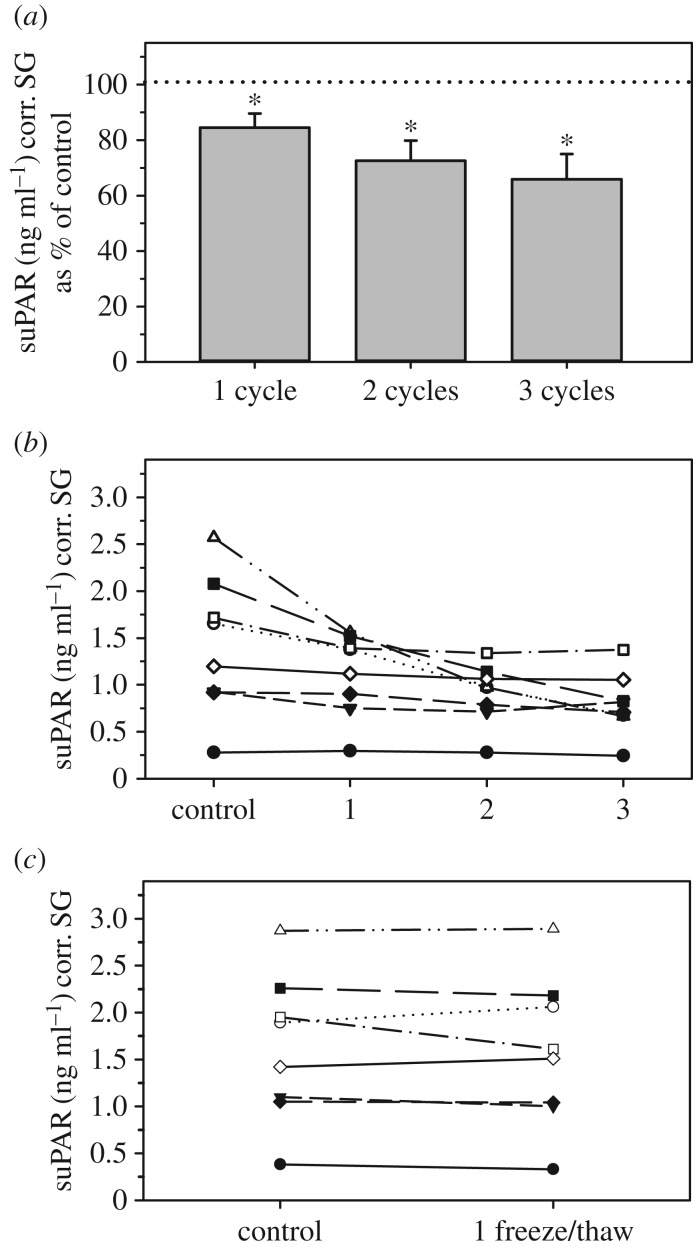
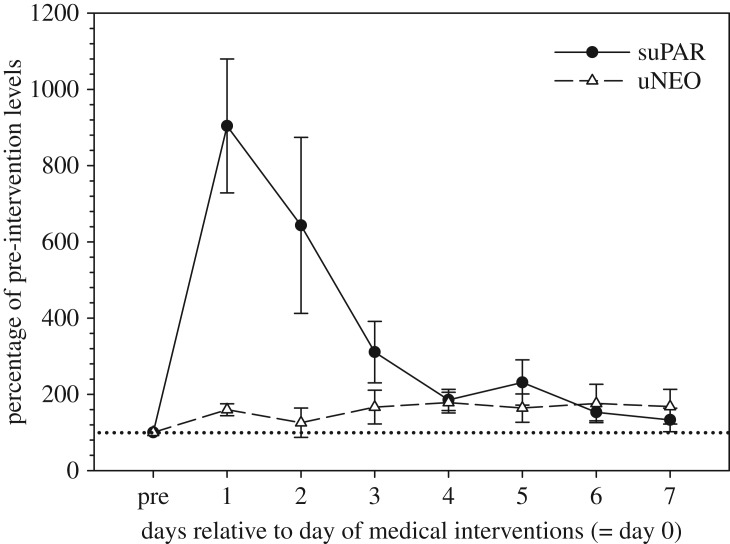
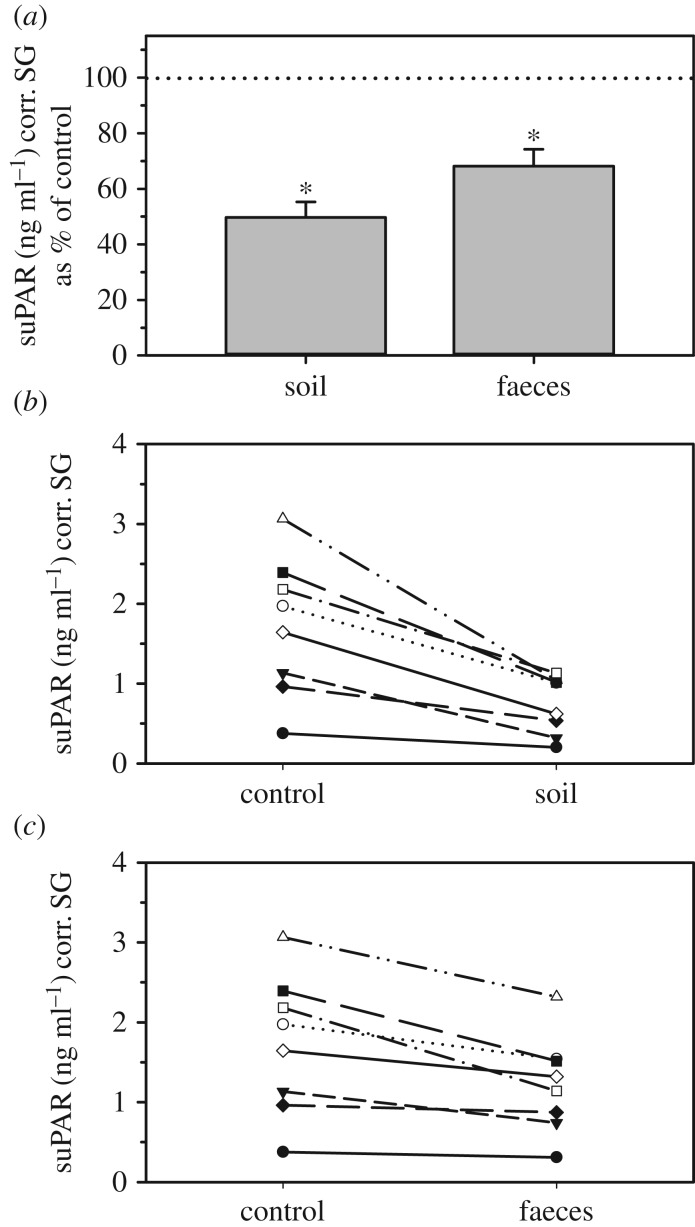
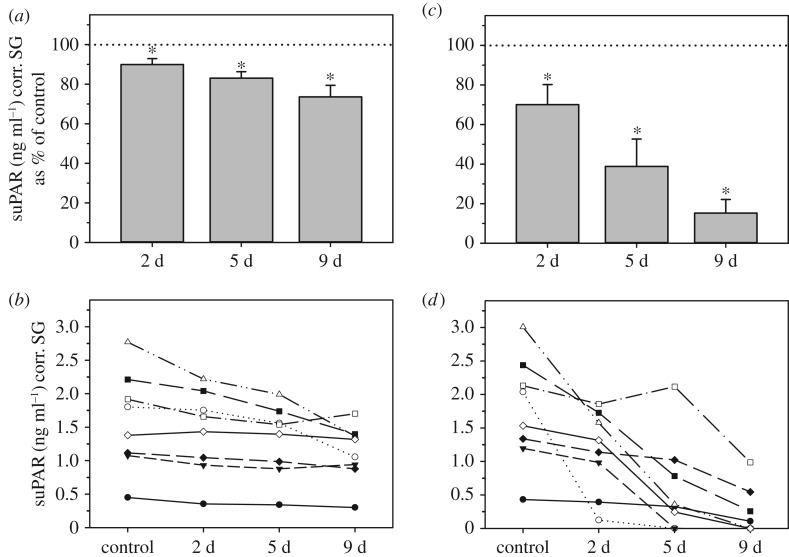
Studies of large free-ranging mammals incorporating physiological measurements typically require the collection of urine or faecal samples, due to ethical and practical concerns over trapping or darting animals. However, there is a dearth of validated biomarkers of immune activation and inflammation that can be measured non-invasively. We here evaluate the utility of urinary measurements of the soluble form of the urokinase plasminogen activator receptor (suPAR), for use as a health marker in studies of wild large mammals. We investigate how urinary suPAR concentrations change in response to viral infection and surgical trauma (inflammation), comparing it to the measurement of a marker of cellular immune activation, urinary neopterin (uNEO), in captive rhesus macaques. We then test the field utility of urinary suPAR, assessing the effects of soil and faecal contamination, sunlight, storage at different temperatures, freeze-thaw cycles, and lyophilization. We find that suPAR concentrations rise markedly in response to both infection and surgery-associated inflammation, unlike uNEO concentrations, which only rise in response to the former. Our field validation demonstrates that urinary suPAR is reasonably robust to many of the issues associated with field collection, sample processing, and storage, as long as samples can be stored in a freezer. Urinary suPAR is thus a promising biomarker applicable for monitoring various aspects of health in wild primates and potentially also other large mammals.
由于对捕获或麻醉动物存在伦理和实际方面的顾虑,纳入生理测量的大型自由放养哺乳动物研究通常需要收集尿液或粪便样本。然而,目前缺乏可通过非侵入性方式测量的、经过验证的免疫激活和炎症生物标志物。我们在此评估尿激酶纤溶酶原激活物受体可溶性形式(suPAR)的尿液测量值作为野生大型哺乳动物健康标志物的效用。我们研究了圈养恒河猴尿液中suPAR浓度如何因病毒感染和手术创伤(炎症)而变化,并将其与细胞免疫激活标志物尿液新蝶呤(uNEO)的测量结果进行比较。然后,我们测试了尿液suPAR在野外的效用,评估了土壤和粪便污染、阳光、不同温度下的储存、冻融循环和冻干的影响。我们发现,与仅对感染有反应而升高的uNEO浓度不同,suPAR浓度在感染和手术相关炎症时均显著升高。我们的野外验证表明,只要样本能够保存在冰箱中,尿液suPAR对于许多与野外采集、样本处理和储存相关的问题具有相当的耐受性。因此,尿液suPAR是一种有前景的生物标志物,适用于监测野生灵长类动物以及其他大型哺乳动物健康的各个方面。