Paris Jason J, Liere Philippe, Kim Sarah, Mahdi Fakhri, Buchanan Meagan E, Nass Sara R, Qrareya Alaa N, Salahuddin Mohammed F, Pianos Antoine, Fernandez Neïké, Shariat-Madar Zia, Knapp Pamela E, Schumacher Michael, Hauser Kurt F
Department of BioMolecular Sciences, University of Mississippi, School of Pharmacy, University, MS, 38677-1848, USA.
Research Institute of Pharmaceutical Sciences, University of Mississippi, University, MS, 38677, USA.
Neurobiol Stress. 2020 Jan 29;12:100211. doi: 10.1016/j.ynstr.2020.100211. eCollection 2020 May.
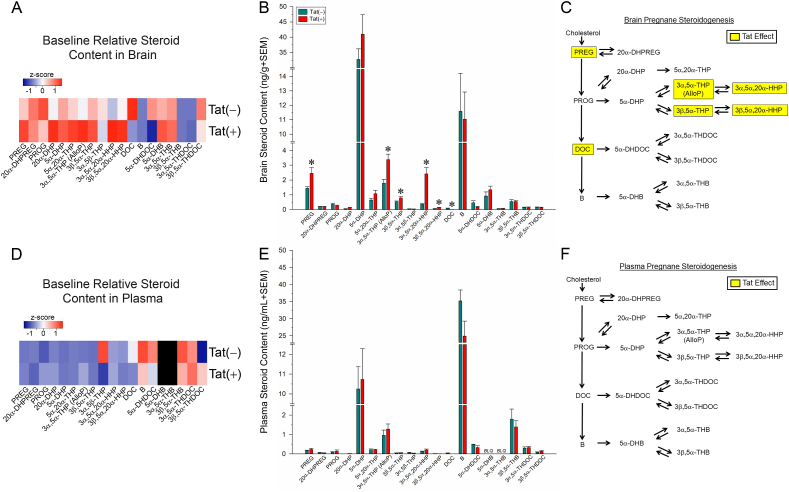
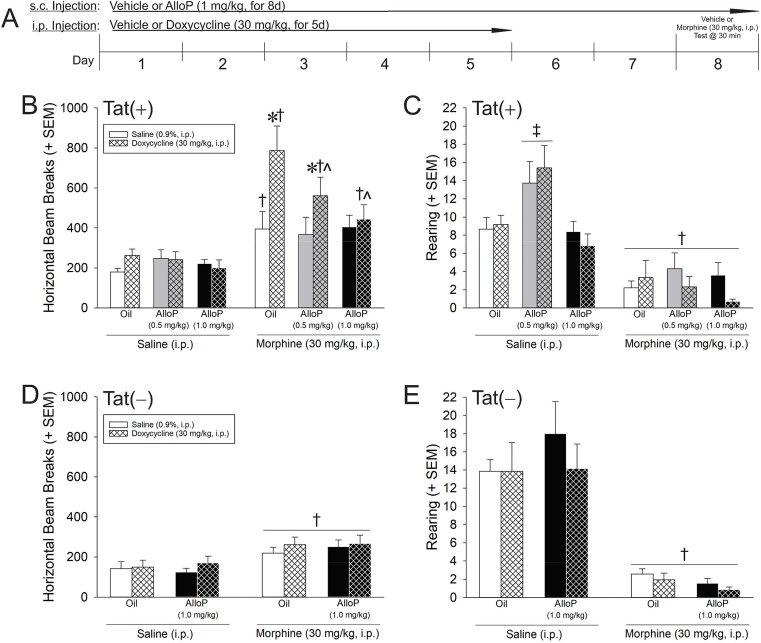
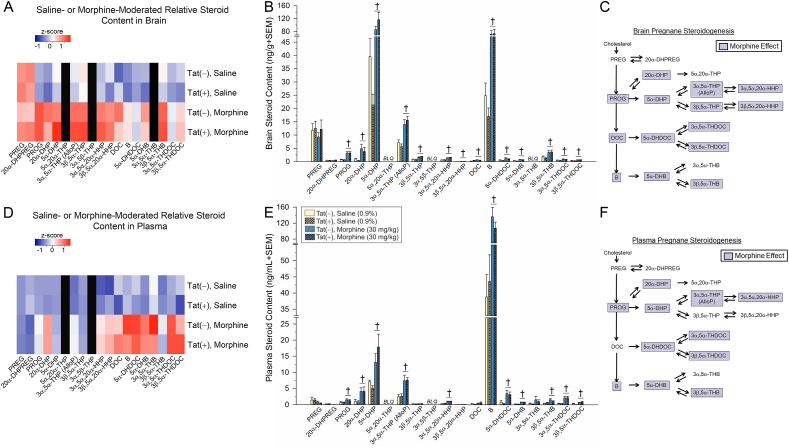
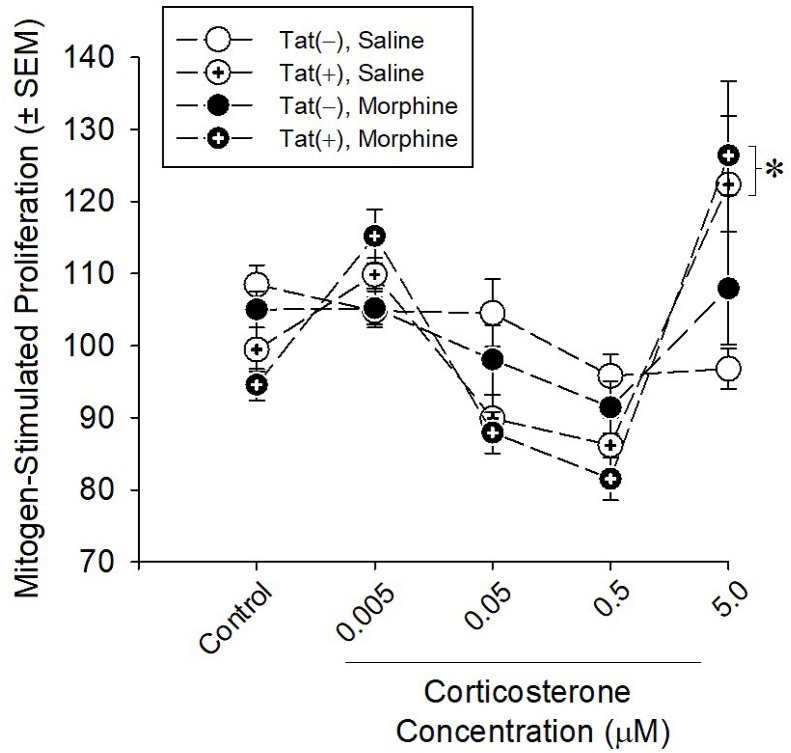
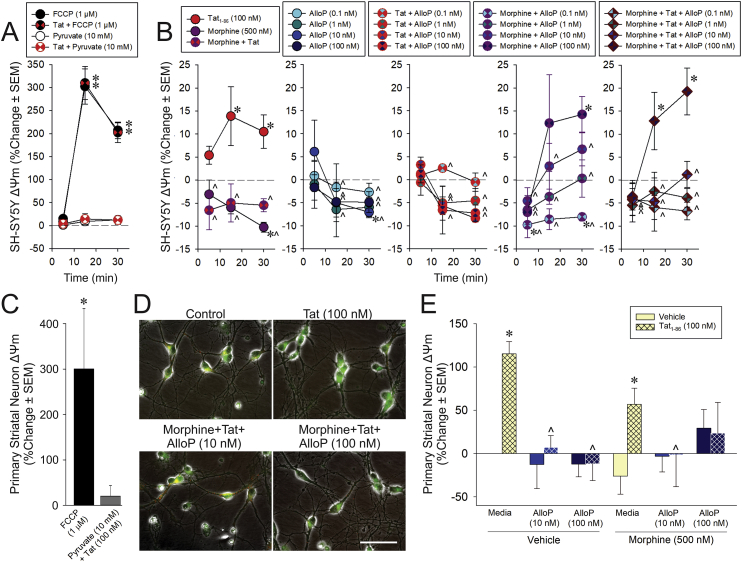
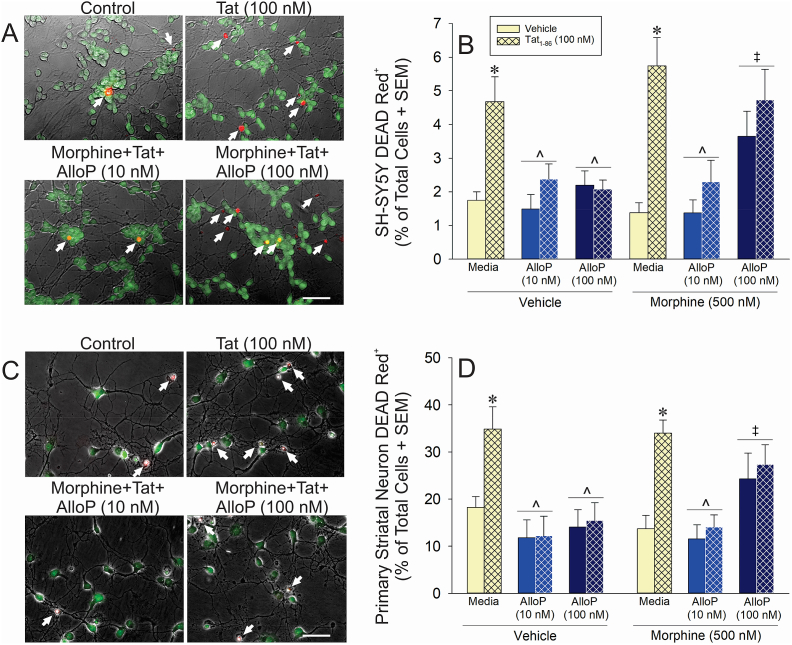
Pregnane steroids, particularly allopregnanolone (AlloP), are neuroprotective in response to central insult. While unexplored , AlloP may confer protection against the neurological dysfunction associated with human immunodeficiency virus type 1 (HIV-1). The HIV-1 regulatory protein, trans-activator of transcription (Tat), is neurotoxic and its expression in mice increases anxiety-like behavior; an effect that can be ameliorated by progesterone, but not when 5α-reduction is blocked. Given that Tat's neurotoxic effects involve mitochondrial dysfunction and can be worsened with opioid exposure, we hypothesized that Tat and/or combined morphine would perturb steroidogenesis in mice, promoting neuronal death, and that exogenous AlloP would rescue these effects. Like other models of neural injury, conditionally inducing HIV-1 Tat in transgenic mice significantly increased the central synthesis of pregnenolone and progesterone's 5α-reduced metabolites, including AlloP, while decreasing central deoxycorticosterone (independent of changes in plasma). Morphine significantly increased brain and plasma concentrations of several steroids (including progesterone, deoxycorticosterone, corticosterone, and their metabolites) likely via activation of the hypothalamic-pituitary-adrenal stress axis. Tat, but not morphine, caused glucocorticoid resistance in primary splenocytes. In neurons, Tat depolarized mitochondrial membrane potential and increased cell death. Physiological concentrations of AlloP (0.1, 1, or 10 nM) reversed these effects. High-concentration AlloP (100 nM) was neurotoxic in combination with morphine. Tat induction in transgenic mice potentiated the psychomotor effects of acute morphine, while exogenous AlloP (1.0 mg/kg, but not 0.5 mg/kg) was ameliorative. Data demonstrate that steroidogenesis is altered by HIV-1 Tat or morphine and that physiological AlloP attenuates resulting neurotoxic and psychomotor effects.
孕烷类固醇,尤其是别孕烯醇酮(AlloP),在应对中枢损伤时具有神经保护作用。虽然尚未进行探索,但AlloP可能对与1型人类免疫缺陷病毒(HIV-1)相关的神经功能障碍具有保护作用。HIV-1调节蛋白转录反式激活因子(Tat)具有神经毒性,其在小鼠中的表达会增加焦虑样行为;孕酮可改善这种效应,但当5α-还原被阻断时则无效。鉴于Tat的神经毒性作用涉及线粒体功能障碍,且在接触阿片类药物时会恶化,我们推测Tat和/或联合吗啡会扰乱小鼠的类固醇生成,促进神经元死亡,而外源性AlloP会挽救这些效应。与其他神经损伤模型一样,在转基因小鼠中条件性诱导HIV-1 Tat会显著增加孕烯醇酮和孕酮的5α-还原代谢产物(包括AlloP)的中枢合成,同时降低中枢脱氧皮质酮(与血浆变化无关)。吗啡可能通过激活下丘脑-垂体-肾上腺应激轴显著增加几种类固醇(包括孕酮、脱氧皮质酮、皮质酮及其代谢产物)的脑和血浆浓度。Tat而非吗啡会导致原代脾细胞产生糖皮质激素抵抗。在神经元中,Tat使线粒体膜电位去极化并增加细胞死亡。生理浓度的AlloP(0.1、1或10 nM)可逆转这些效应。高浓度的AlloP(100 nM)与吗啡联合使用时具有神经毒性。在转基因小鼠中诱导Tat会增强急性吗啡的精神运动效应,而外源性AlloP(1.0 mg/kg,但0.5 mg/kg无效)具有改善作用。数据表明,HIV-1 Tat或吗啡会改变类固醇生成,而生理性AlloP可减轻由此产生的神经毒性和精神运动效应。