Obstetrics and Gynecology Department, Huai'an Maternal and Child Health Hospital, Huai'an, China.
Department of Orthopedics, the Second Affiliated Hospital of Soochow University, Suzhou, China.
Aging (Albany NY). 2020 Apr 7;12(7):6109-6119. doi: 10.18632/aging.103009.
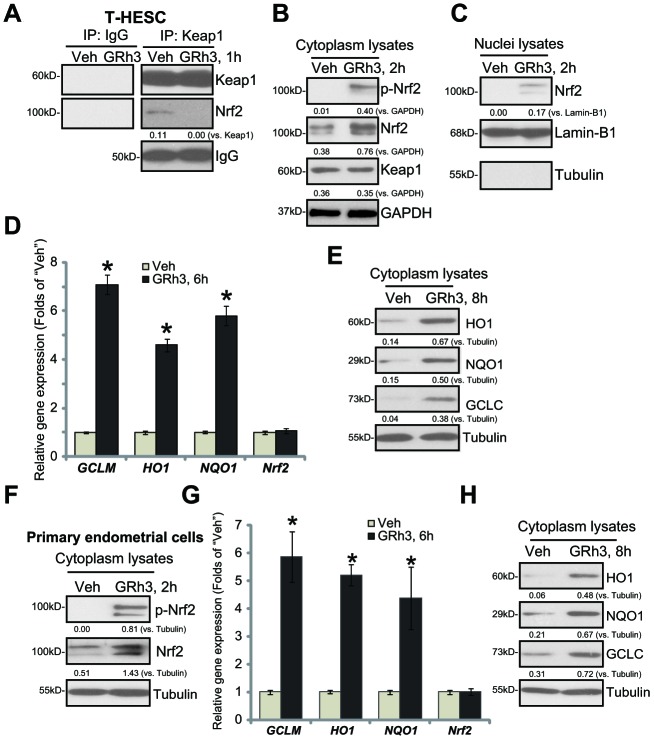
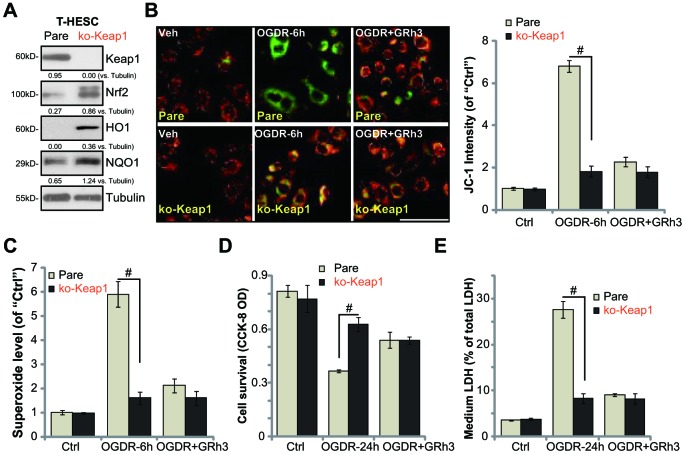
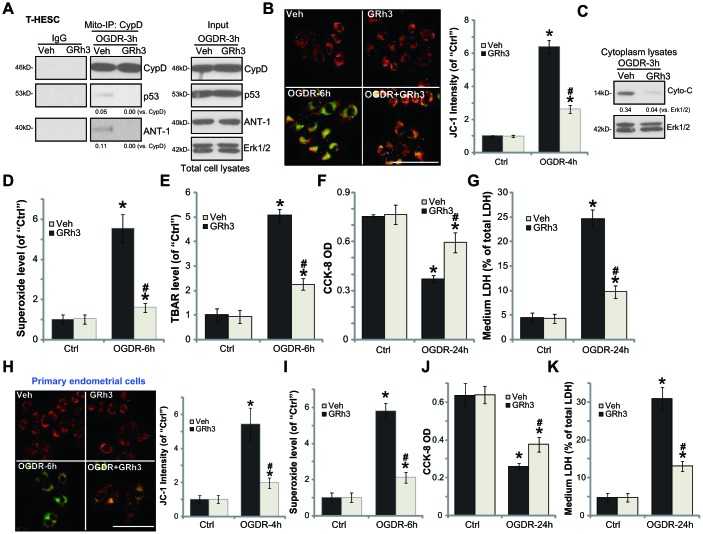
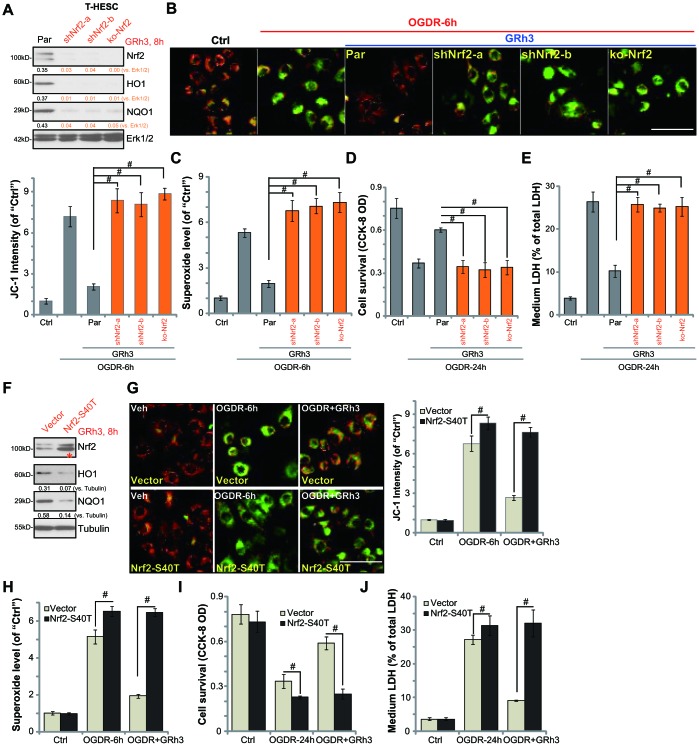
Oxygen and glucose deprivation (OGD)-reoxygenation (OGDR) induces oxidative injury to endometrial cells . We tested the potential effect of ginsenoside Rh3 (GRh3) in the process. Our results show that GRh3 activated Nrf2 signaling in T-HESC cells and primary murine endometrial cells. GRh3 induced Nrf2 Ser-40 phosphorylation and Keap1-Nrf2 disassociation, causing Nrf2 protein stabilization and nuclear translocation, which led to transcription and expression of antioxidant response element-dependent genes (, and ). In T-HESC cells and primary murine endometrial cells, GRh3 potently attenuated OGDR-induced reactive oxygen species production, lipid peroxidation and mitochondrial depolarization, as well as cell viability reduction and necrosis. Activation of Nrf2 is required for GRh3-induced anti-OGDR actions in endometrial cells. Nrf2 inhibition, by Nrf2 shRNA, knockout (through CRISPR-Cas9-editing) or S40T mutation, abolished GRh3-induced endometrial cell protection against OGDR. Additionally, forced activation of Nrf2, by Keap1 knockout, mimicked and nullified GRh3-induced anti-OGDR actions in T-HESC cells. Together, we conclude that GRh3 protects endometrial cells from OGDR via activation of Nrf2 signaling.
氧葡萄糖剥夺(OGD)-复氧(OGDR)可诱导子宫内膜细胞发生氧化损伤。我们测试了人参皂苷 Rh3(GRh3)在此过程中的潜在作用。结果表明,GRh3 可激活 T-HESC 细胞和原代小鼠子宫内膜细胞中的 Nrf2 信号通路。GRh3 诱导 Nrf2 Ser-40 磷酸化和 Keap1-Nrf2 解离,导致 Nrf2 蛋白稳定和核转位,从而引发抗氧化反应元件依赖性基因(,和)的转录和表达。在 T-HESC 细胞和原代小鼠子宫内膜细胞中,GRh3 可有效抑制 OGDR 诱导的活性氧产生、脂质过氧化和线粒体去极化,以及细胞活力降低和坏死。Nrf2 的激活是 GRh3 诱导子宫内膜细胞抗 OGDR 作用所必需的。通过 Nrf2 shRNA、敲除(通过 CRISPR-Cas9 编辑)或 S40T 突变抑制 Nrf2,可消除 GRh3 诱导的对 OGDR 的保护作用。此外,通过 Keap1 敲除强制激活 Nrf2,可模拟和消除 GRh3 诱导的 T-HESC 细胞抗 OGDR 作用。综上,我们的结论是,GRh3 通过激活 Nrf2 信号通路来保护子宫内膜细胞免受 OGDR 的损伤。