Department of Paediatric Haematology and Oncology, Second Faculty of Medicine, Charles University and University Hospital Motol, Prague, Czechia.
Laboratory for Immunology, Department of Pediatrics, Leiden University Medical Center (LUMC), Leiden, Netherlands.
Front Immunol. 2020 Mar 19;11:371. doi: 10.3389/fimmu.2020.00371. eCollection 2020.
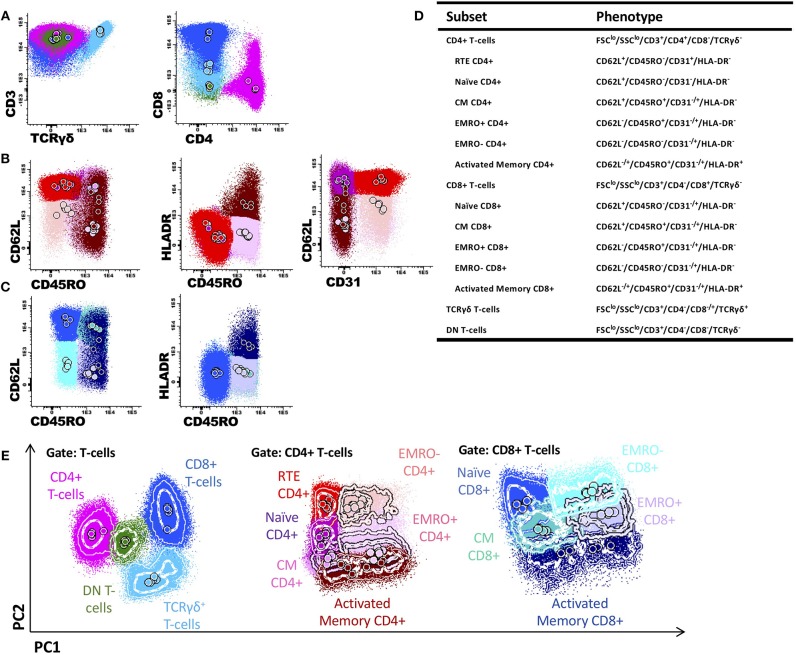
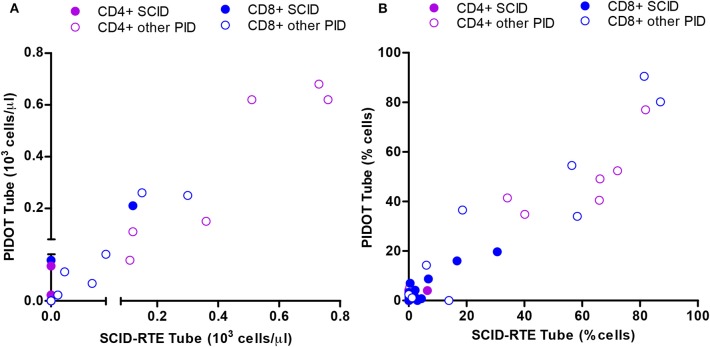
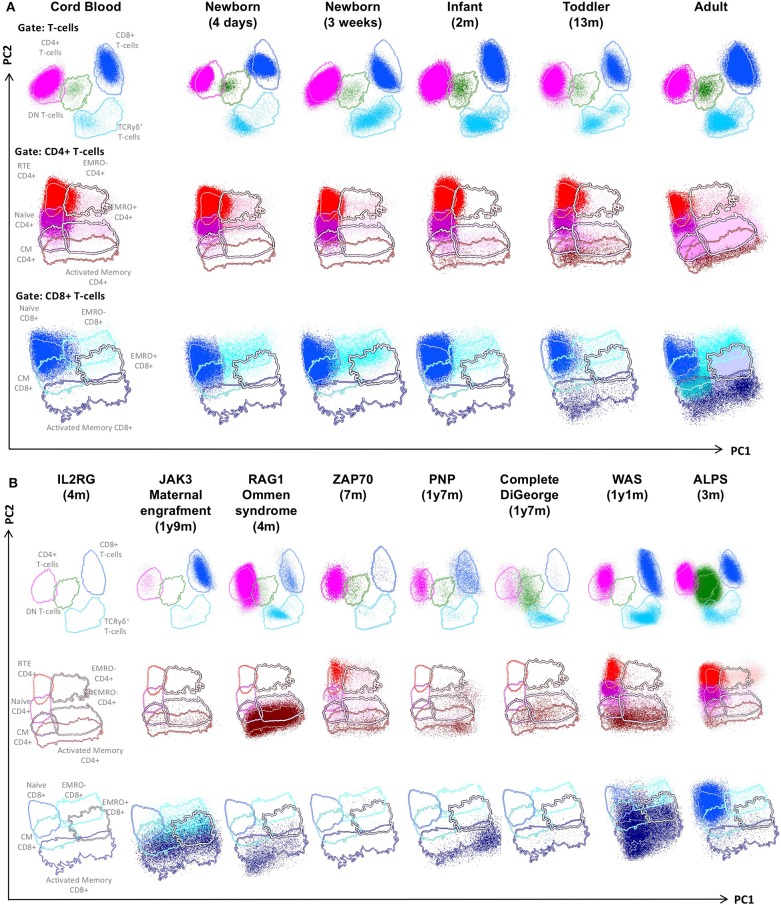
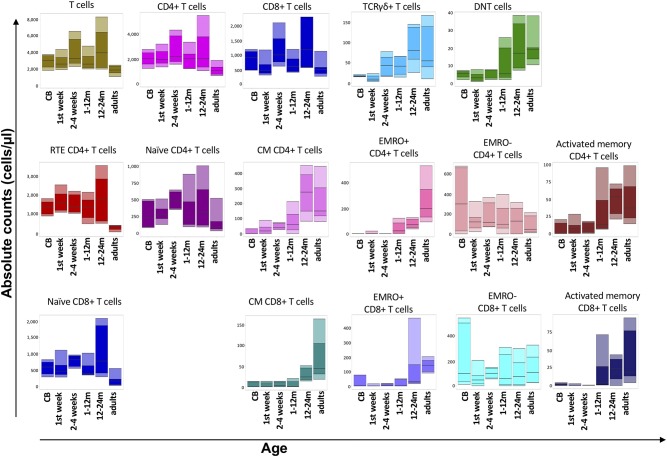
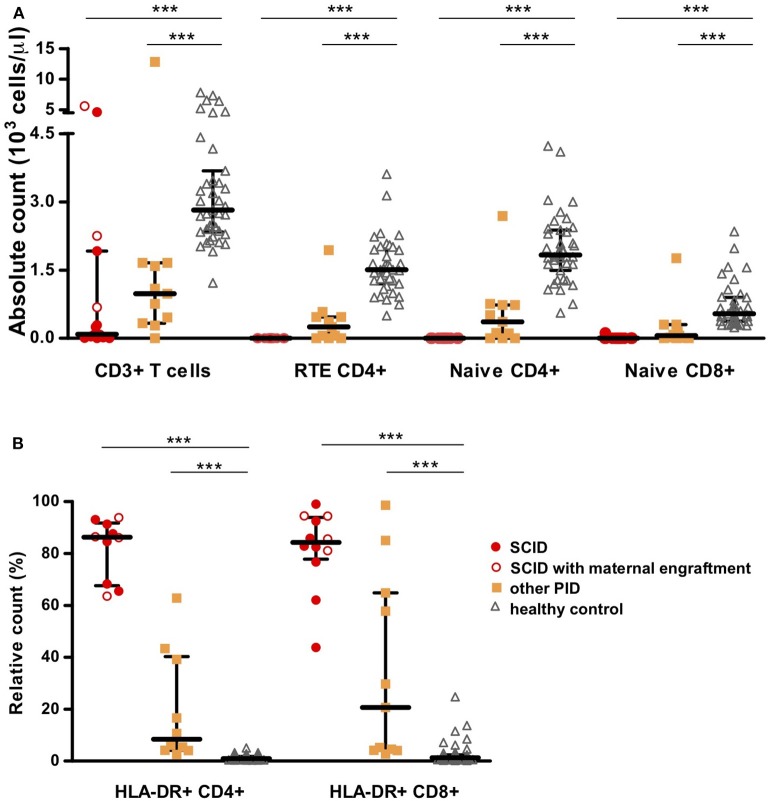
The EuroFlow PID consortium developed a set of flow cytometry tests for evaluation of patients with suspicion of primary immunodeficiency (PID). In this technical report we evaluate the performance of the SCID-RTE tube that explores the presence of recent thymic emigrants (RTE) together with T-cell activation status and maturation stages and discuss its applicability in the context of the broader EuroFlow PID flow cytometry testing algorithm for diagnostic orientation of PID of the lymphoid system. We have analyzed peripheral blood cells of 26 patients diagnosed between birth and 2 years of age with a genetically defined primary immunodeficiency disorder: 15 severe combined immunodeficiency (SCID) patients had disease-causing mutations in ( = 4, two of them presented with Omenn syndrome), ( = 4, one of them with confirmed maternal engraftment), ( = 1), ( = 1), ( = 1), ( = 3, two of them with maternal engraftment) and ( = 1) and 11 other PID patients had diverse molecular defects [ ( = 1), ( = 2), ( = 1), ( = 1), del22q11.2 (DiGeorge = 4), ( = 1) and ( = 1)]. In addition, 44 healthy controls in the same age group were analyzed using the SCID-RTE tube in four EuroFlow laboratories using a standardized 8-color approach. RTE were defined as CD62L+CD45RO-HLA-DR-CD31+ and the activation status was assessed by the expression of HLA-DR+. Naïve CD8+ T-lymphocytes and naïve CD4+ T-lymphocytes were defined as CD62L+CD45RO-HLA-DR-. With the SCID-RTE tube, we identified patients with PID by low levels or absence of RTE in comparison to controls as well as low levels of naïve CD4+ and naïve CD8+ lymphocytes. These parameters yielded 100% sensitivity for SCID. All SCID patients had absence of RTE, including the patients with confirmed maternal engraftment or oligoclonally expanded T-cells characteristic for Omenn syndrome. Another dominant finding was the increased numbers of activated CD4+HLA-DR+ and CD8+HLA-DR+ lymphocytes. Therefore, the EuroFlow SCID-RTE tube together with the previously published PIDOT tube form a sensitive and complete cytometric diagnostic test suitable for patients suspected of severe PID (SCID or CID) as well as for children identified via newborn screening programs for SCID with low or absent T-cell receptor excision circles (TRECs).
欧洲流式细胞术免疫缺陷联盟(EuroFlow PID consortium)开发了一组流式细胞术检测方法,用于评估疑似原发性免疫缺陷(PID)的患者。在本技术报告中,我们评估了 SCID-RTE 管的性能,该管用于评估近期胸腺移居(RTE)的存在情况以及 T 细胞激活状态和成熟阶段,并讨论了其在更广泛的欧洲流式细胞术 PID 流式细胞术检测算法中的适用性,该算法用于诊断淋巴系统的 PID。我们分析了 26 名出生至 2 岁之间确诊患有遗传性原发性免疫缺陷疾病的患者的外周血:15 名严重联合免疫缺陷(SCID)患者的基因突变导致 (=4,其中 2 名患者表现为 Omenn 综合征), (=4,其中 1 名患者存在确证的母体嵌合), (=1), (=1), (=1), (=3,其中 2 名患者存在母体嵌合)和 (=1),11 名其他 PID 患者存在不同的分子缺陷[ (=1), (=2), (=1), (=1),del22q11.2(DiGeorge =4), (=1)和 (=1)]。此外,在四个欧洲流式细胞术实验室中,使用标准化的 8 色方法,对同一年龄组的 44 名健康对照者使用 SCID-RTE 管进行了分析。RTE 被定义为 CD62L+CD45RO-HLA-DR-CD31+,通过 HLA-DR+的表达来评估激活状态。幼稚 CD8+T 淋巴细胞和幼稚 CD4+T 淋巴细胞被定义为 CD62L+CD45RO-HLA-DR-。通过 SCID-RTE 管,我们将 PID 患者与对照组进行比较,发现 PID 患者的 RTE 水平较低或缺失,以及幼稚 CD4+和幼稚 CD8+淋巴细胞水平较低。这些参数对 SCID 的敏感性为 100%。所有 SCID 患者均无 RTE,包括确证的母体嵌合或具有 Omenn 综合征特征的寡克隆扩增 T 细胞的患者。另一个主要发现是 CD4+HLA-DR+和 CD8+HLA-DR+活化淋巴细胞的数量增加。因此,欧洲流式细胞术的 SCID-RTE 管与之前发表的 PIDOT 管一起形成了一种敏感且完整的细胞诊断测试,适用于疑似严重 PID(SCID 或 CID)的患者,也适用于通过新生儿筛查程序识别的 SCID 患者,这些患者的 T 细胞受体切除环(TRECs)水平较低或缺失。