Division of Rheumatology, Inflammation and Immunity, Brigham and Women's Hospital and Harvard Medical School, Boston, MA 02115, USA; Division of Medical Sciences, Harvard Medical School, Boston, MA 02115, USA.
Division of Medical Sciences, Harvard Medical School, Boston, MA 02115, USA.
Cell Rep. 2020 Apr 7;31(1):107466. doi: 10.1016/j.celrep.2020.03.030.
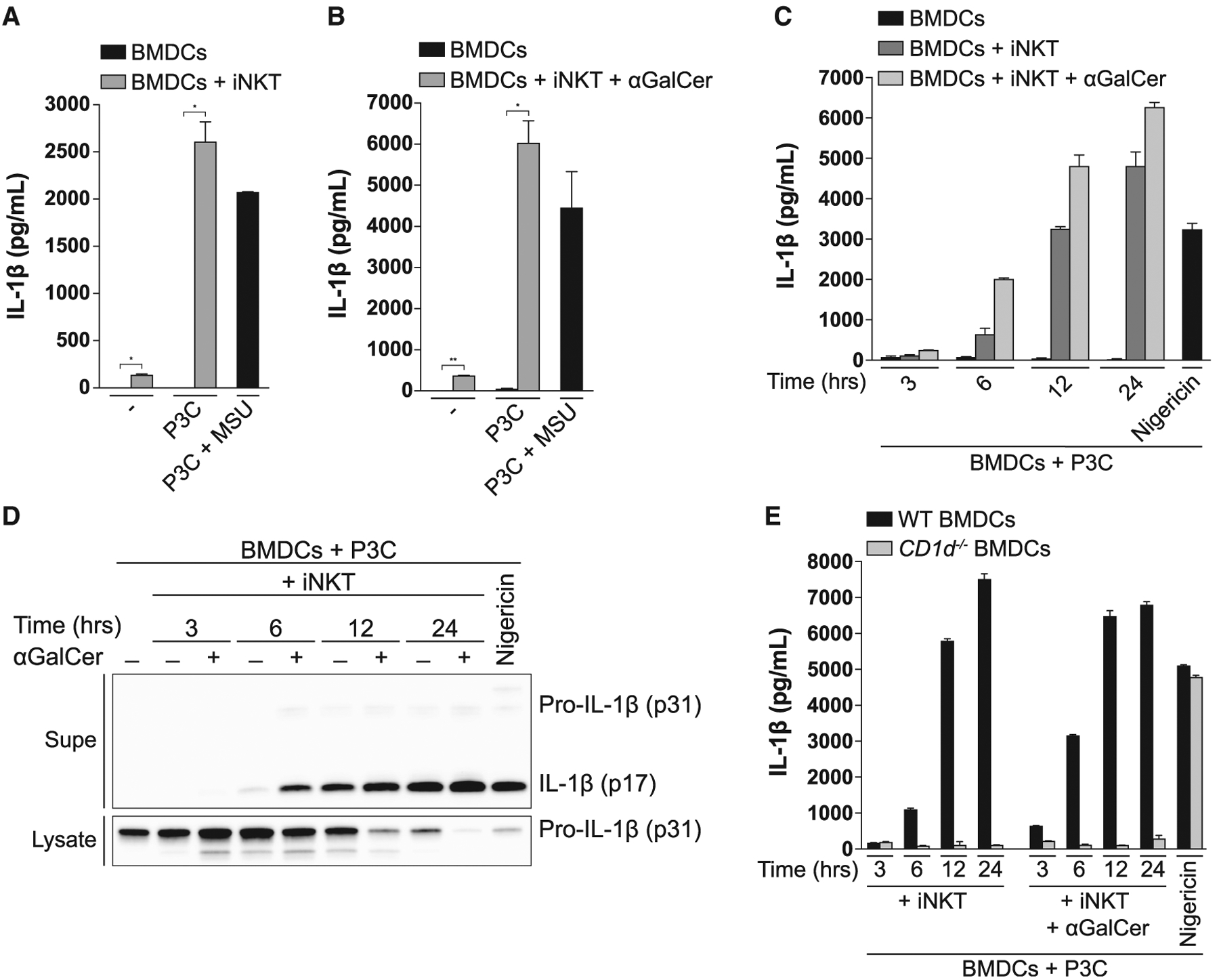
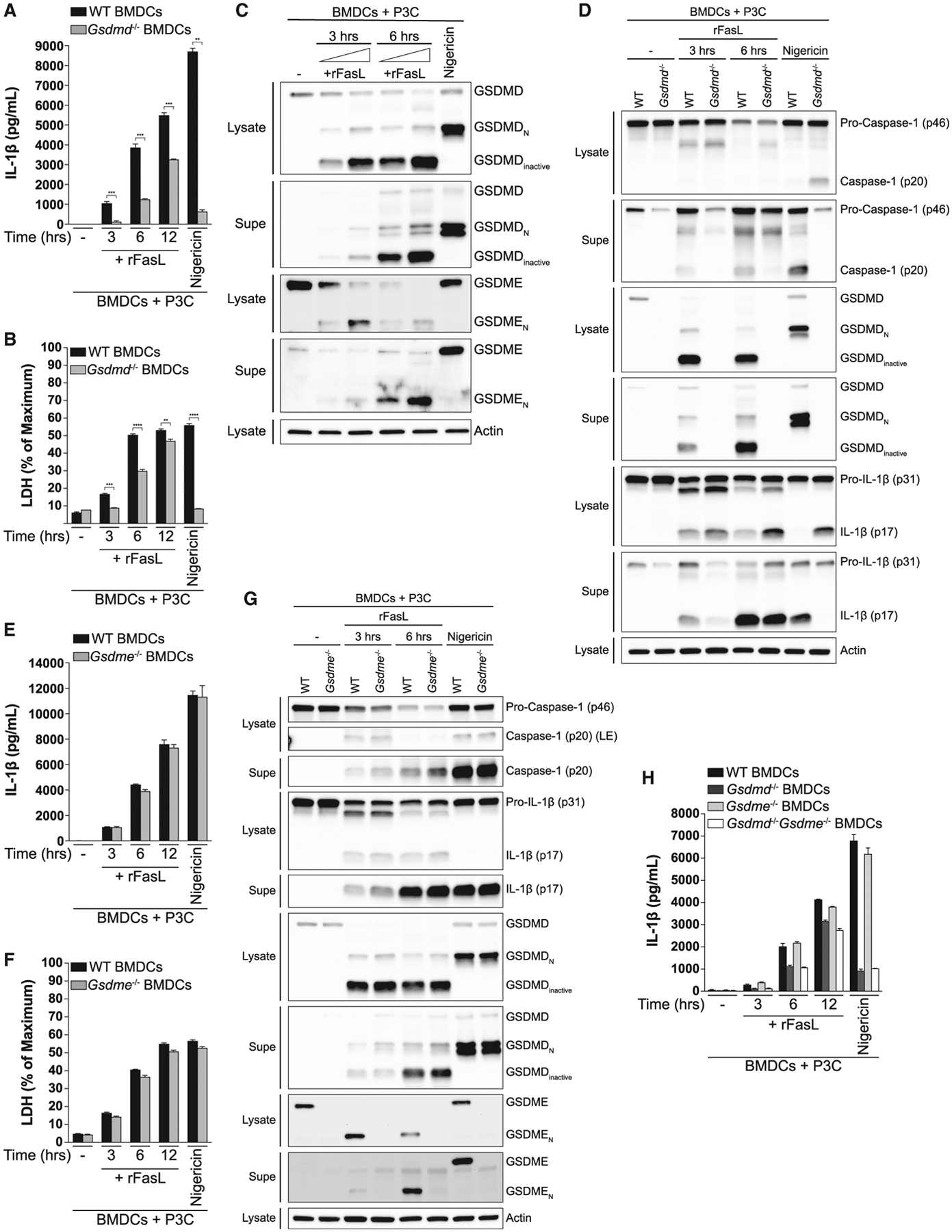
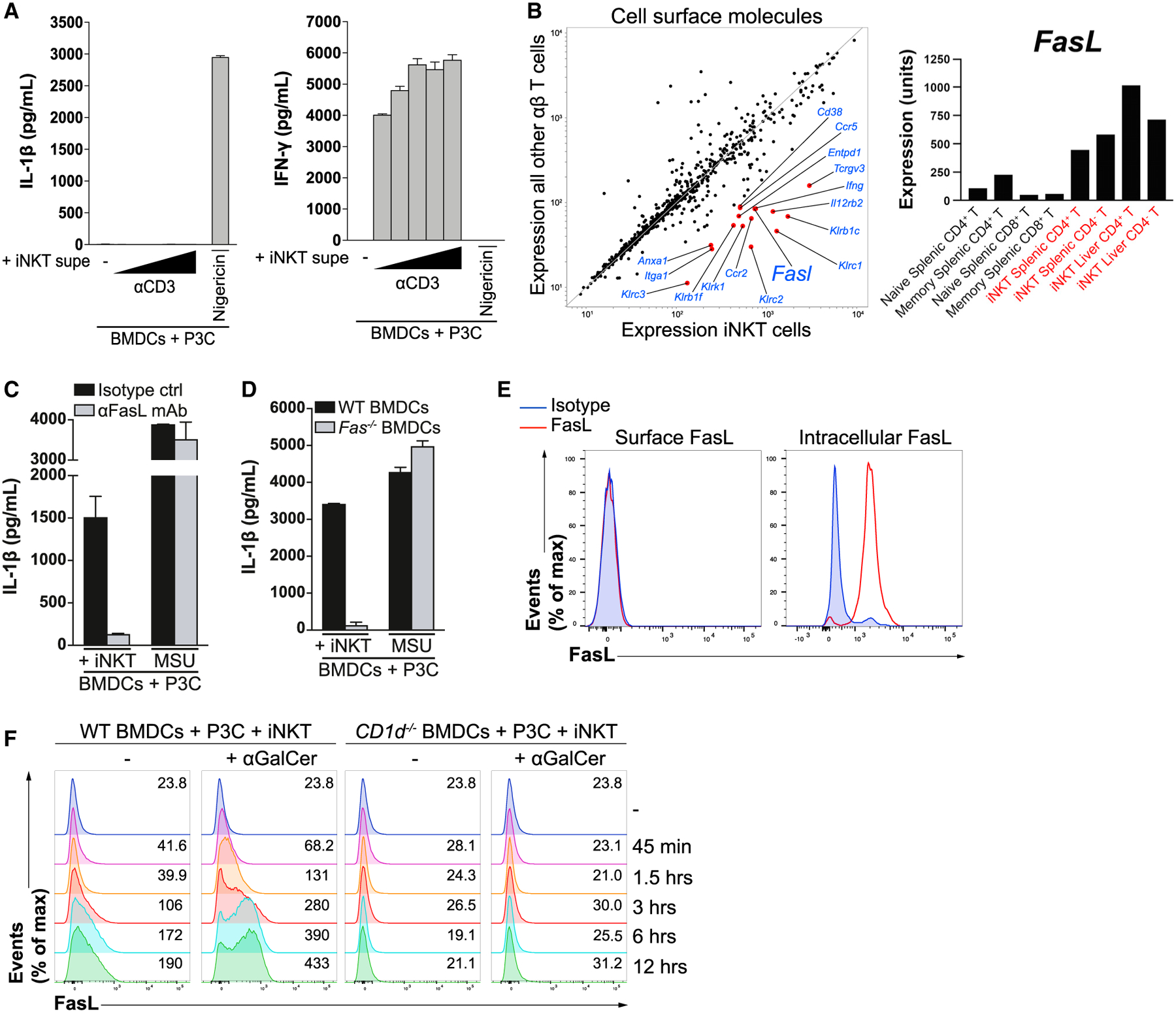
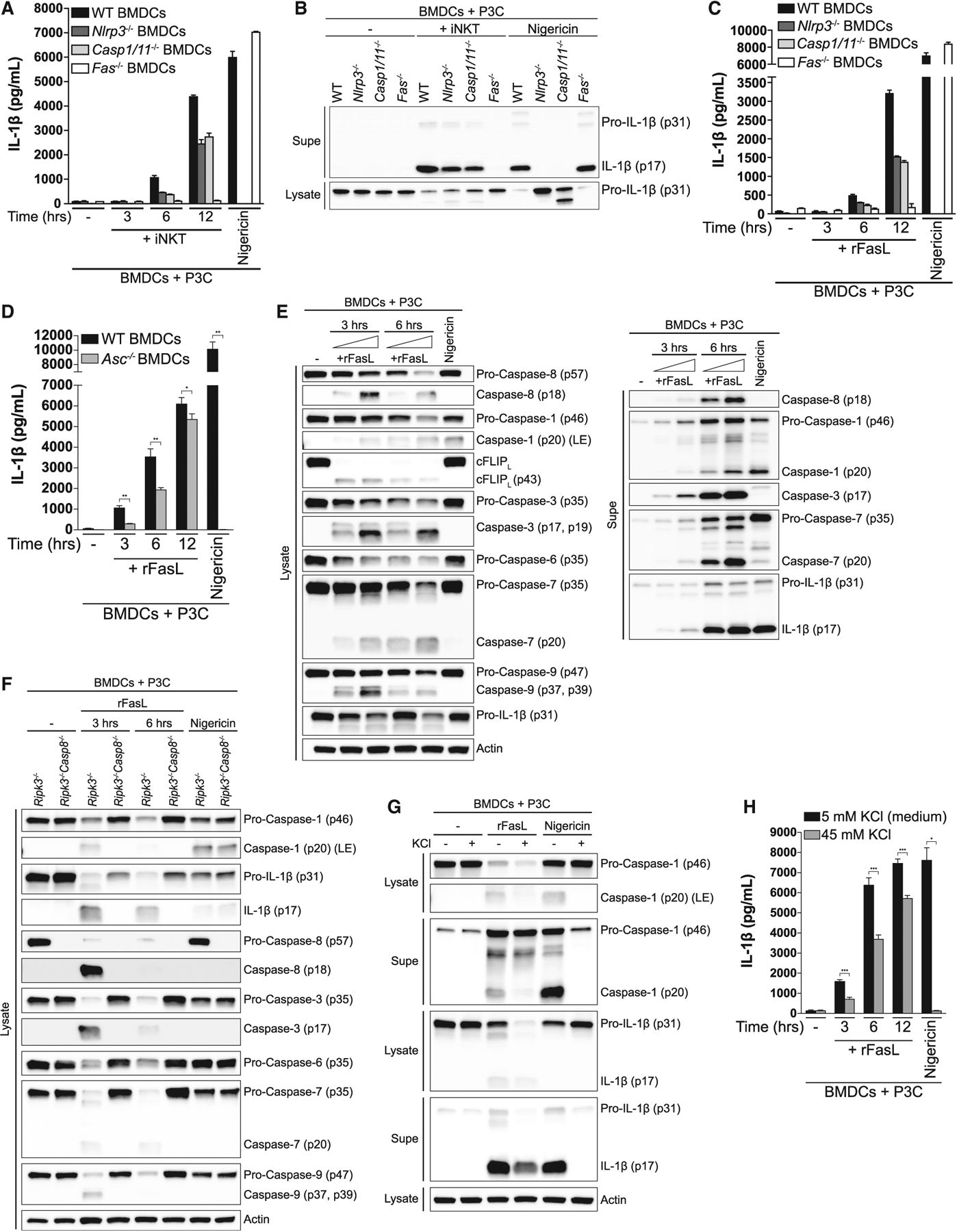
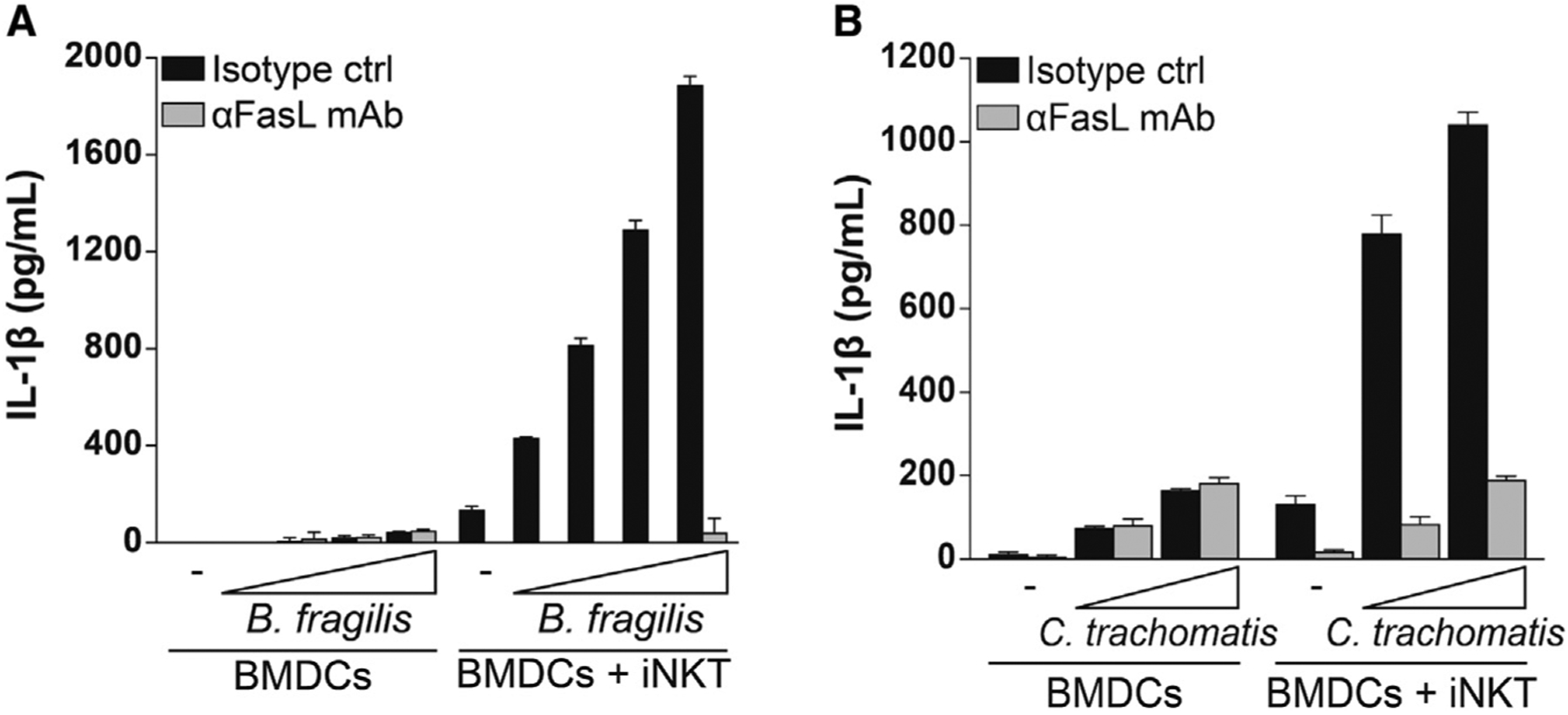
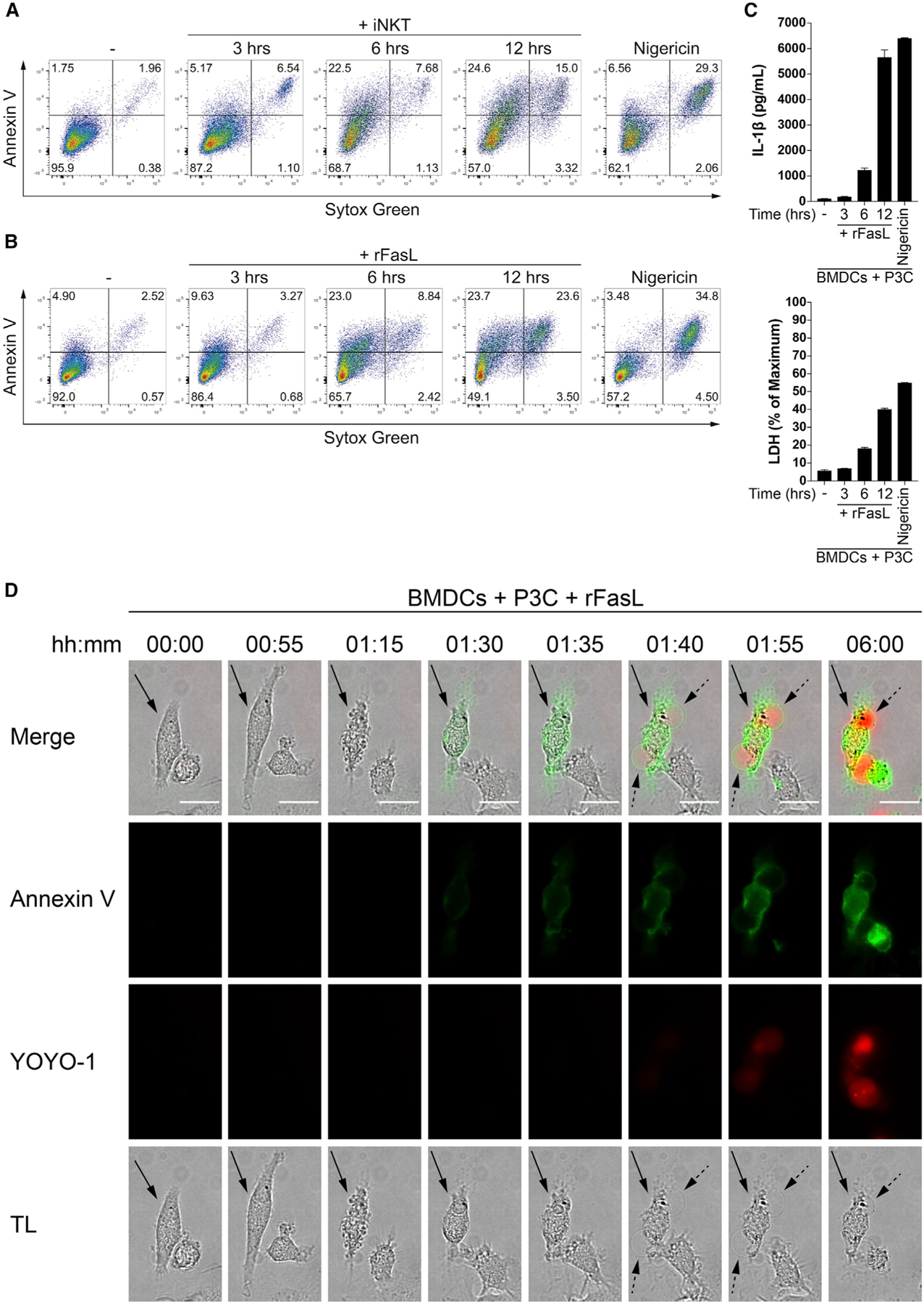
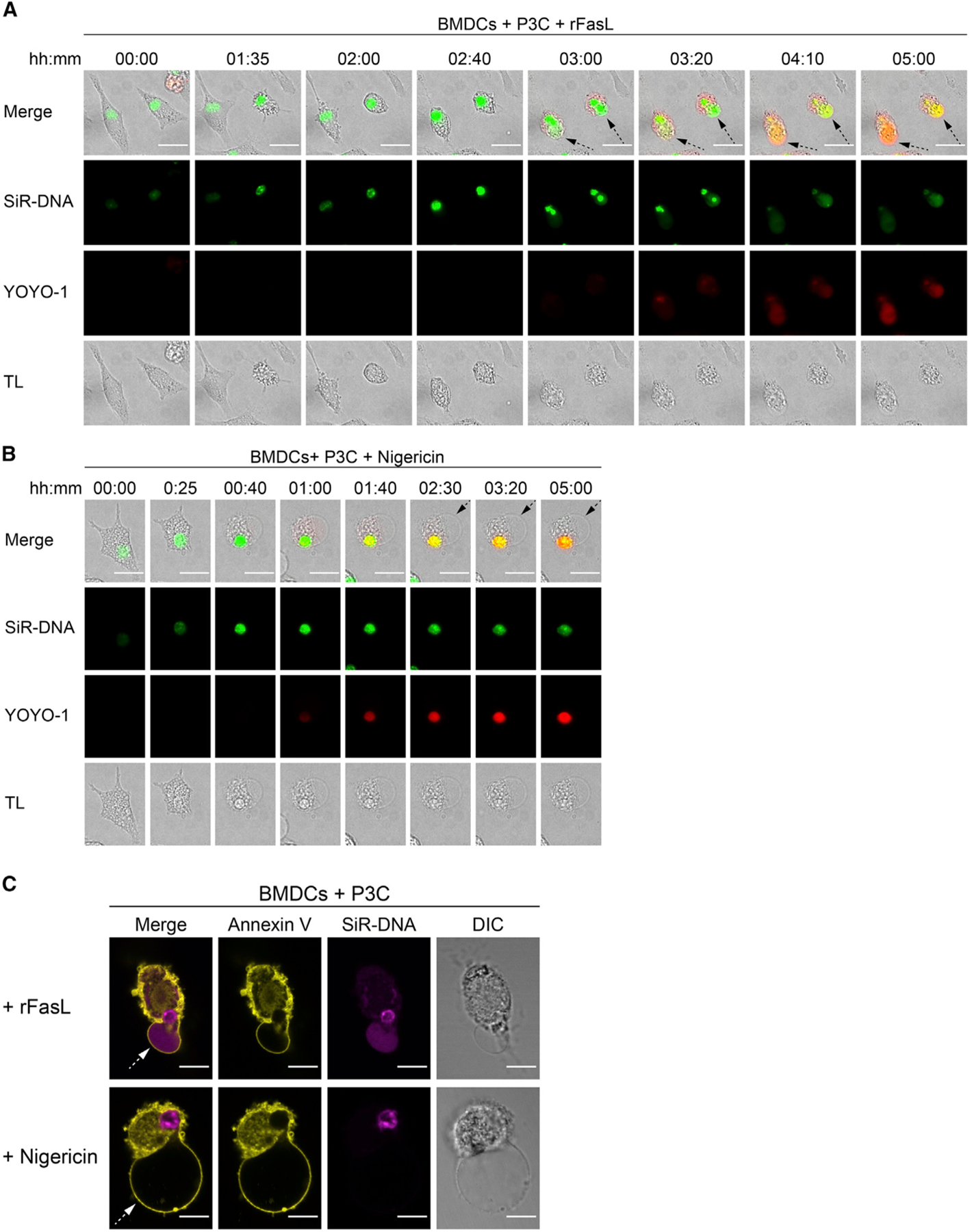
Interleukin-1β (IL-1β) is a key orchestrator of anti-microbial immunity whose secretion is typically dependent on activation of inflammasomes. However, many pathogens have evolved strategies to evade inflammasome activation. Here we describe an alternative, two-cell model for IL-1β release where invariant natural killer T (iNKT) cells use the death receptor pathway to instruct antigen-presenting cells to secrete IL-1β. Following cognate interactions with TLR-primed bone marrow-derived dendritic cells (BMDCs), iNKT cells rapidly translocate intracellular Fas ligand to the surface to engage Fas on BMDCs. Fas ligation activates a caspase-8-dependent signaling cascade in BMDCs that drives IL-1β release largely independent of inflammasomes. The apoptotic program initiated by Fas ligation rapidly transitions into a pyroptosis-like form of cell death mediated by gasdermin D. Together, our findings support a two-cell model for IL-1β secretion that may supersede inflammasome activation when cytosolic triggers fail.
白细胞介素-1β(IL-1β)是抗微生物免疫的关键协调者,其分泌通常依赖于炎症小体的激活。然而,许多病原体已经进化出了逃避炎症小体激活的策略。在这里,我们描述了一种替代的、双细胞模型,用于 IL-1β 的释放,其中不变自然杀伤 T(iNKT)细胞使用死亡受体途径来指示抗原呈递细胞分泌 IL-1β。在与 TLR 预激活的骨髓来源树突状细胞(BMDC)的同源相互作用后,iNKT 细胞迅速将细胞内 Fas 配体转位到表面,以与 BMDC 上的 Fas 结合。Fas 结合激活了 BMDC 中 caspase-8 依赖性信号级联反应,导致 IL-1β 的释放,在很大程度上独立于炎症小体。由 Fas 结合引发的凋亡程序迅速转变为由 GSDMD 介导的类细胞焦亡形式的细胞死亡。总之,我们的研究结果支持一种双细胞模型,用于 IL-1β 的分泌,当细胞溶质触发失败时,该模型可能会取代炎症小体的激活。