Crawford Lindsey B, Tempel Rebecca, Streblow Daniel N, Yurochko Andrew D, Goodrum Felicia D, Nelson Jay A, Caposio Patrizia
Vaccine and Gene Therapy Institute, Oregon Health & Science University, Beaverton, OR 97006, USA.
Department of Microbiology and Immunology, Louisiana State University Health Sciences Center, Shreveport, LA 71130, USA.
Microorganisms. 2020 Apr 6;8(4):525. doi: 10.3390/microorganisms8040525.
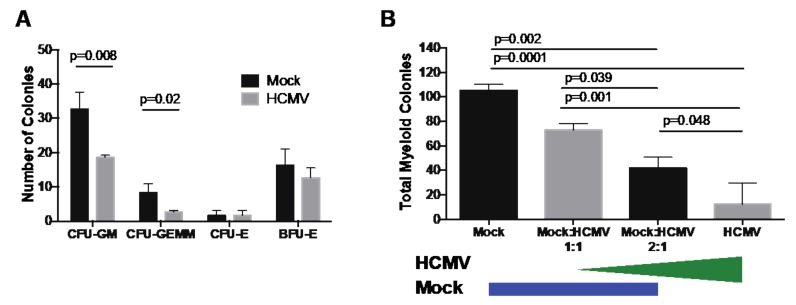
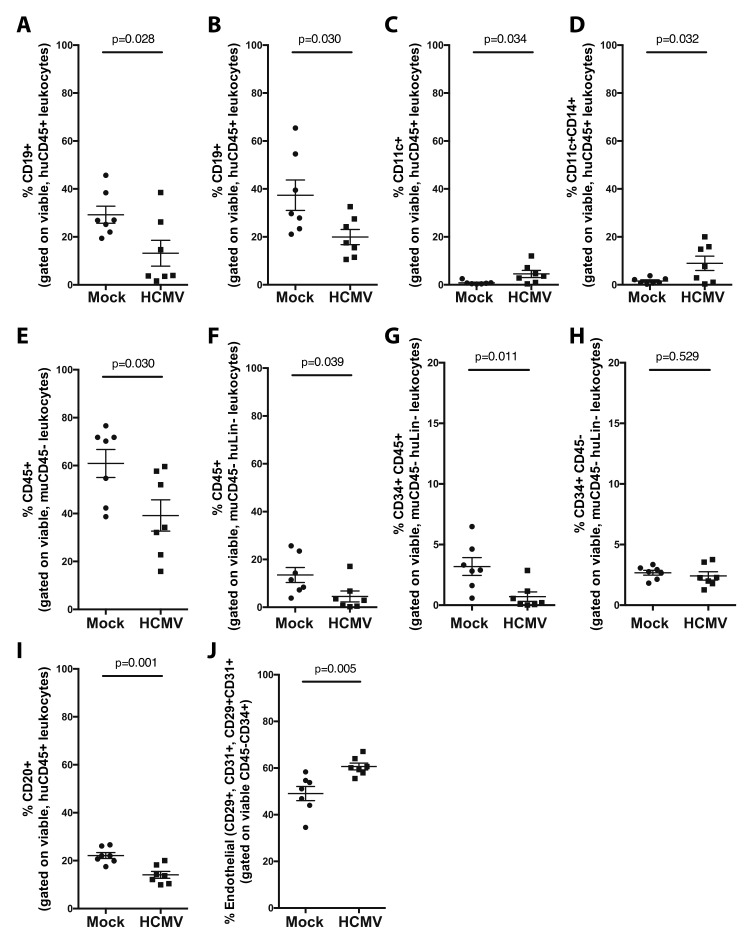
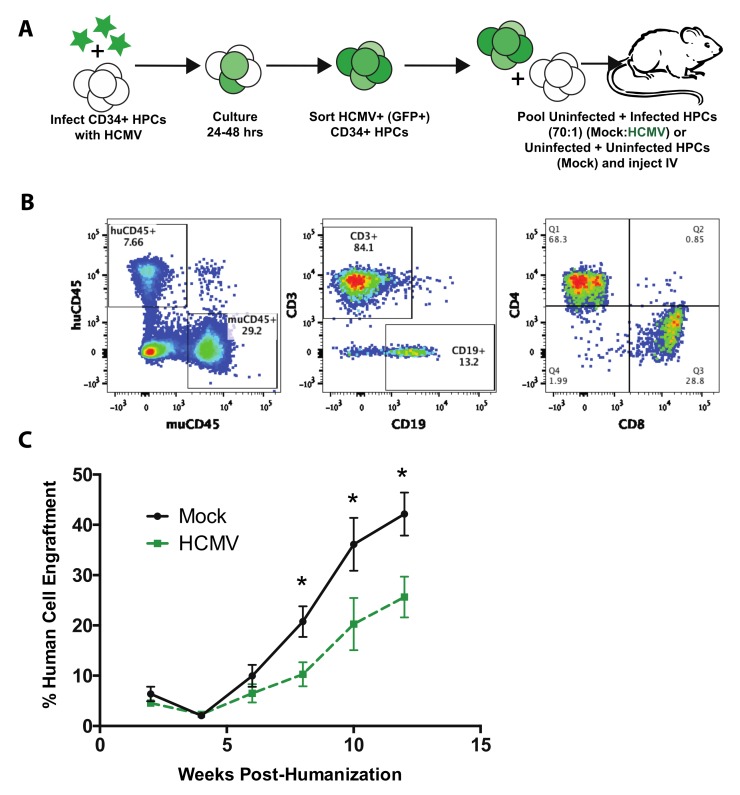
Human cytomegalovirus (HCMV) infection is a serious complication in hematopoietic stem cell transplant (HSCT) recipients due to virus-induced myelosuppression and impairment of stem cell engraftment. Despite the clear clinical link between myelosuppression and HCMV infection, little is known about the mechanism(s) by which the virus inhibits normal hematopoiesis because of the strict species specificity and the lack of surrogate animal models. In this study, we developed a novel humanized mouse model system that recapitulates the HCMV-mediated engraftment failure after hematopoietic cell transplantation. We observed significant alterations in the hematopoietic populations in peripheral lymphoid tissues following engraftment of a subset of HCMV CD34 hematopoietic progenitor cells (HPCs) within the transplant, suggesting that a small proportion of HCMV-infected CD34 HPCs can profoundly affect HPC differentiation in the bone marrow microenvironment. This model will be instrumental to gain insight into the fundamental mechanisms of HCMV myelosuppression after HSCT and provides a platform to assess novel treatment strategies.
人巨细胞病毒(HCMV)感染是造血干细胞移植(HSCT)受者的一种严重并发症,原因是病毒诱导的骨髓抑制和干细胞植入受损。尽管骨髓抑制与HCMV感染之间存在明确的临床联系,但由于严格的物种特异性和缺乏替代动物模型,对于该病毒抑制正常造血的机制知之甚少。在本研究中,我们开发了一种新型人源化小鼠模型系统,该系统概括了造血细胞移植后HCMV介导的植入失败。我们观察到移植内一部分HCMV CD34造血祖细胞(HPCs)植入后,外周淋巴组织中的造血群体发生了显著变化,这表明一小部分受HCMV感染的CD34 HPCs可深刻影响骨髓微环境中HPC的分化。该模型将有助于深入了解HSCT后HCMV骨髓抑制的基本机制,并提供一个评估新型治疗策略的平台。