DeFoor Mikalyn T, Chung Yunmi, Zadinsky Julie K, Dowling Jeffrey, Sams Richard W
School of Medicine, Medical College of Georgia at Augusta University, Augusta, GA, 30909, USA.
Institute of Public and Preventative Health, Augusta University, Augusta, GA, 30909, USA.
BMC Med Ethics. 2020 Apr 8;21(1):26. doi: 10.1186/s12910-020-00468-4.
There is continued need for enhanced medical ethics education across the United States. In an effort to guide medical ethics education reform, we report the first interprofessional survey of a cohort of graduate medical, nursing and allied health professional students that examined perceived student need for more formalized medical ethics education and assessed preferences for teaching methods in a graduate level medical ethics curriculum.
In January 2018, following the successful implementation of a peer-led, grassroots medical ethics curriculum, student leaders under faculty guidance conducted a cross-sectional survey with 562 of 1357 responses received (41% overall response rate) among students enrolled in the School of Medicine, College of Nursing, Doctor of Physical Therapy and BS/(D) MD Professional Scholars programs at The Medical College of Georgia at Augusta University. An in person or web-based questionnaire was designed to measure perceived need for a more in-depth medical ethics curriculum.
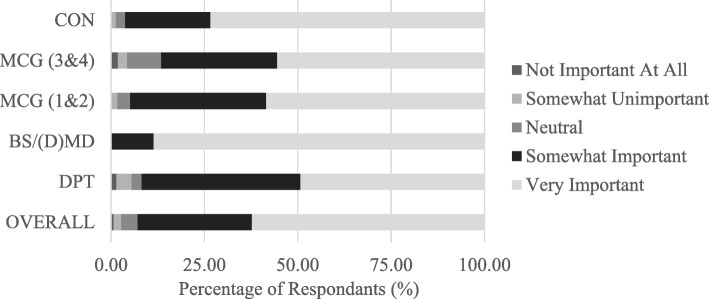
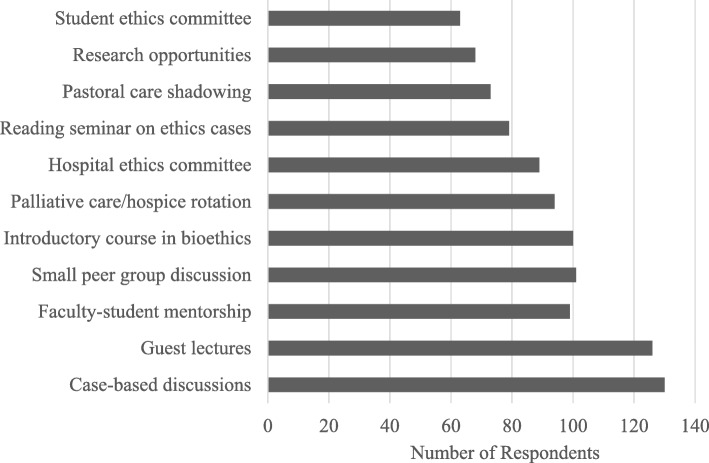
The majority of respondents were female (333, 59.3%), white (326, 58.0%) and mid-20s in age (340, 60.5%). Almost half of respondents (47%) reported no prior medical ethics exposure or training in their previous educational experience, while 60% of students across all degree programs reported an interest in more medical ethics education and 92% noted that an understanding of medical ethics was important to their future career. Over a quarter of students (28%) were interested in pursuing graduate-level training in medical ethics, with case-based discussions, small group peer settings and ethics guest lectures being the most desired teaching methods.
The future physician, nursing and physical therapist workforce in our medical community demonstrated an unmet need and strong interest for more formal medical ethics education within their current coursework. Grassroots student-driven curricular development and leadership in medical ethics can positively impact medical education. Subsequent integration of interprofessional training in medical ethics may serve as a vital curricular approach to improving the training of ethically competent healthcare professionals and overcoming the current hierarchical clinical silos.
美国各地对加强医学伦理教育的需求持续存在。为了指导医学伦理教育改革,我们报告了对一批医学、护理和联合健康专业研究生进行的首次跨专业调查,该调查考察了学生对更正规医学伦理教育的需求,并评估了研究生层次医学伦理课程中教学方法的偏好。
2018年1月,在成功实施了由同伴主导的基层医学伦理课程之后,学生领袖在教师指导下对奥古斯塔大学乔治亚医学院的医学院、护理学院、物理治疗博士和理学学士/(医学博士)专业学者项目的学生进行了横断面调查,共收到1357份回复中的562份(总体回复率为41%)。设计了一份面对面或基于网络的问卷,以衡量对更深入医学伦理课程的需求。
大多数受访者为女性(333人,59.3%),白人(326人,58.0%),年龄在25岁左右(340人,60.5%)。近一半的受访者(47%)表示在之前的教育经历中没有接受过医学伦理方面的接触或培训,而所有学位项目中60%的学生表示有兴趣接受更多的医学伦理教育,92%的学生指出对医学伦理的理解对他们未来的职业很重要。超过四分之一的学生(28%)有兴趣攻读医学伦理方面的研究生课程,基于案例的讨论、小组同伴学习和伦理客座讲座是最受欢迎的教学方法。
我们医疗社区未来的医生、护士和物理治疗师群体在当前课程中对更正规的医学伦理教育表现出未得到满足的需求和浓厚兴趣。由学生推动的基层医学伦理课程开发和领导力可以对医学教育产生积极影响。随后将医学伦理的跨专业培训整合进来,可能成为改善具有伦理能力的医疗专业人员培训并打破当前等级分明的临床壁垒的重要课程方法。