Department of Knee Surgery, Henan LuoYang Orthopedic-Traumatological Hospital(Henan Orthopedic Hospital), Qiming Southern Road, Luoyang, Henan, 471002, P.R. China.
Sci Rep. 2020 Apr 8;10(1):6044. doi: 10.1038/s41598-020-63219-w.
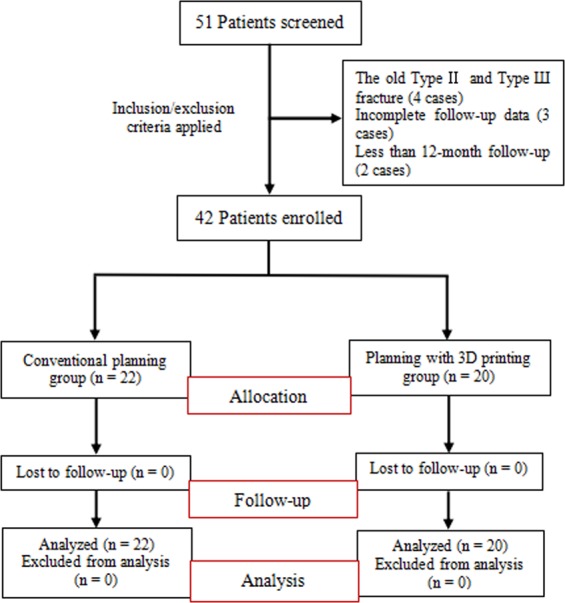
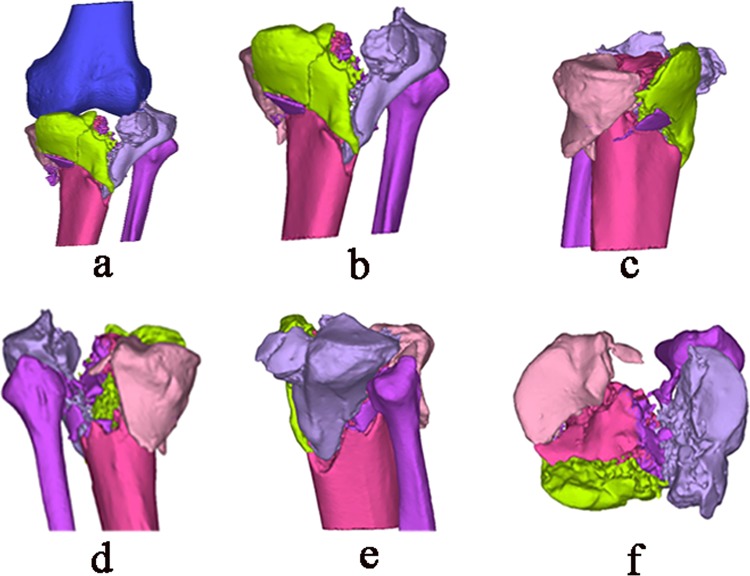
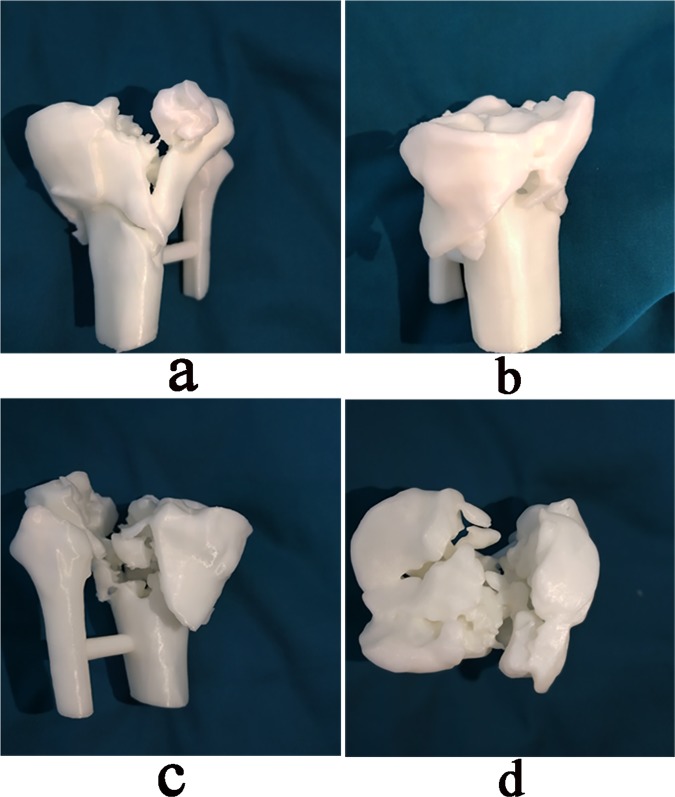
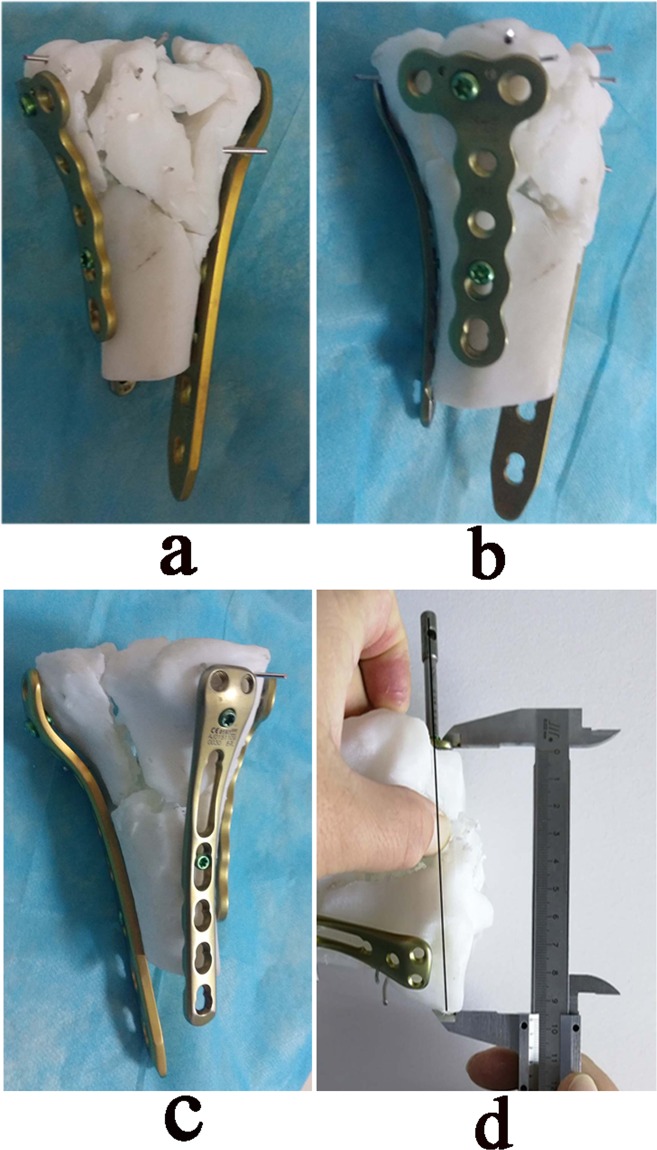
To investigate the clinical efficacy of pre-operative simulation using a three-dimensional (3D) printing model for surgical treatment of old and complex tibial plateau fractures. Forty-two patients with old and complex tibial plateau fractures were retrospectively reviewed from January 2014 to January 2018, which were divided into a conventional planning group (n = 22) and a planning with 3D printing group (n = 20). In the planning with 3D printing group, preoperative equal-ratio fracture models prepared using the 3D printing technique were used to perform pre-operative simulation and guide the real surgical operation. In the conventional planning group, the operation was performed based on pre-operative computed tomography (CT) images. Surgery duration, blood loss and the number of fluoroscopy during operations were recorded. During follow-up, the quality of fracture reduction and complications were also recorded. Knee functions were evaluated using the hospital for special surgery (HSS) scoring system. The operation time, blood loss and the number of fluoroscopy during operation in the planning with 3D printing group were less than that in the conventional planning group (P < 0.01). All patients were followed up for mean of 24.38 ± 7.62 months. The rate of excellent fracture reduction in the planning with 3D printing group and conventional planning group was 75% and 45.45%, respectively (P = 0.05). The complication rate was 15% in the planning with 3D printing group and 31.82% in the conventional planning group. At the final follow-up evaluation, the mean HSS score was 86.05 ± 7.67 in the planning with 3D printing group and 79.09 ± 6.75 in the conventional planning group (P = 0.003). The rate of excellent results in the planning with 3D printing group was 70% and in the conventional planning group was 45.45% (P = 0.083). In conclusion, pre-operative simulation using a 3D printing model may be helpful for the treatment of old and complex tibial plateau fractures, which may be conducive to the pre-operative planning and to making the surgical procedure accurate and personalized. However, its clinical effectiveness need to be further assessed by a prospective randomized-controlled study.
为了探讨术前使用三维(3D)打印模型模拟手术治疗陈旧性复杂胫骨平台骨折的临床疗效。回顾性分析 2014 年 1 月至 2018 年 1 月收治的 42 例陈旧性复杂胫骨平台骨折患者,分为常规规划组(n=22)和规划加 3D 打印组(n=20)。规划加 3D 打印组采用 3D 打印技术术前制作等比例骨折模型,进行术前模拟,指导实际手术操作。常规规划组根据术前 CT 图像进行手术。记录手术时间、术中出血量和透视次数。随访时记录骨折复位质量和并发症。采用美国特种外科医院(HSS)评分系统评价膝关节功能。规划加 3D 打印组的手术时间、术中出血量和透视次数均少于常规规划组(P<0.01)。所有患者均获得平均 24.38±7.62 个月随访。规划加 3D 打印组和常规规划组的优良骨折复位率分别为 75%和 45.45%(P=0.05)。规划加 3D 打印组并发症发生率为 15%,常规规划组为 31.82%。末次随访时,规划加 3D 打印组 HSS 评分平均为 86.05±7.67,常规规划组为 79.09±6.75(P=0.003)。规划加 3D 打印组优良率为 70%,常规规划组为 45.45%(P=0.083)。结论:术前使用 3D 打印模型模拟治疗陈旧性复杂胫骨平台骨折可能有助于术前规划,使手术准确、个体化。但还需要前瞻性随机对照研究进一步评估其临床疗效。