Zhu Zhenbang, Zhang Hui, Zhang Xiaoxiao, He Sheng, Dong Wenjuan, Wang Xiaoying, Chen Yaosheng, Liu Xiaohong, Guo Chunhe
State Key Laboratory of Biocontrol, School of Life Sciences, Sun Yat-sen University, Guangzhou, China.
Front Microbiol. 2020 Mar 25;11:501. doi: 10.3389/fmicb.2020.00501. eCollection 2020.
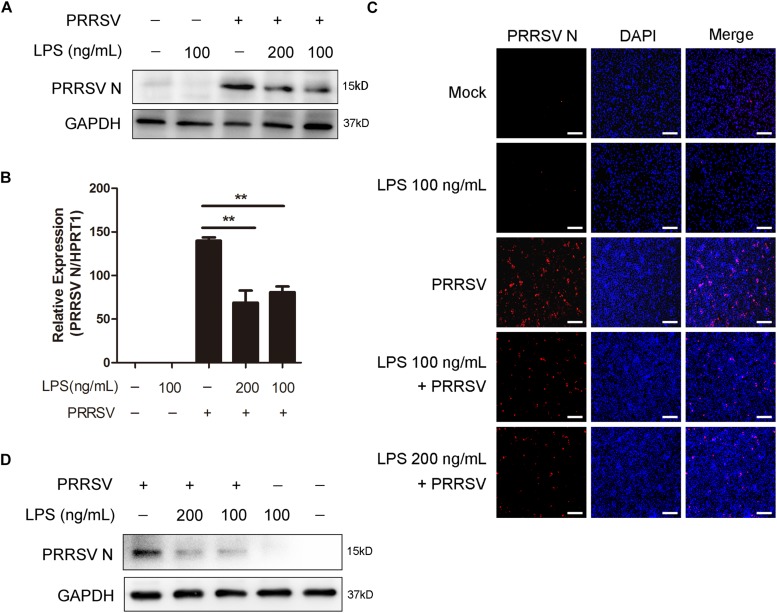
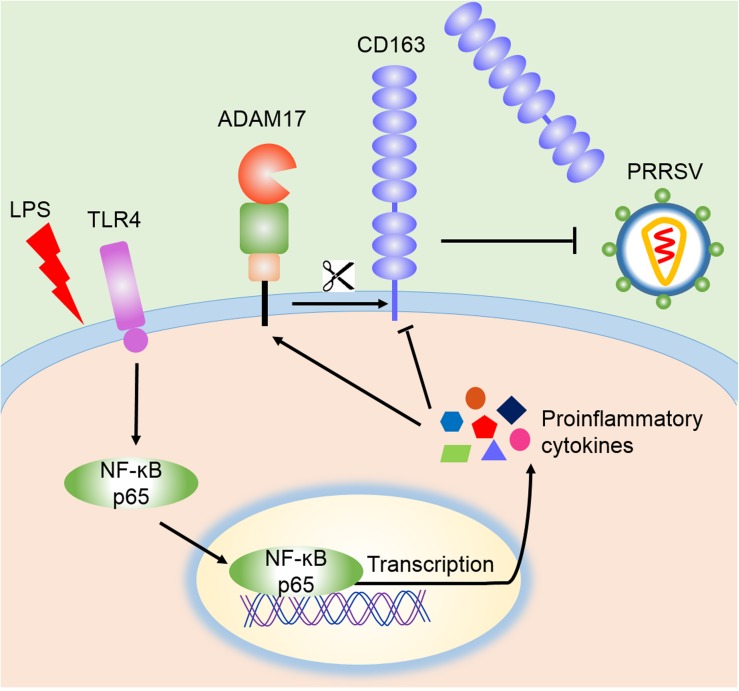
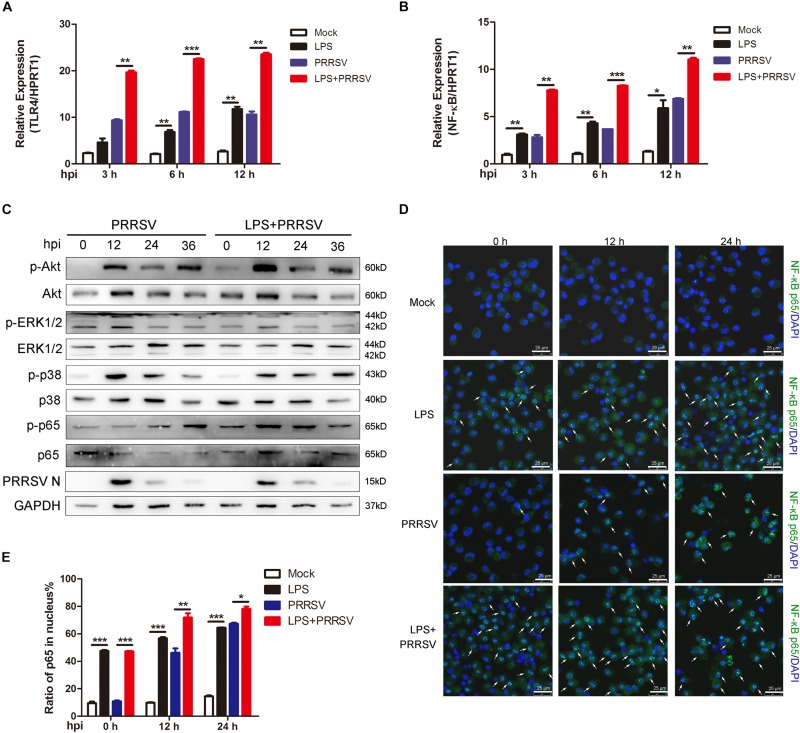
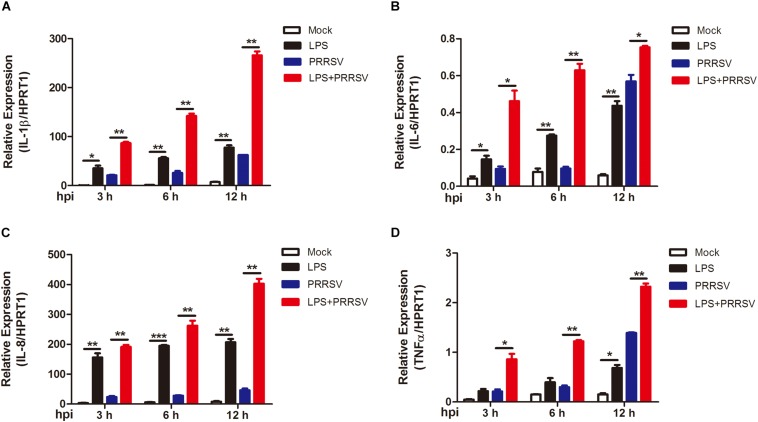
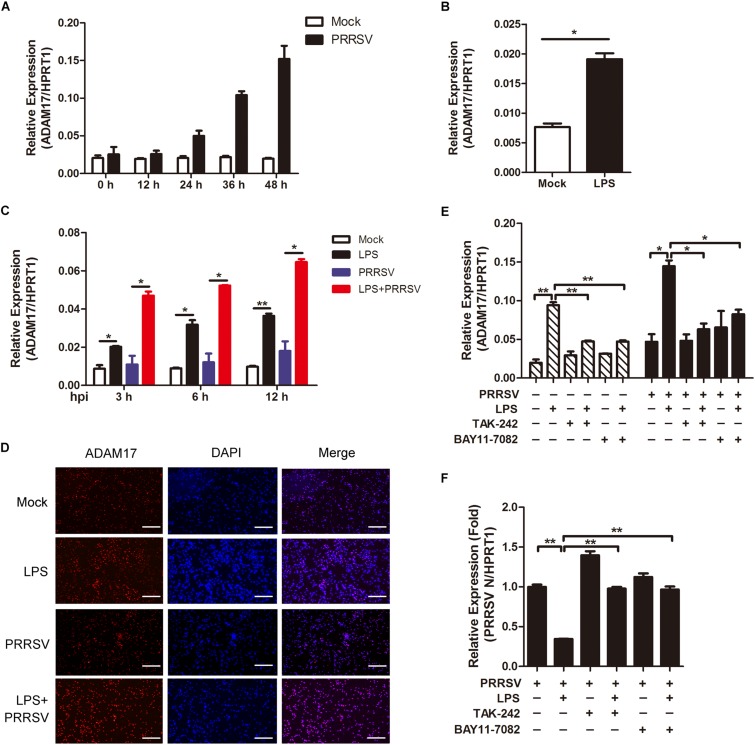
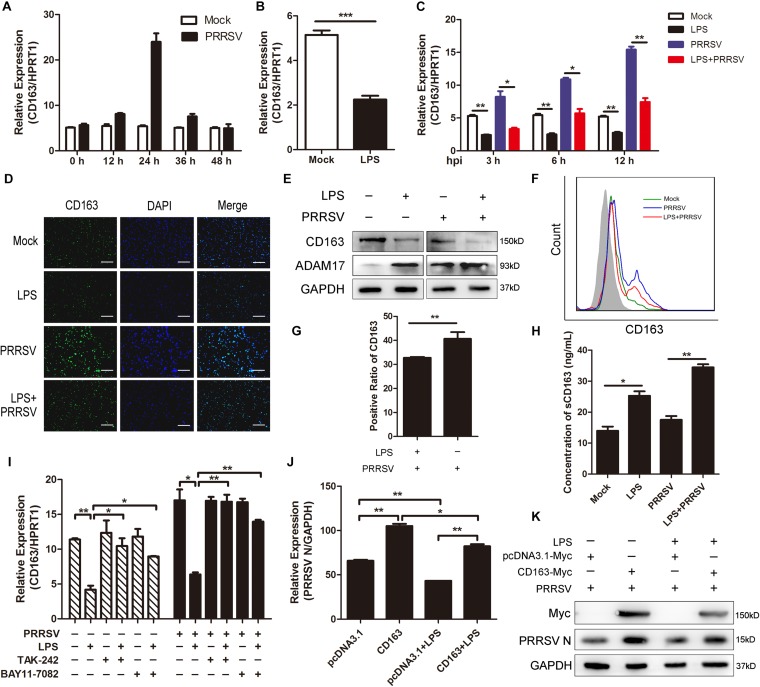
Porcine reproductive and respiratory syndrome virus (PRRSV) has been recognized to induce proinflammatory cytokine production and modulate the host interferon (IFN) system. Proinflammatory cytokines and type I IFNs contribute to the prevention of viral infection. Lipopolysaccharide (LPS), a specific agonist to Toll-like receptor 4 (TLR4), provokes signal transduction and activates immune response and . Here we identified LPS inhibited PRRSV infection in porcine alveolar macrophages (PAMs) and in Marc-145 cells. To investigate the possible mechanism, we found TLR4-NF-κB pathway was obviously activated in LPS-treated PAMs at the early stage of PRRSV infection. As a result, the expression of proinflammatory cytokines was strongly induced following LPS and PRRSV co-treatment. Due to the enhanced proinflammatory response, CD163 expression was significantly reduced and a disintegrin and metalloproteinase 17 was activated, which promotes the cleavage of membrane CD163. Ultimately, CD163 down-regulation led to the suppression of PRRSV replication. Our data demonstrate that LPS has an impact on PRRSV infection via inflammation response, which provides a new insight of inflammation-mediated antiviral immunity and a new strategy to control PRRSV infection.
猪繁殖与呼吸综合征病毒(PRRSV)已被证实可诱导促炎细胞因子的产生并调节宿主干扰素(IFN)系统。促炎细胞因子和I型干扰素有助于预防病毒感染。脂多糖(LPS)是Toll样受体4(TLR4)的特异性激动剂,可引发信号转导并激活免疫反应。在此,我们发现LPS可抑制猪肺泡巨噬细胞(PAM)和Marc-145细胞中的PRRSV感染。为了探究其可能的机制,我们发现在PRRSV感染早期,LPS处理的PAM中TLR4-NF-κB通路明显被激活。因此,LPS和PRRSV共同处理后,促炎细胞因子的表达被强烈诱导。由于促炎反应增强,CD163的表达显著降低,解整合素和金属蛋白酶17被激活,这促进了膜CD163的裂解。最终,CD163的下调导致PRRSV复制受到抑制。我们的数据表明,LPS通过炎症反应对PRRSV感染产生影响,这为炎症介导的抗病毒免疫提供了新的见解,并为控制PRRSV感染提供了新的策略。