Oh Seung-Hun, Jeong Yong-Woo, Choi Wankyu, Noh Jeong-Eun, Lee Suji, Kim Hyun-Sook, Song Jihwan
Department of Neurology, CHA Bundang Medical Center, CHA University, Seongnam, Gyeonggi-do, Republic of Korea.
CHA Stem Cell Institute, Department of Biomedical Science, CHA University, Seongnam, Gyeonggi-do, Republic of Korea.
Stem Cells Int. 2020 Mar 23;2020:4061516. doi: 10.1155/2020/4061516. eCollection 2020.
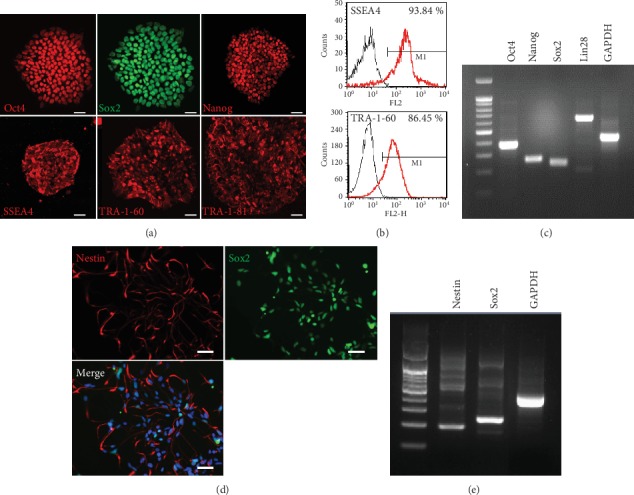
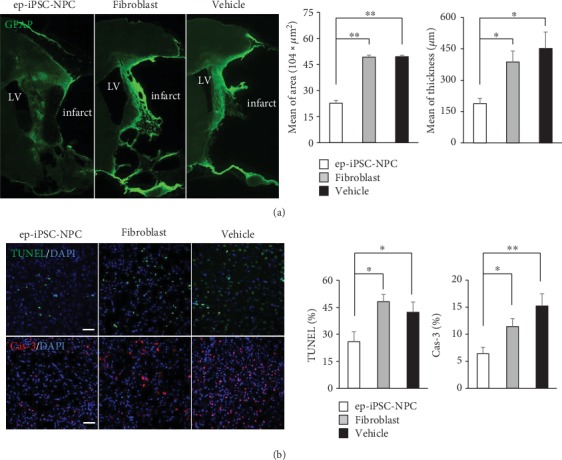
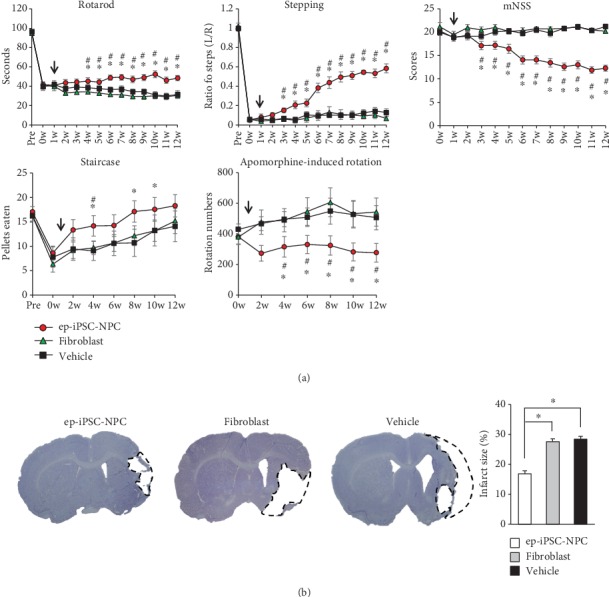
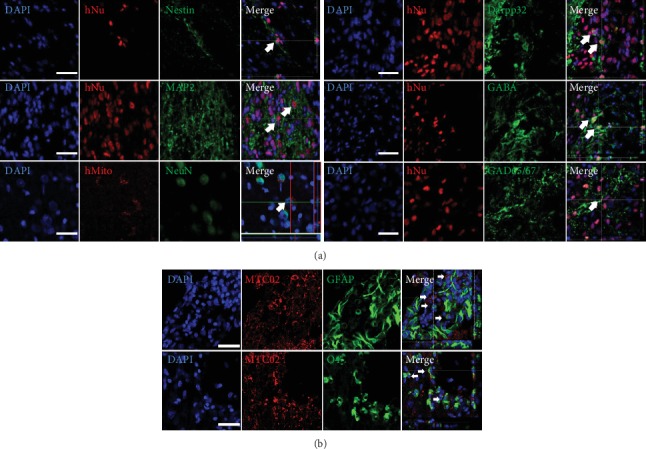
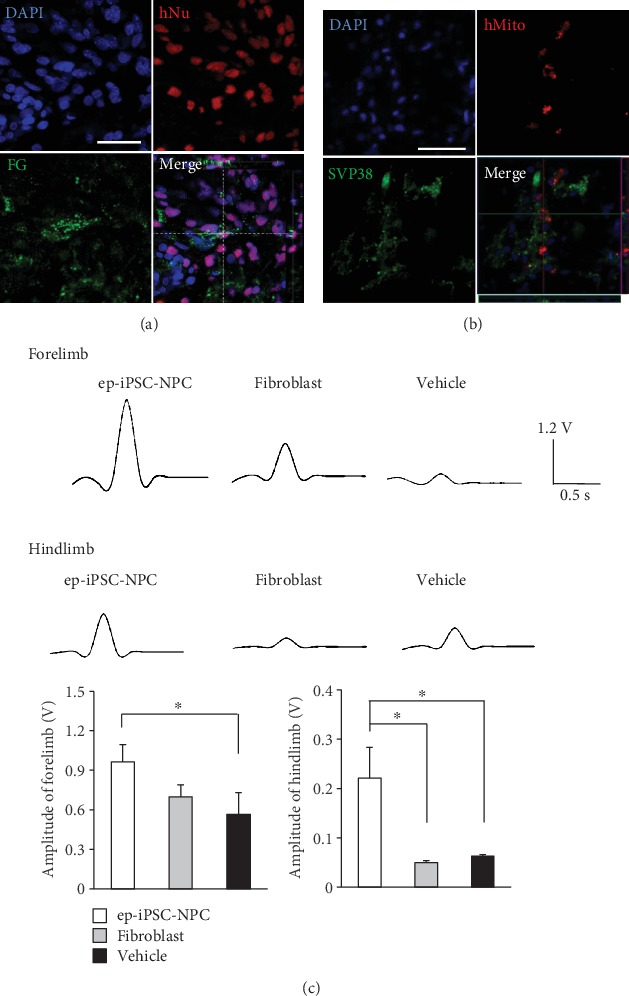
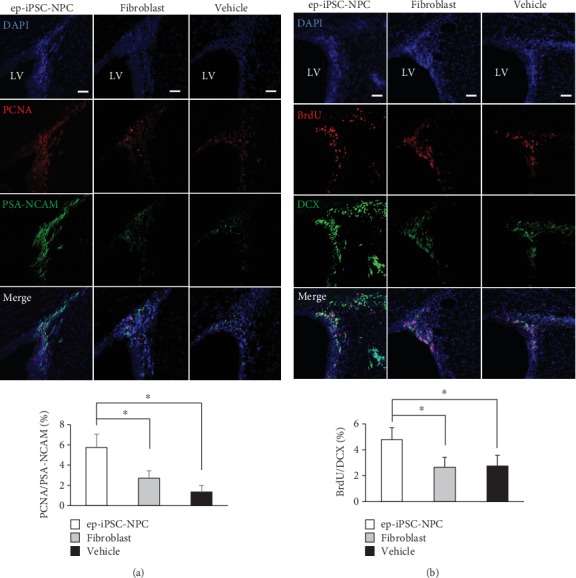
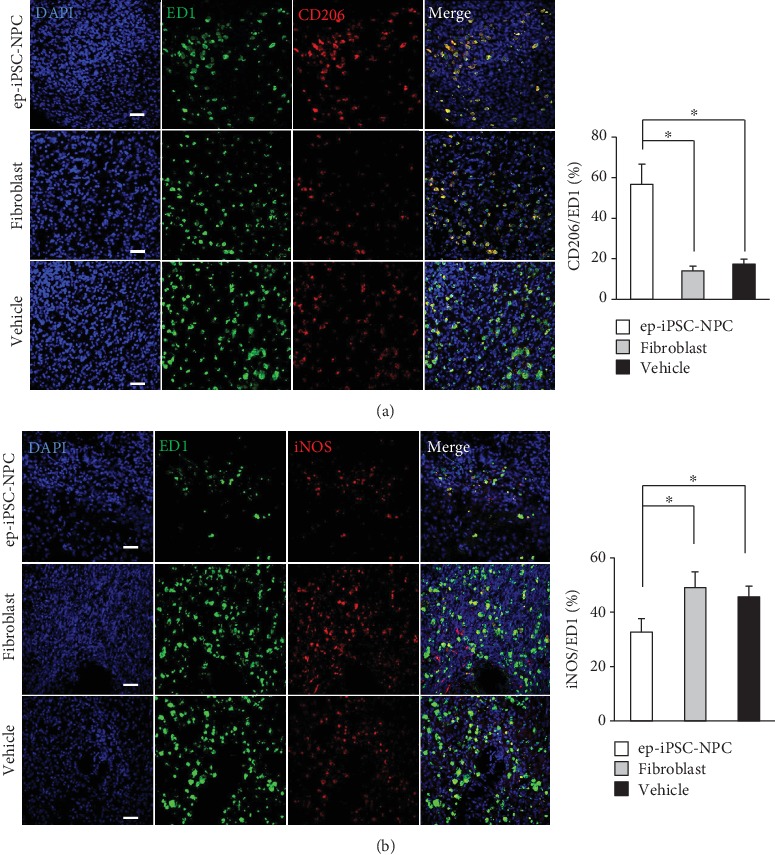
Stem cell therapy is a promising option for treating functional deficits in the stroke-damaged brain. Induced pluripotent stem cells (iPSCs) are attractive sources for cell therapy as they can be efficiently differentiated into neural lineages. Episomal plasmids (EPs) containing reprogramming factors can induce nonviral, integration-free iPSCs. Thus, iPSCs generated by an EP-based reprogramming technique (ep-iPSCs) have an advantage over gene-integrating iPSCs for clinical applications. However, there are few studies regarding the efficacy of ep-iPSCs. In this study, we investigated the therapeutic potential of intracerebral transplantation of neural precursor cells differentiated from ep-iPSCs (ep-iPSC-NPCs) in a rodent stroke model. The ep-iPSC-NPCs were transplanted intracerebrally in a peri-infarct area in a rodent stroke model. Rats transplanted with fibroblasts and vehicle were used as controls. The ep-iPSC-NPC-transplanted animals exhibited functional improvements in behavioral and electrophysiological tests. A small proportion of ep-iPSC-NPCs were detected up to 12 weeks after transplantation and were differentiated into both neuronal and glial lineages. In addition, transplanted cells promoted endogenous brain repair, presumably via increased subventricular zone neurogenesis, and reduced poststroke inflammation and glial scar formation. Taken together, these results strongly suggest that intracerebral transplantation of ep-iPSC-NPCs is a useful therapeutic option to treat clinical stroke through multimodal therapeutic mechanisms.
干细胞疗法是治疗中风损伤大脑功能缺陷的一种有前景的选择。诱导多能干细胞(iPSC)是细胞治疗的有吸引力的来源,因为它们可以有效地分化为神经谱系。含有重编程因子的附加体质粒(EP)可以诱导产生非病毒、无整合的iPSC。因此,基于EP的重编程技术产生的iPSC(ep-iPSC)在临床应用方面比基因整合型iPSC具有优势。然而,关于ep-iPSC疗效的研究很少。在本研究中,我们在啮齿动物中风模型中研究了由ep-iPSC分化而来的神经前体细胞(ep-iPSC-NPC)脑内移植的治疗潜力。将ep-iPSC-NPC脑内移植到啮齿动物中风模型的梗死灶周围区域。将移植成纤维细胞和赋形剂的大鼠用作对照。接受ep-iPSC-NPC移植的动物在行为和电生理测试中表现出功能改善。移植后长达12周仍可检测到一小部分ep-iPSC-NPC,并分化为神经元和胶质谱系。此外,移植细胞可能通过增加脑室下区神经发生促进内源性脑修复,并减少中风后炎症和胶质瘢痕形成。综上所述,这些结果强烈表明,ep-iPSC-NPC脑内移植是通过多模式治疗机制治疗临床中风的一种有用的治疗选择。