School of Public Health and Family Medicine, University of Cape Town, Cape Town, South Africa.
Int J Public Health. 2020 May;65(4):413-423. doi: 10.1007/s00038-020-01351-0. Epub 2020 Apr 9.
Modelling the potential impact of screening for chlamydia and gonorrhoea in youth and other populations in a resource-limited setting.
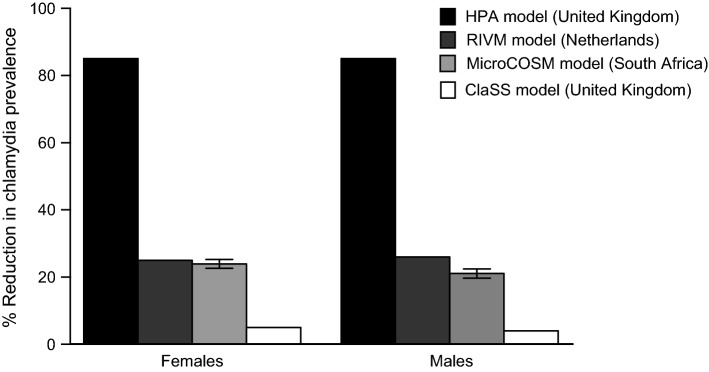
We extended an agent-based model of heterosexual chlamydia and gonorrhoea transmission in South Africa to investigate the impact of screening strategies in key populations including youth, patients in HIV care, pregnant women and female sex workers (FSWs). Additionally, we compared the modelled impact of a standardised screening programme to results obtained from other published mathematical models of chlamydia screening.
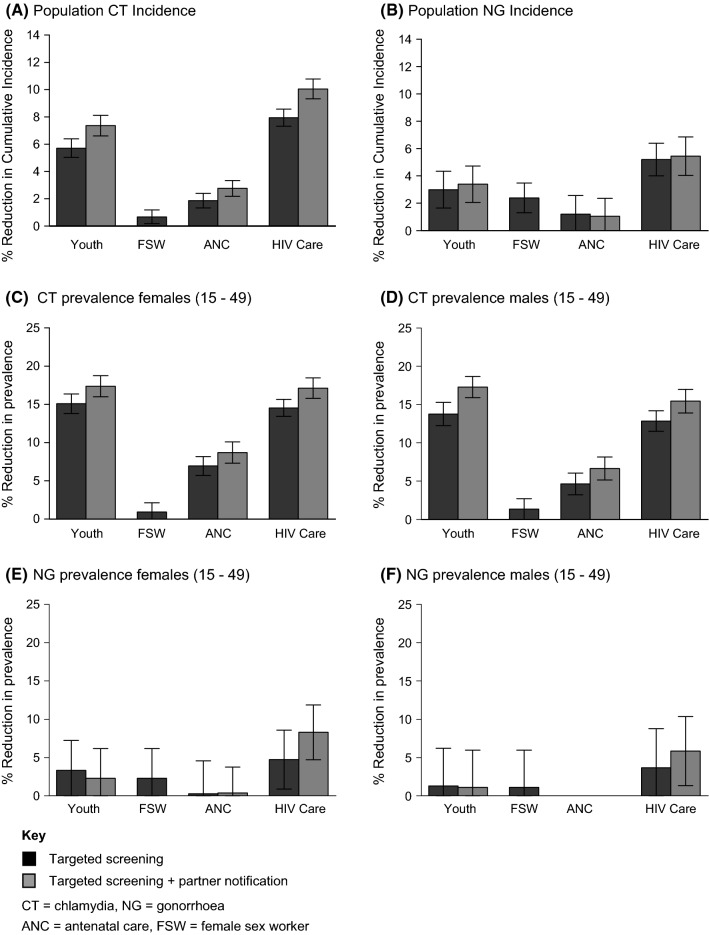
All strategies resulted in reductions in general and targeted population chlamydia and gonorrhoea transmission. Opportunistic screening of patients in youth and HIV care was shown to be the most effective, and FSW screening was shown to be the most efficient strategy. Differences between models could be attributed to differences in the modelled heterogeneity in sexual behaviour as well as differences in assumptions about immunity following chlamydia recovery.
Taking modelling assumptions into account, opportunistic chlamydia and gonorrhoea screening of youth and those in HIV care represents a viable intervention for reducing sexually transmitted infections in the South African population.
在资源有限的环境下,对青年和其他人群中沙眼衣原体和淋病筛查的潜在影响进行建模。
我们扩展了南非异性恋人群中沙眼衣原体和淋病传播的基于主体的模型,以调查在关键人群(包括青年、艾滋病毒感染者、孕妇和性工作者)中筛查策略的影响。此外,我们将标准化筛查方案的模型影响与其他已发表的沙眼衣原体筛查数学模型的结果进行了比较。
所有策略都导致一般人群和目标人群中沙眼衣原体和淋病传播的减少。对青年和艾滋病毒感染者中的患者进行机会性筛查被证明是最有效的策略,而对性工作者的筛查则是最有效的策略。模型之间的差异可以归因于性行为异质性的建模差异以及感染后获得免疫力的假设差异。
考虑到建模假设,对青年和艾滋病毒感染者中的沙眼衣原体和淋病进行机会性筛查是减少南非人群中性传播感染的可行干预措施。