Gastroenterology & Hepatology, Faculty of Medicine, Saitama Medical University, Saitama, Japan.
PLoS One. 2020 Apr 10;15(4):e0231427. doi: 10.1371/journal.pone.0231427. eCollection 2020.
This study sought to clarify the usefulness of lenvatinib for patients with unresectable hepatocellular carcinoma (HCC).
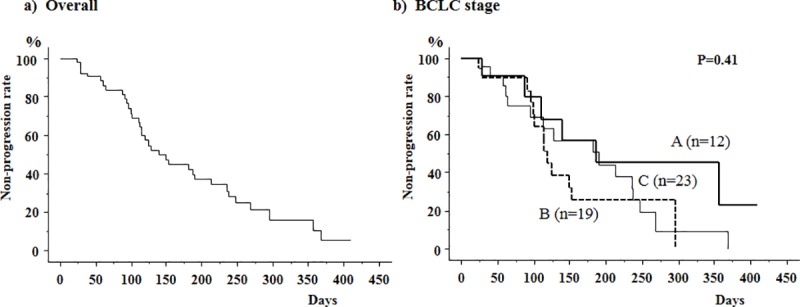
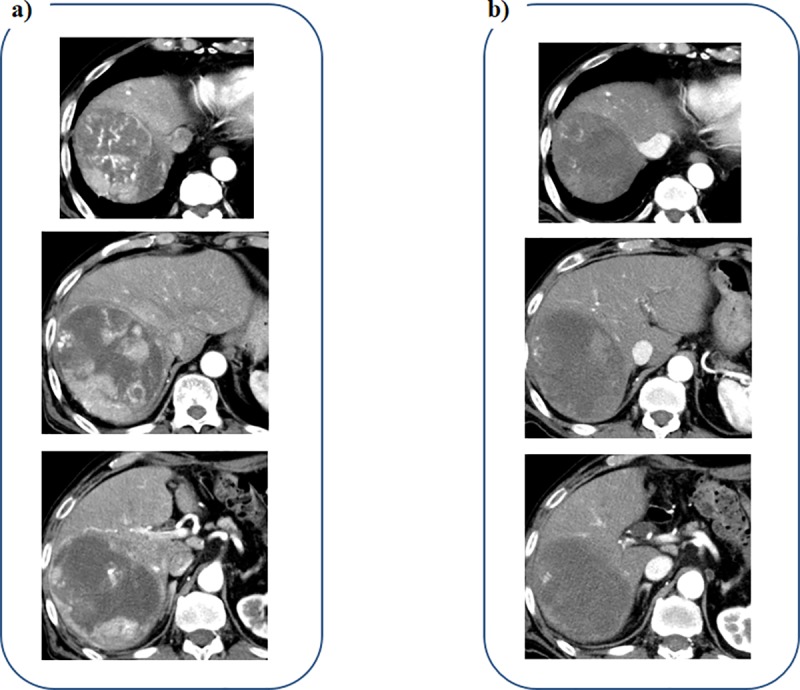
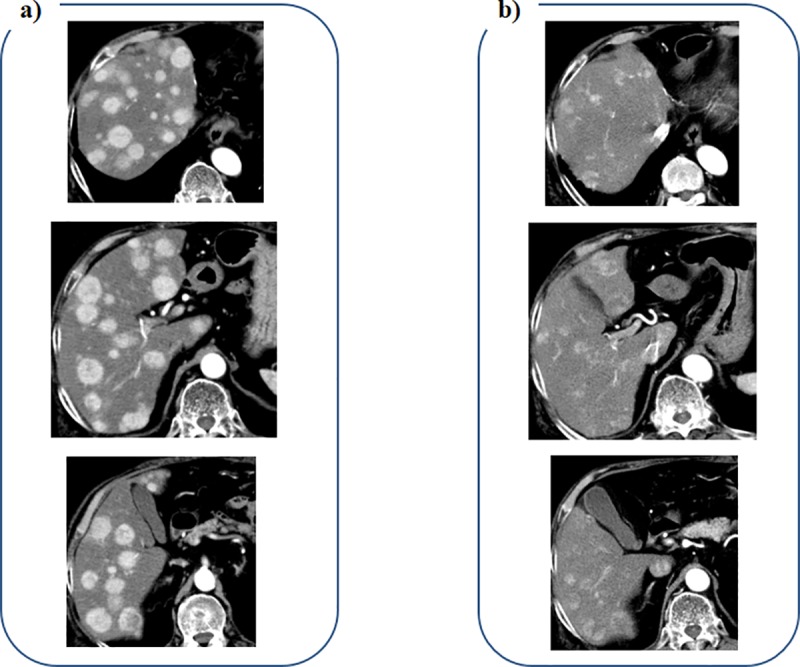
The subjects were 69 patients with HCC receiving lenvatinib; the median age was 73 years, and 14 and 67 patients had been previously treated with regorafenib and/or sorafenib and therapies without molecular-targeted agents, respectively. Therapeutic efficacy was evaluated using contrast-enhanced CT images obtained 4-8 weeks after the start of lenvatinib and the middle-term outcome using Kaplan-Meier method.
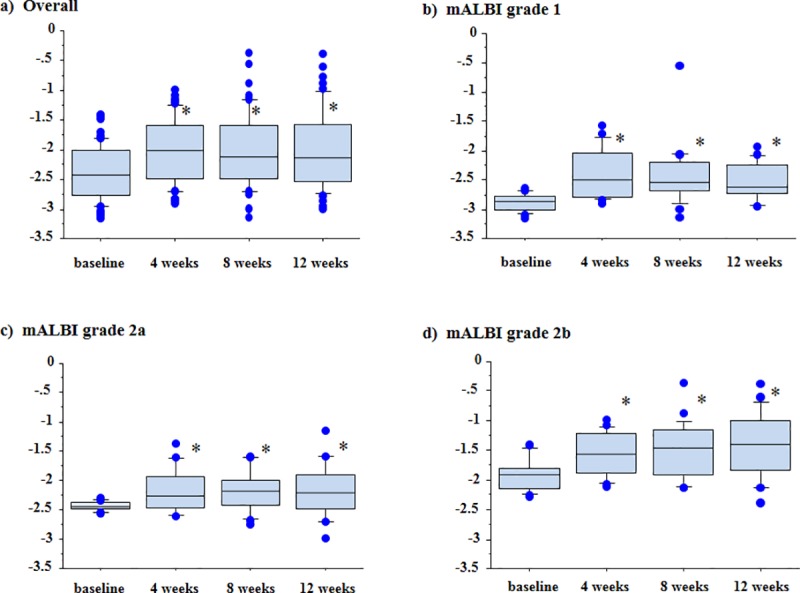
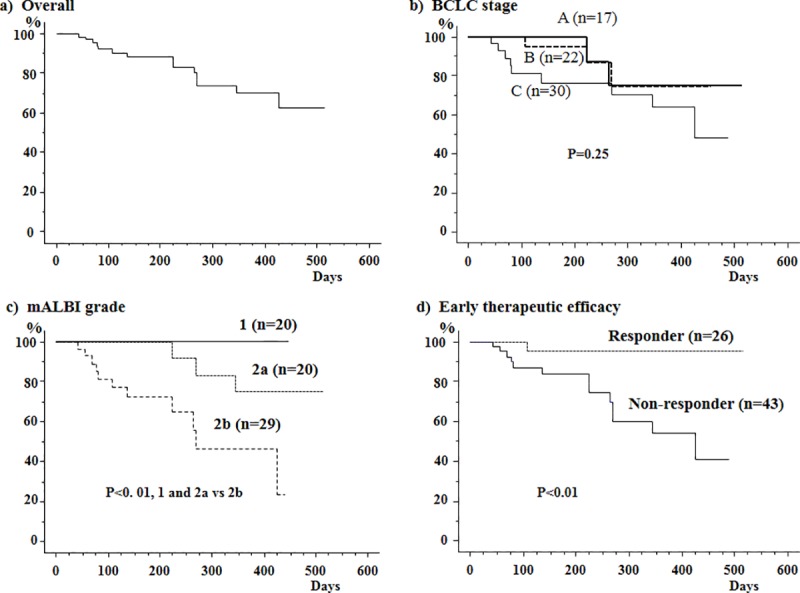
The baseline Child-Pugh scores were 5, 6 and 7 in 31, 32 and 6 patients, respectively, and the modified albumin-bilirubin (mALBI) grades were 1, 2a and 2b in 20, 20 and 29 patients, respectively. The Barcelona Clinic Liver Cancer (BCLC) stages following downsizing after prior treatment were A, B and C in 17, 22 and 30 patients, respectively. The therapeutic efficacy was evaluated in 54 patients, and the percentages of patients achieving CR, PR, SD and PD were 3.7%, 44.4%, 37.0%, and 14.8%, respectively. The ALBI scores deteriorated significantly between 4 and 12 weeks after the start of therapy, compared with the baseline. The cumulative survival rates at 48 weeks were significantly higher among patients achieving CR/PR (95.5%) than among those showing no response (54.3%). Multivariate analyses revealed that the BCLC stages and the serum AFP levels were significantly associated with therapeutic efficacy, while the mALBI grade was associated with the middle-term outcome.
A favorable middle-term outcome was obtained in patients with HCC receiving lenvatinib, especially in those manifesting grades 1/2a mALBI at baseline, despite the deterioration in ALBI scores during treatment.
本研究旨在阐明仑伐替尼在不可切除肝细胞癌(HCC)患者中的应用价值。
本研究共纳入 69 例接受仑伐替尼治疗的 HCC 患者,中位年龄为 73 岁,分别有 14 例和 67 例患者之前接受过regorafenib 和/或索拉非尼治疗以及未接受分子靶向药物治疗。采用治疗开始后 4-8 周的增强 CT 图像评估治疗疗效,并采用 Kaplan-Meier 法评估中期结局。
31 例患者的基线 Child-Pugh 评分为 5 分,32 例患者的基线 Child-Pugh 评分为 6 分,6 例患者的基线 Child-Pugh 评分为 7 分;20 例患者的基线改良型白蛋白-胆红素(mALBI)评分为 1 分,20 例患者的基线 mALBI 评分为 2a 分,29 例患者的基线 mALBI 评分为 2b 分。经先前治疗缩瘤后,BCLC 分期为 A 期、B 期和 C 期的患者分别有 17 例、22 例和 30 例。对 54 例患者进行疗效评价,完全缓解(CR)、部分缓解(PR)、疾病稳定(SD)和疾病进展(PD)的患者比例分别为 3.7%、44.4%、37.0%和 14.8%。与基线相比,治疗开始后 4-12 周时 ALBI 评分显著恶化。48 周时的累积生存率在 CR/PR 患者(95.5%)中显著高于无反应患者(54.3%)。多变量分析显示,BCLC 分期和血清 AFP 水平与治疗疗效显著相关,而 mALBI 分级与中期结局相关。
仑伐替尼治疗 HCC 患者可获得良好的中期结局,尤其是基线时 mALBI 分级为 1/2a 者,尽管治疗期间 ALBI 评分恶化。