Department of Ultrasound, Zhejiang Provincial People's Hospital, Hangzhou Medical College, Hangzhou, Zhejiang, China.
Department of Radiology, Thomas Jefferson University Hospital, Philadelphia, USA.
Sci Rep. 2020 Apr 10;10(1):6206. doi: 10.1038/s41598-020-63299-8.
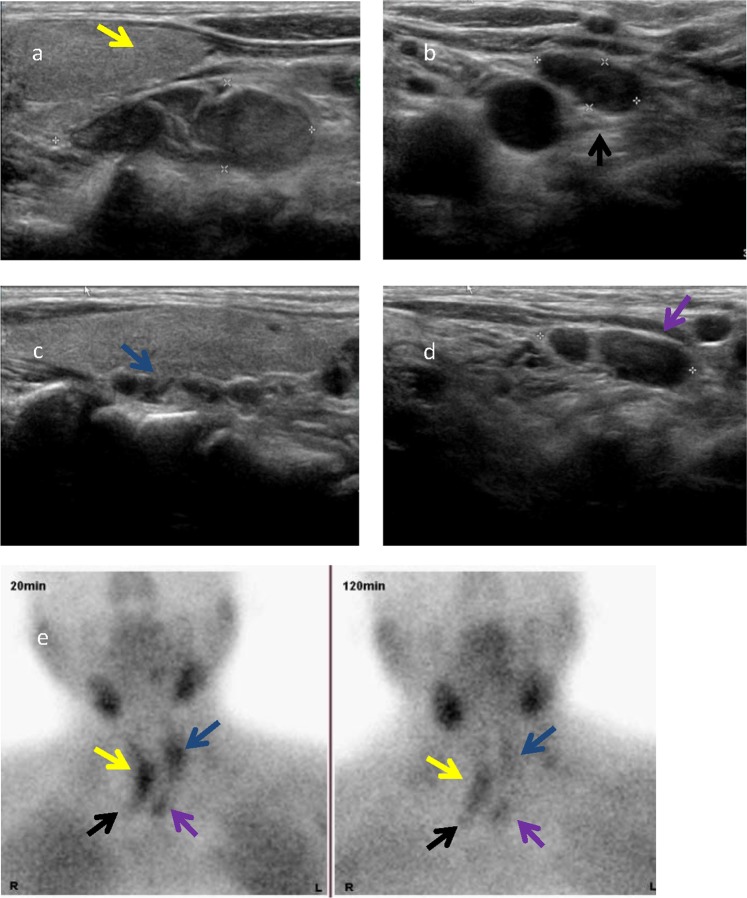
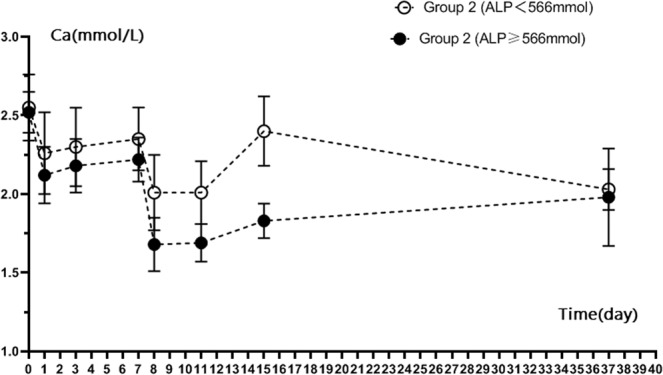
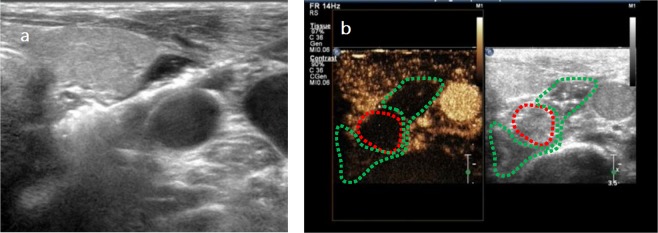
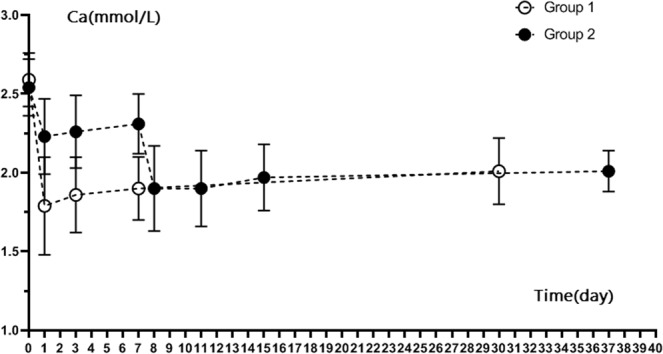
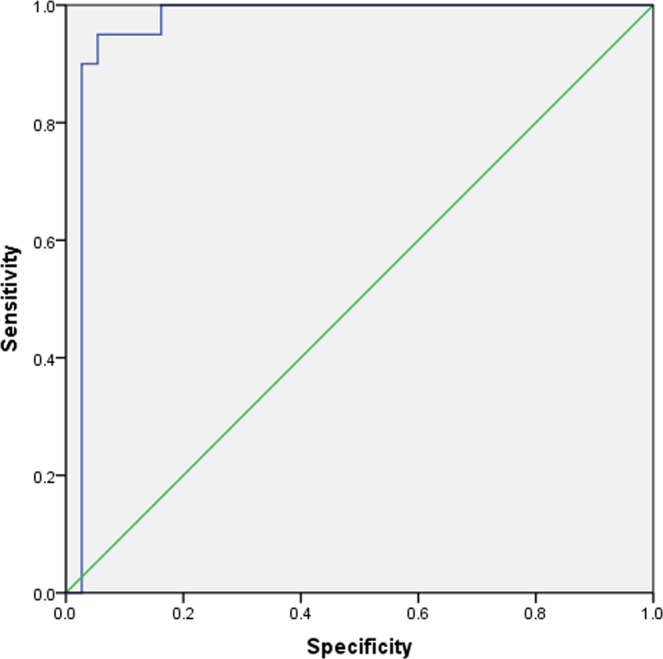
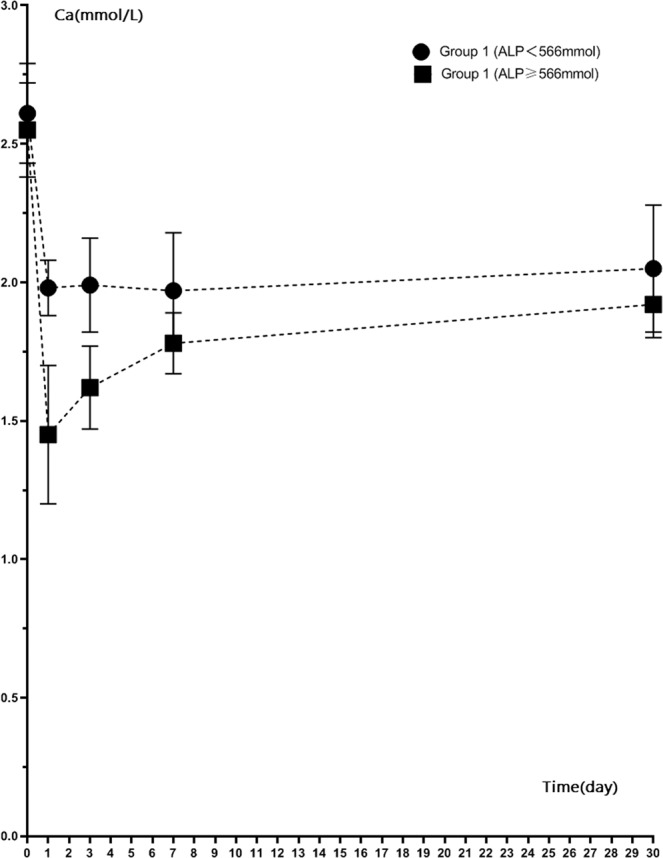
To evaluate safety and efficacy of one- vs. two-session radiofrequency ablation (RFA) of parathyroid hyperplasia for patients with secondary hyperparathyroidism (SHPT) and to compare the outcome of both methods on hypocalcemia. Patients with secondary hyperparathyroidism underwent ultrasound guided RFA of parathyroid hyperplasia. Patients were alternately assigned to either group 1 (n = 28) with RFA of all 4 glands in one session or group 2 (n = 28) with RFA of 2 glands in a first session and other 2 glands in a second session. Serum parathyroid hormone (PTH), calcium, phosphorus and alkaline phosphatase (ALP) values were measured at a series of time points after RFA. RFA parameters, including operation duration and ablation time and hospitalization length and cost, were compared between the two groups. Mean PTH decreased in group 1 from 1865.18 ± 828.93 pg/ml to 145.72 ± 119.27 pg/ml at 1 day after RFA and in group 2 from 2256.64 ± 1021.72 pg/ml to 1388.13 ± 890.15 pg/ml at 1 day after first RFA and to 137.26 ± 107.12 pg/ml at 1 day after second RFA. Group 1's calcium level decreased to 1.79 ± 0.31 mmol/L at day 1 after RFA and group 2 decreased to 1.89 ± 0.26 mmol/L at day 1 after second session RFA (P < 0.05). Multivariate analysis showed that hypocalcemia was related to serum ALP. Patients with ALP ≥ 566 U/L had lower calcium compared to patients with ALP < 566 U/L up to a month after RFA (P < 0.05). Group 1's RFA time and hospitalization were shorter and had lower cost compared with Group 2. US-guided RFA of parathyroid hyperplasia is a safe and effective method for treating secondary hyperparathyroidism. Single-session RFA was more cost-effective and resulted in a shorter hospital stay compared to two sessions. However, patients with two-session RFA had less hypocalcemia, especially those with high ALP.
评估甲状旁腺增生的一次与两次射频消融术(RFA)治疗继发性甲状旁腺功能亢进(SHPT)的安全性和有效性,并比较两种方法对低钙血症的影响。接受超声引导下甲状旁腺增生的 RFA 治疗。患者被交替分配到一组 1(n = 28),即一次消融所有 4 个腺体;或组 2(n = 28),即第一次消融 2 个腺体,第二次消融另外 2 个腺体。在 RFA 后一系列时间点测量血清甲状旁腺激素(PTH)、钙、磷和碱性磷酸酶(ALP)值。比较两组之间的 RFA 参数,包括手术时间、消融时间、住院时间和费用。组 1 的平均 PTH 从 RFA 后 1 天的 1865.18 ± 828.93 pg/ml 降至 145.72 ± 119.27 pg/ml,组 2 的平均 PTH 从 RFA 后 1 天的 2256.64 ± 1021.72 pg/ml 降至 1388.13 ± 890.15 pg/ml,降至第二次 RFA 后 1 天的 137.26 ± 107.12 pg/ml。组 1 的血钙水平在 RFA 后 1 天降至 1.79 ± 0.31 mmol/L,组 2 降至第二次 RFA 后 1 天的 1.89 ± 0.26 mmol/L(P < 0.05)。多变量分析显示低钙血症与血清 ALP 相关。ALP ≥ 566 U/L 的患者与 ALP < 566 U/L 的患者相比,RFA 后 1 个月时血钙水平更低(P < 0.05)。与组 2 相比,组 1 的 RFA 时间、住院时间更短,费用更低。然而,与两次 RFA 相比,两次 RFA 后低钙血症患者更少,尤其是 ALP 较高的患者。