National Heart and Lung Institute, Imperial College, London, United Kingdom.
National Heart and Lung Institute, Imperial College, London, United Kingdom; Imperial College Healthcare NHS Trust, London, United Kingdom.
J Allergy Clin Immunol. 2020 Oct;146(4):840-850.e7. doi: 10.1016/j.jaci.2020.03.021. Epub 2020 Apr 10.
Respiratory viral infection causes chronic obstructive pulmonary disease (COPD) exacerbations. We previously reported increased bronchial mucosa eosinophil and neutrophil inflammation in patients with COPD experiencing naturally occurring exacerbations. But it is unclear whether virus per se induces bronchial mucosal inflammation, nor whether this relates to exacerbation severity.
We sought to determine the extent and nature of bronchial mucosal inflammation following experimental rhinovirus (RV)-16-induced COPD exacerbations and its relationship to disease severity.
Bronchial mucosal inflammatory cell phenotypes were determined at preinfection baseline and following experimental RV infection in 17 Global Initiative for Chronic Obstructive Lung Disease stage II subjects with COPD and as controls 20 smokers and 11 nonsmokers with normal lung function. No subject had a history of asthma/allergic rhinitis: all had negative results for aeroallergen skin prick tests.
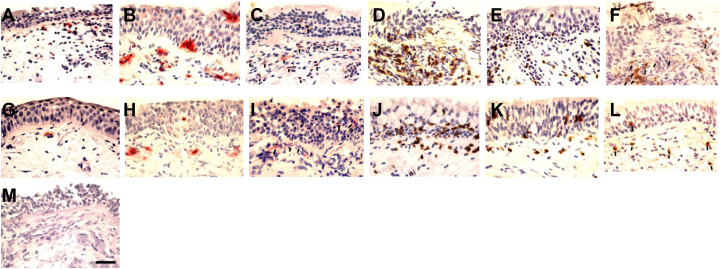
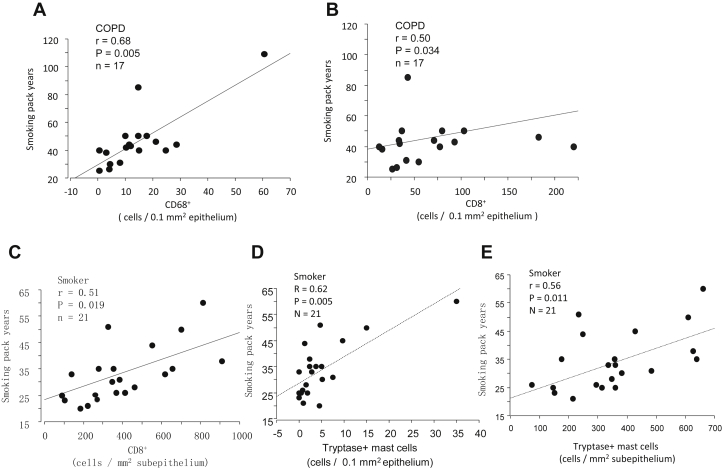
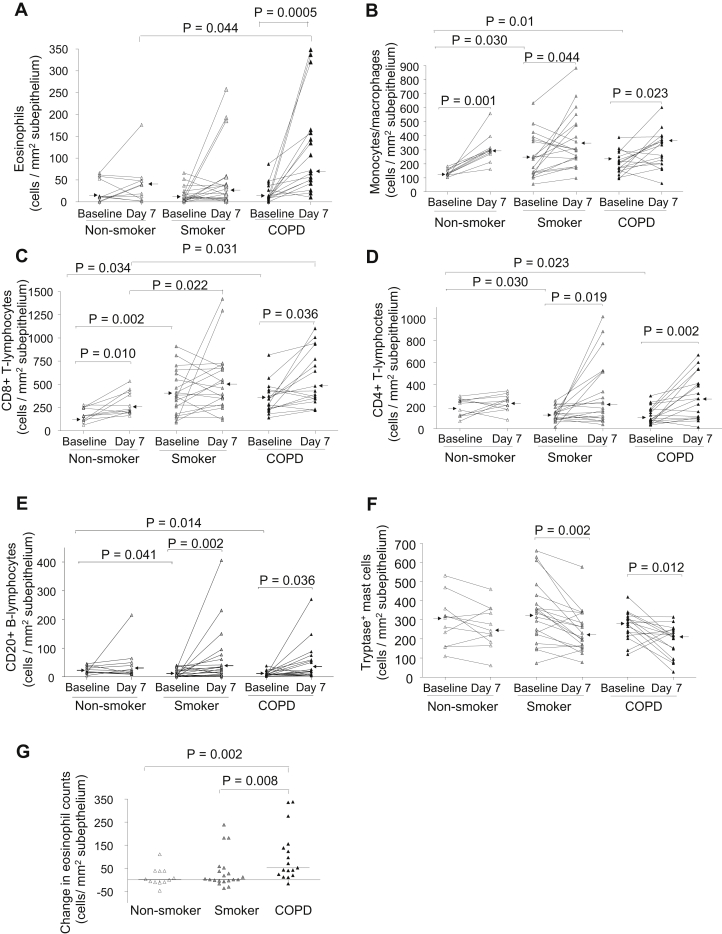
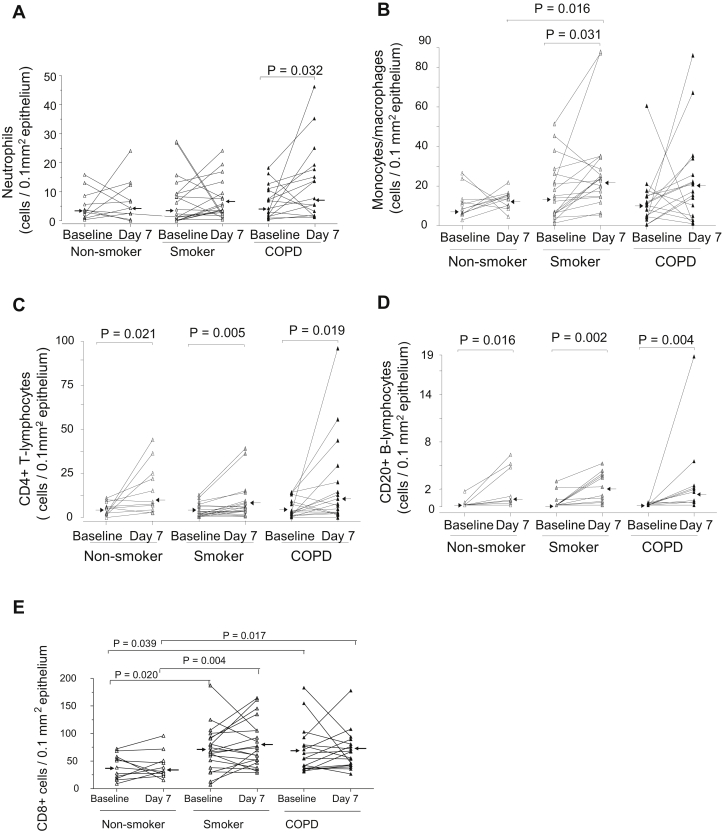
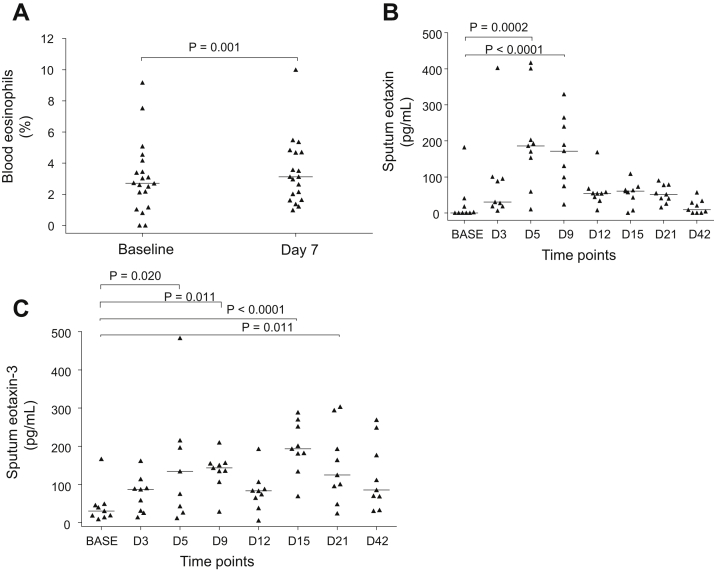
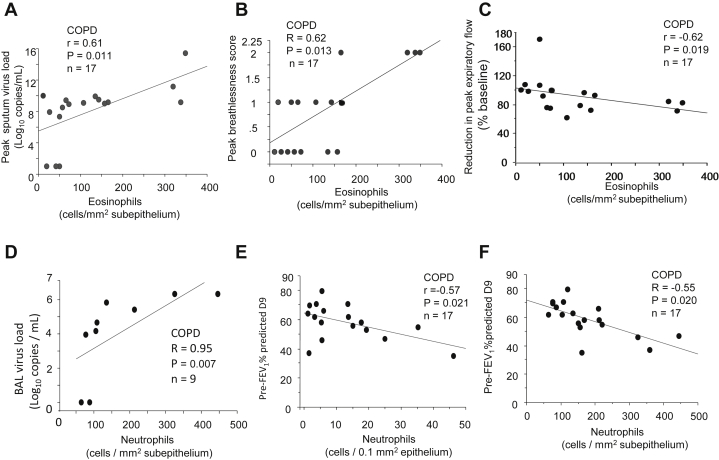
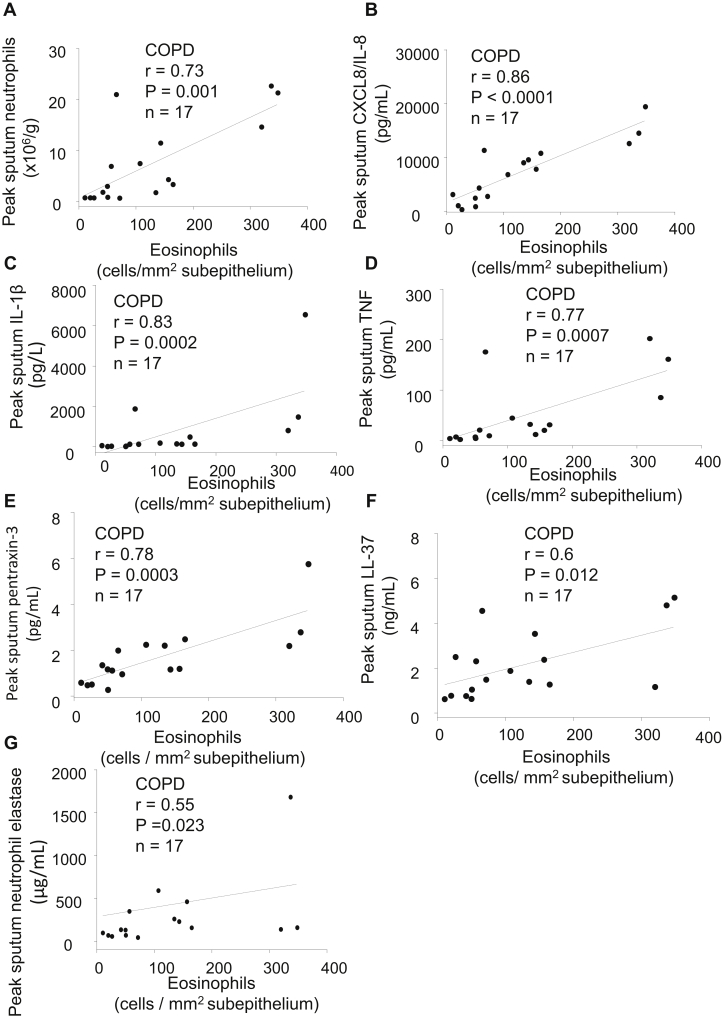
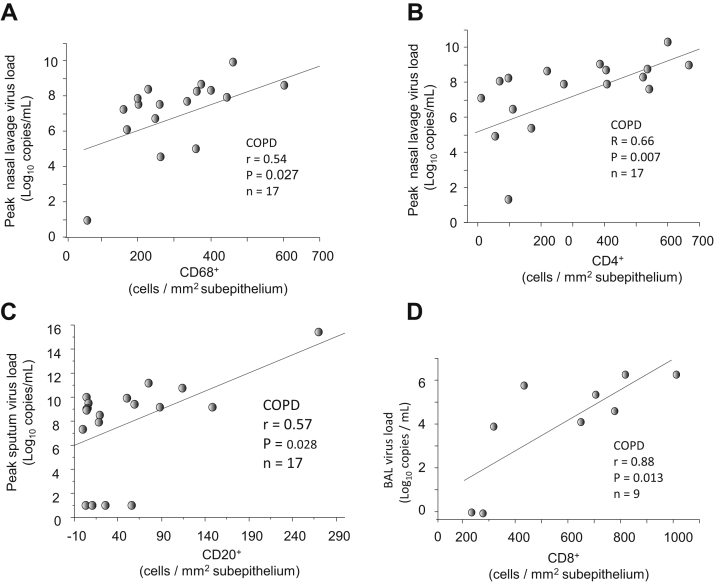
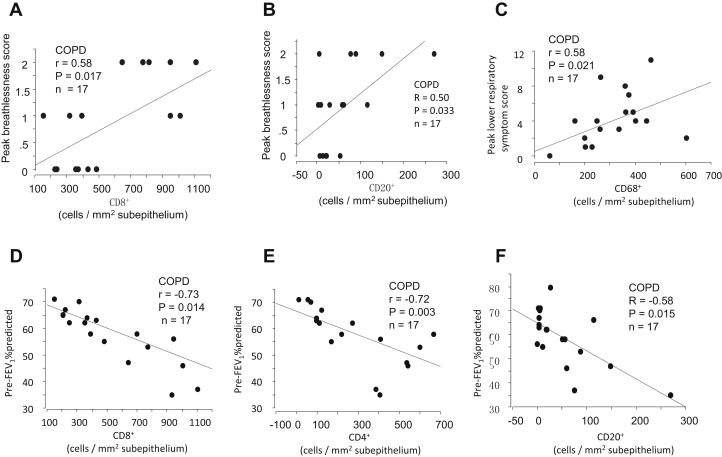
RV infection increased the numbers of bronchial mucosal eosinophils and neutrophils only in COPD and CD8 T lymphocytes in patients with COPD and nonsmokers. Monocytes/macrophages, CD4 T lymphocytes, and CD20 B lymphocytes were increased in all subjects. At baseline, compared with nonsmokers, subjects with COPD and smokers had increased numbers of bronchial mucosal monocytes/macrophages and CD8 T lymphocytes but fewer numbers of CD4 T lymphocytes and CD20 B lymphocytes. The virus-induced inflammatory cells in patients with COPD were positively associated with virus load, illness severity, and reductions in lung function.
Experimental RV infection induces bronchial mucosal eosinophilia and neutrophilia only in patients with COPD and monocytes/macrophages and lymphocytes in both patients with COPD and control subjects. The virus-induced inflammatory cell phenotypes observed in COPD positively related to virus load and illness severity. Antiviral/anti-inflammatory therapies could attenuate bronchial inflammation and ameliorate virus-induced COPD exacerbations.
呼吸道病毒感染可导致慢性阻塞性肺疾病(COPD)恶化。我们之前的研究报告称,在自然发生恶化的 COPD 患者中,支气管黏膜嗜酸性粒细胞和中性粒细胞炎症增加。但是,尚不清楚病毒本身是否会引起支气管黏膜炎症,也不清楚这种炎症与恶化的严重程度是否相关。
我们旨在确定实验性鼻病毒(RV)-16 诱导的 COPD 恶化后支气管黏膜炎症的程度和性质,及其与疾病严重程度的关系。
在 17 名慢性阻塞性肺疾病(COPD)Ⅱ期 GOLD 患者和 20 名吸烟者及 11 名非吸烟者(肺功能正常)中,于实验性 RV 感染前基线期和感染后,确定支气管黏膜炎症细胞表型,作为对照。所有患者均无哮喘/过敏性鼻炎病史,所有患者的变应原皮肤点刺试验均为阴性。
RV 感染仅在 COPD 患者和非吸烟者中增加了支气管黏膜嗜酸性粒细胞和中性粒细胞以及 COPD 患者和非吸烟者中的 CD8 T 淋巴细胞。所有受试者的单核细胞/巨噬细胞、CD4 T 淋巴细胞和 CD20 B 淋巴细胞均增加。在基线期,与非吸烟者相比,COPD 患者和吸烟者的支气管黏膜单核细胞/巨噬细胞和 CD8 T 淋巴细胞数量增加,而 CD4 T 淋巴细胞和 CD20 B 淋巴细胞数量减少。COPD 患者中病毒诱导的炎症细胞与病毒载量、疾病严重程度和肺功能降低呈正相关。
实验性 RV 感染仅在 COPD 患者中引起支气管黏膜嗜酸性粒细胞和中性粒细胞增加,在 COPD 患者和对照组中引起单核细胞/巨噬细胞和淋巴细胞增加。在 COPD 中观察到的病毒诱导的炎症细胞表型与病毒载量和疾病严重程度呈正相关。抗病毒/抗炎治疗可减轻支气管炎症,改善病毒引起的 COPD 恶化。