Department of Cardiology, Erasmus MC, University Medical Center Rotterdam, Rotterdam, the Netherlands.
Department of Cardiology, Maasstad Hospital, Rotterdam, the Netherlands.
J Interv Card Electrophysiol. 2021 Mar;60(2):287-294. doi: 10.1007/s10840-020-00737-7. Epub 2020 Apr 13.
Pulmonary vein isolation (PVI) using cryoballoon (CB) ablation is associated with an increased radiation exposure compared with radiofrequency ablation. Previous studies showed that radiation exposure in CB PVI can be reduced by optimizing the fluoroscopy protocol without comprising acute efficacy and safety. We evaluated the mid-term outcome of a modified fluoroscopy protocol in patients undergoing CB PVI.
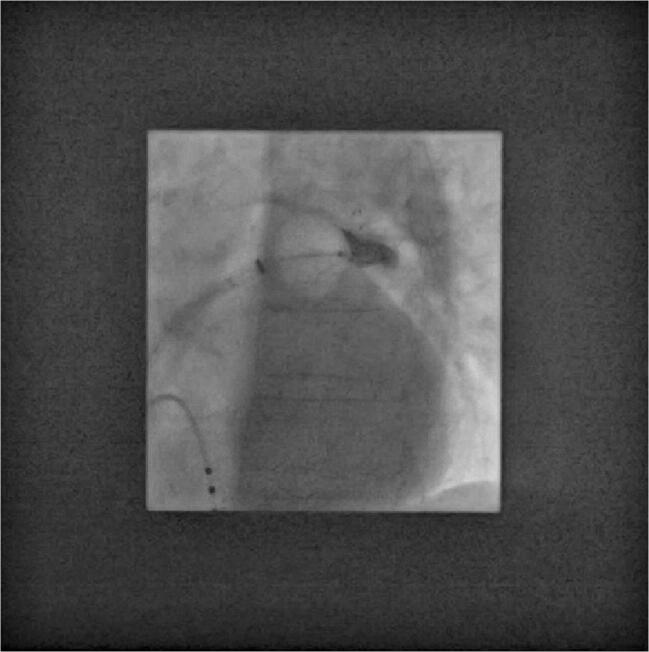
The study population comprised 90 consecutive patients who underwent second-generation CB-based PVI. The first 46 patients underwent CB PVI with conventional fluoroscopy settings (group A, historic control group). In the following 44 patients (group B), a modified fluoroscopy protocol was applied consisting of (1) visualization of degree of PV occlusion only by fluoroscopy (no cine runs); (2) increased radiation awareness. Primary endpoints were the total dose area product (DAP), fluoroscopy time, and freedom from documented recurrence of atrial fibrillation (AF) after a single procedure.
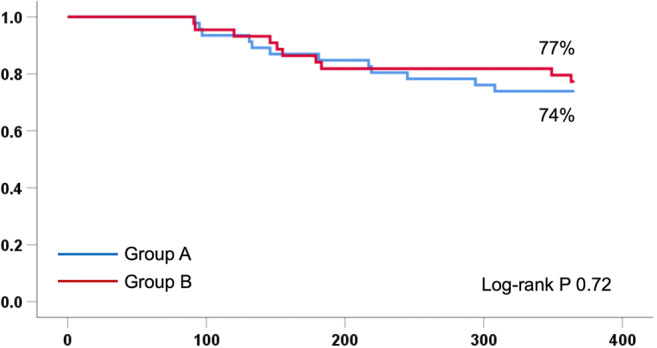
Group B had a lower median DAP (1393 cGycm vs. 3232 cGycm, P < 0.001) and median fluoroscopy time (20 min vs. 24 min, P < 0.001) as compared with group A. The 1-year freedom from documented recurrence of AF after a single procedure was similar among groups (74% in group A vs. 77% in group B, P = 0.71). There were no significant differences between both groups for the secondary endpoints, including procedure duration, proportion of patients with complete electrical isolation, and complications.
Using a modified fluoroscopy protocol and increased radiation awareness, radiation exposure can be significantly reduced in CB PVI with a similar 1-year clinical outcome.
与射频消融相比,使用冷冻球囊(CB)消融进行肺静脉隔离(PVI)会增加辐射暴露。先前的研究表明,通过优化透视协议可以减少 CB PVI 中的辐射暴露,而不会影响急性疗效和安全性。我们评估了在接受 CB PVI 的患者中应用改良透视协议的中期结果。
研究人群包括 90 例连续接受第二代基于 CB 的 PVI 的患者。前 46 例患者接受常规透视设置的 CB PVI(A 组,历史对照组)。在随后的 44 例患者(B 组)中,应用改良透视协议,包括(1)仅透视观察 PV 闭塞程度(无电影运行);(2)提高辐射意识。主要终点是总剂量面积乘积(DAP)、透视时间和单次手术后无记录的心房颤动(AF)复发的无复发率。
与 A 组相比,B 组的中位数 DAP(1393 cGycm 比 3232 cGycm,P<0.001)和中位数透视时间(20 分钟比 24 分钟,P<0.001)均较低。单次手术后 1 年无记录的 AF 复发率在两组之间相似(A 组 74%,B 组 77%,P=0.71)。两组在次要终点方面无显著差异,包括手术时间、完全电隔离的患者比例和并发症。
通过应用改良透视协议和提高辐射意识,在 CB PVI 中可以显著减少辐射暴露,而 1 年的临床结果相似。