Renal, Vascular and Diabetes Research Laboratory, IIS-Fundación Jiménez Díaz, Universidad Autónoma de Madrid, Spanish Biomedical Research Centre in Diabetes and Associated Metabolic Disorders (CIBERDEM), 28040 Madrid, Spain.
Laboratorio de Nefrología, Facultad de Medicina, Universidad Austral de Chile, 5090000 Valdivia, Chile.
Int J Mol Sci. 2020 Apr 10;21(7):2632. doi: 10.3390/ijms21072632.
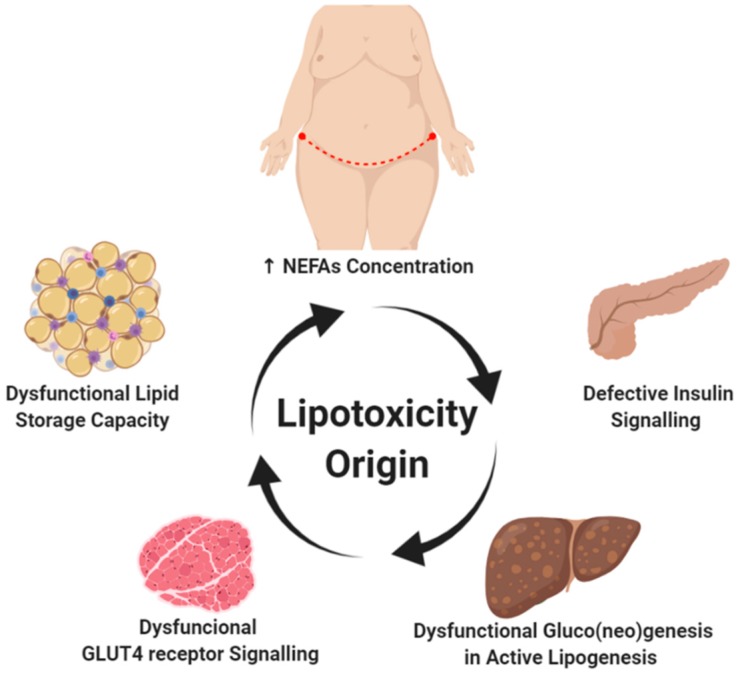
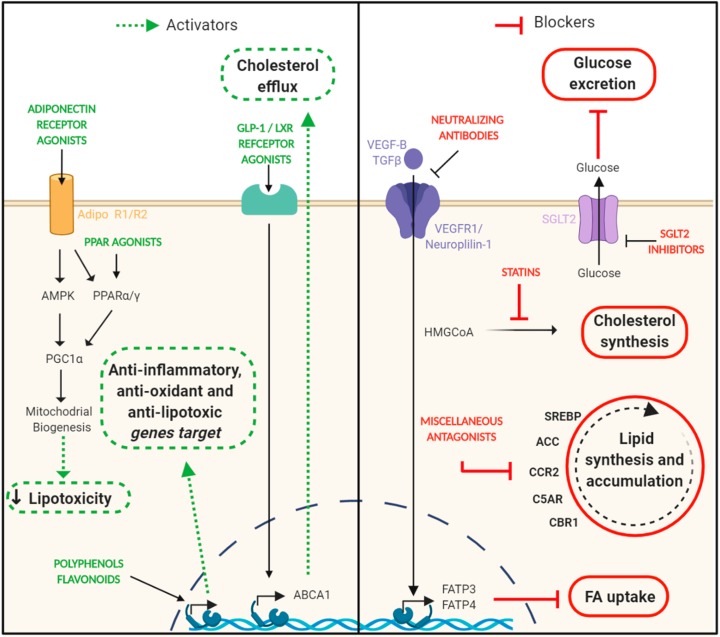
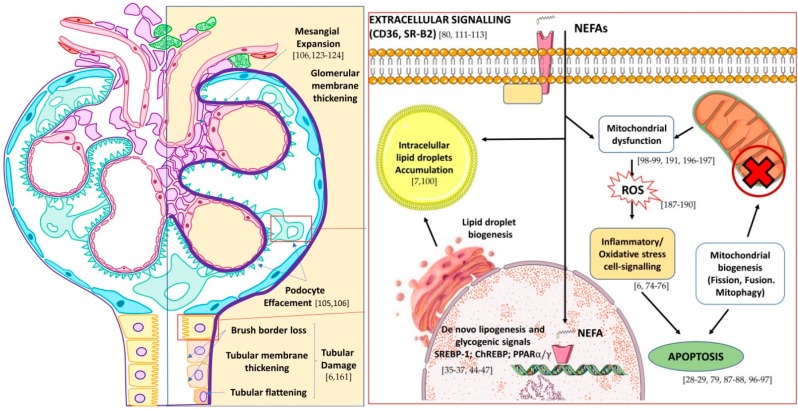
Lipotoxicity is characterized by the ectopic accumulation of lipids in organs different from adipose tissue. Lipotoxicity is mainly associated with dysfunctional signaling and insulin resistance response in non-adipose tissue such as myocardium, pancreas, skeletal muscle, liver, and kidney. Serum lipid abnormalities and renal ectopic lipid accumulation have been associated with the development of kidney diseases, in particular diabetic nephropathy. Chronic hyperinsulinemia, often seen in type 2 diabetes, plays a crucial role in blood and liver lipid metabolism abnormalities, thus resulting in increased non-esterified fatty acids (NEFA). Excessive lipid accumulation alters cellular homeostasis and activates lipogenic and glycogenic cell-signaling pathways. Recent evidences indicate that both quantity and quality of lipids are involved in renal damage associated to lipotoxicity by activating inflammation, oxidative stress, mitochondrial dysfunction, and cell-death. The pathological effects of lipotoxicity have been observed in renal cells, thus promoting podocyte injury, tubular damage, mesangial proliferation, endothelial activation, and formation of macrophage-derived foam cells. Therefore, this review examines the recent preclinical and clinical research about the potentially harmful effects of lipids in the kidney, metabolic markers associated with these mechanisms, major signaling pathways affected, the causes of excessive lipid accumulation, and the types of lipids involved, as well as offers a comprehensive update of therapeutic strategies targeting lipotoxicity.
脂毒性的特征是脂质在与脂肪组织不同的器官中异位积聚。脂毒性主要与心肌、胰腺、骨骼肌、肝脏和肾脏等非脂肪组织的功能障碍信号和胰岛素抵抗反应有关。血清脂质异常和肾脏异位脂质积聚与肾脏疾病的发展有关,特别是糖尿病肾病。慢性高胰岛素血症,常见于 2 型糖尿病,在血液和肝脏脂质代谢异常中起着至关重要的作用,从而导致非酯化脂肪酸(NEFA)增加。过量的脂质积累改变了细胞内稳态,并激活了生脂和糖异生细胞信号通路。最近的证据表明,脂质的数量和质量都通过激活炎症、氧化应激、线粒体功能障碍和细胞死亡参与了与脂毒性相关的肾脏损伤。脂毒性的病理作用已经在肾脏细胞中观察到,从而促进了足细胞损伤、小管损伤、系膜增殖、内皮激活和巨噬细胞衍生泡沫细胞的形成。因此,本综述检查了关于脂质在肾脏中的潜在有害作用、与这些机制相关的代谢标志物、受影响的主要信号通路、过量脂质积累的原因以及涉及的脂质类型的最新临床前和临床研究,并提供了针对脂毒性的治疗策略的全面更新。