Klanova Magdalena, Klener Pavel
Institute of Pathological Physiology, First Faculty of Medicine, Charles University in Prague, 12853 Prague, Czech Republic.
First Department of Internal Medicine-Department of Hematology, Charles University General Hospital in Prague, 12808 Prague, Czech Republic.
Cancers (Basel). 2020 Apr 10;12(4):938. doi: 10.3390/cancers12040938.
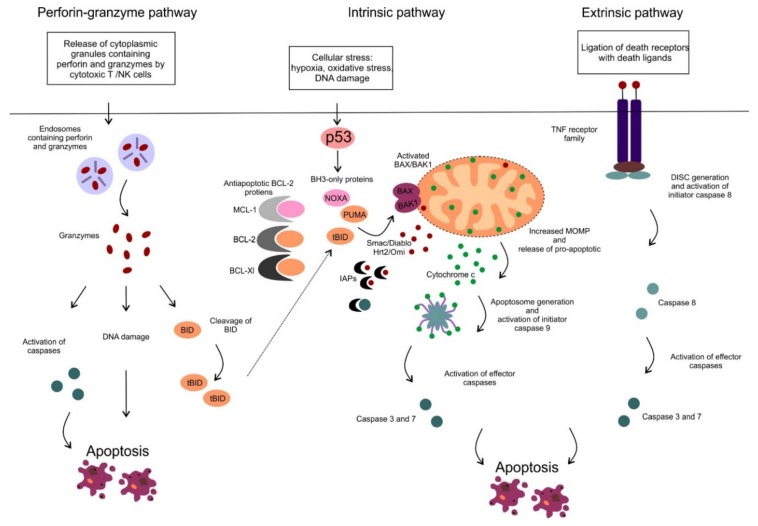
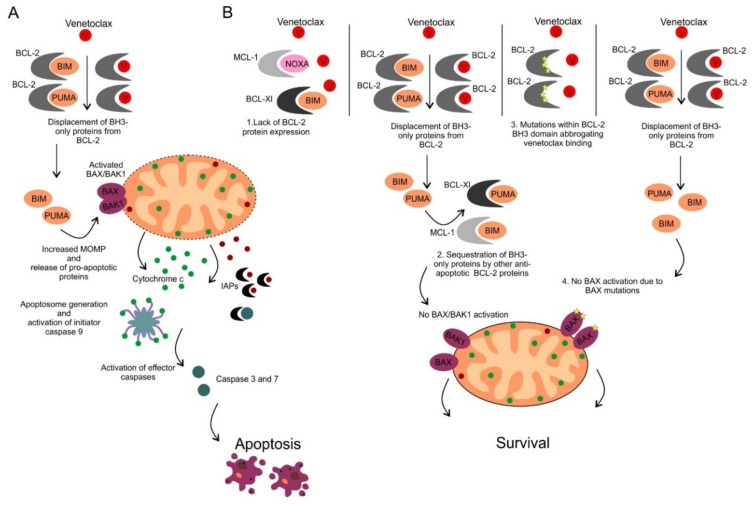
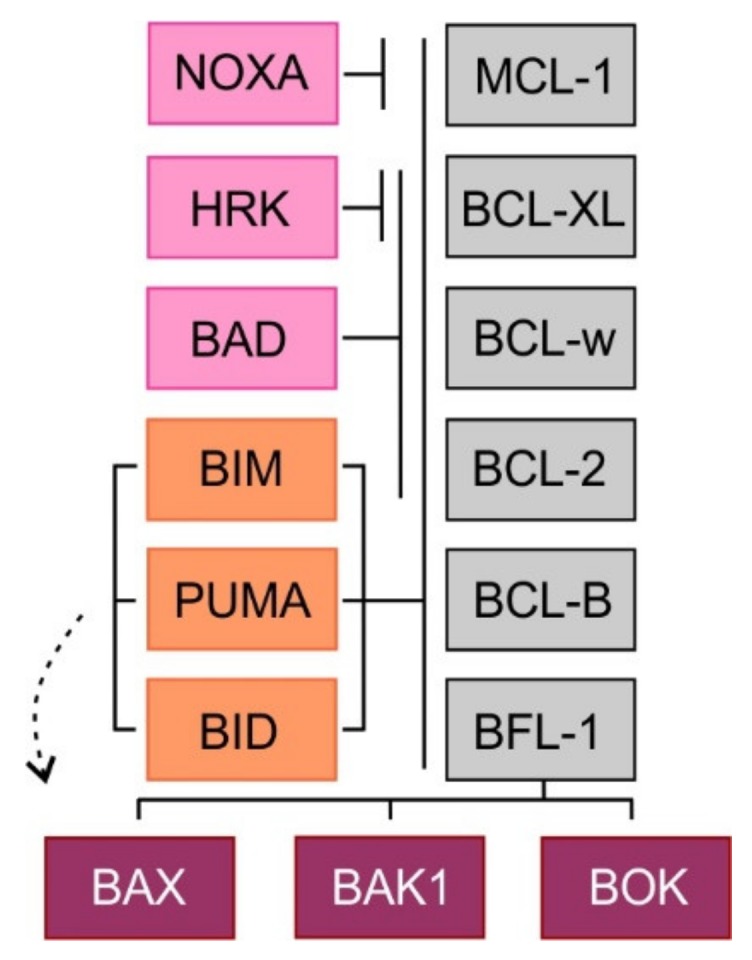
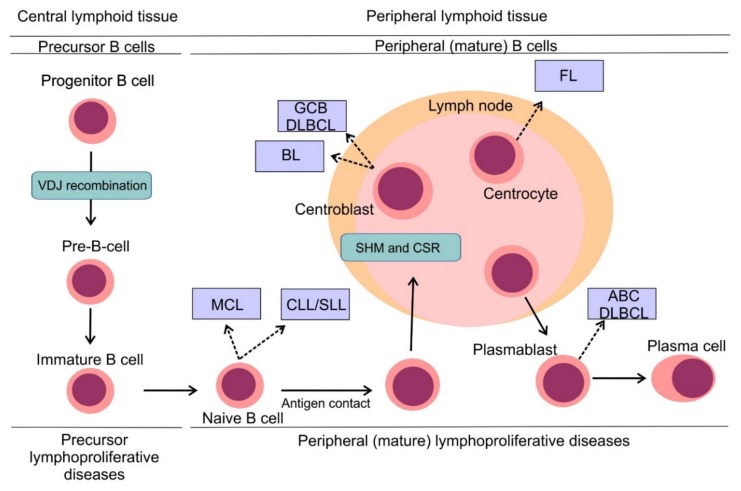
The ability to inhibit mitochondrial apoptosis is a hallmark of B-cell non-Hodgkin lymphomas (B-NHL). Activation of mitochondrial apoptosis is tightly controlled by members of B-cell leukemia/lymphoma-2 (BCL-2) family proteins via protein-protein interactions. Altering the balance between anti-apoptotic and pro-apoptotic BCL-2 proteins leads to apoptosis evasion and extended survival of malignant cells. The pro-survival BCL-2 proteins: B-cell leukemia/lymphoma-2 (BCL-2/BCL2), myeloid cell leukemia-1 (MCL-1/MCL1) and B-cell lymphoma-extra large (BCL-XL/BCL2L1) are frequently (over)expressed in B-NHL, which plays a crucial role in lymphoma pathogenesis, disease progression, and drug resistance. The efforts to develop inhibitors of anti-apoptotic BCL-2 proteins have been underway for several decades and molecules targeting anti-apoptotic BCL-2 proteins are in various stages of clinical testing. Venetoclax is a highly specific BCL-2 inhibitor, which has been approved by the US Food and Drug Agency (FDA) for the treatment of patients with chronic lymphocytic leukemia (CLL) and is in advanced clinical testing in other types of B-NHL. In this review, we summarize the biology of BCL-2 proteins and the mechanisms of how these proteins are deregulated in distinct B-NHL subtypes. We describe the mechanism of action of BH3-mimetics and the status of their clinical development in B-NHL. Finally, we summarize the mechanisms of sensitivity/resistance to venetoclax.
抑制线粒体凋亡的能力是B细胞非霍奇金淋巴瘤(B-NHL)的一个标志。线粒体凋亡的激活由B细胞白血病/淋巴瘤-2(BCL-2)家族蛋白成员通过蛋白质-蛋白质相互作用严格控制。改变抗凋亡和促凋亡BCL-2蛋白之间的平衡会导致恶性细胞逃避凋亡并延长生存期。促生存BCL-2蛋白:B细胞白血病/淋巴瘤-2(BCL-2/BCL2)、髓样细胞白血病-1(MCL-1/MCL1)和B细胞淋巴瘤-特大(BCL-XL/BCL2L1)在B-NHL中经常(过度)表达,这在淋巴瘤发病机制、疾病进展和耐药性中起关键作用。开发抗凋亡BCL-2蛋白抑制剂的努力已经进行了几十年,靶向抗凋亡BCL-2蛋白的分子正处于不同阶段的临床试验中。维奈克拉是一种高度特异性的BCL-2抑制剂,已被美国食品药品监督管理局(FDA)批准用于治疗慢性淋巴细胞白血病(CLL)患者,并且正在对其他类型的B-NHL进行晚期临床试验。在这篇综述中,我们总结了BCL-2蛋白的生物学特性以及这些蛋白在不同B-NHL亚型中失调的机制。我们描述了BH3模拟物的作用机制及其在B-NHL中的临床开发状况。最后,我们总结了对维奈克拉敏感/耐药的机制。