Chen Zhaokun, Huang Qinghua, Yang Shaohua, Su Shuai, Li Baoquan, Cui Ning, Xu Chuantian
Shandong Key Laboratory of Animal Disease Control & Breeding, Institute of Animal Science and Veterinary Medicine, Shandong Academy of Agricultural Sciences, Jinan 250100, China.
College of Life Sciences, Shandong Normal University, Jinan 250014, China.
Viruses. 2020 Apr 11;12(4):432. doi: 10.3390/v12040432.
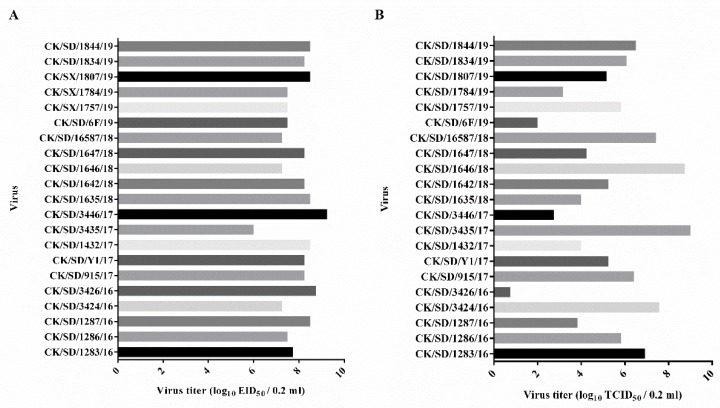
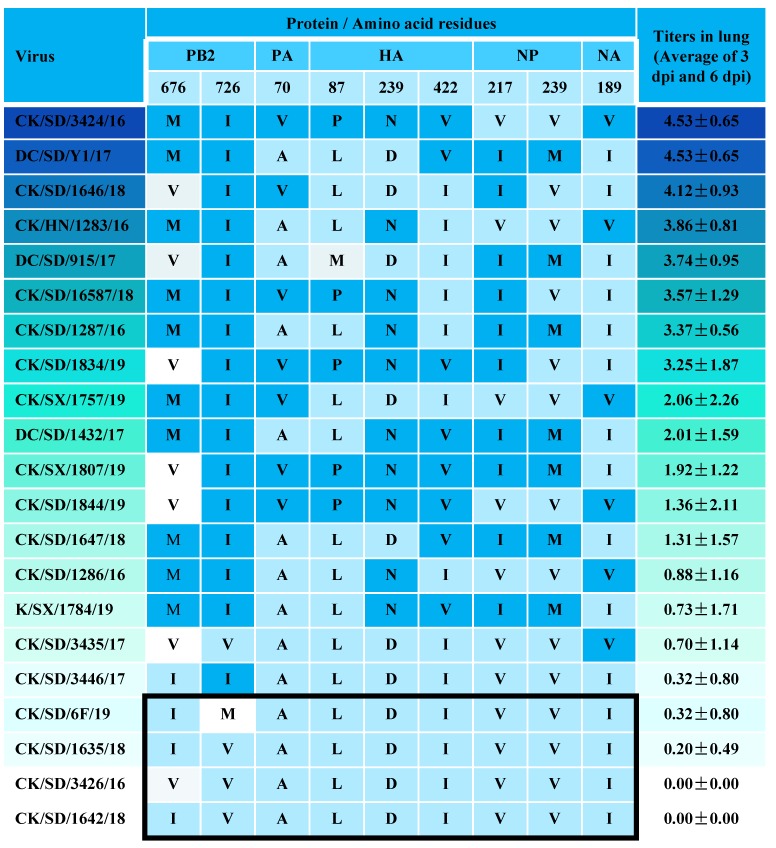
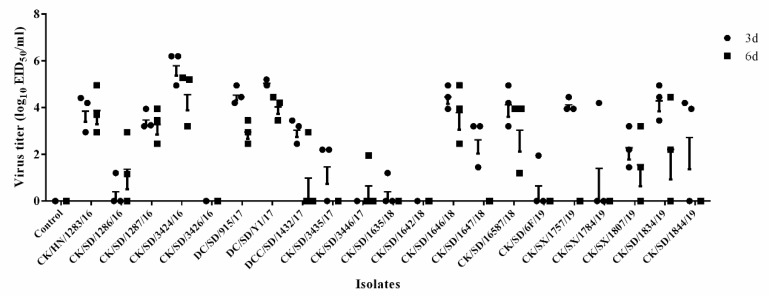
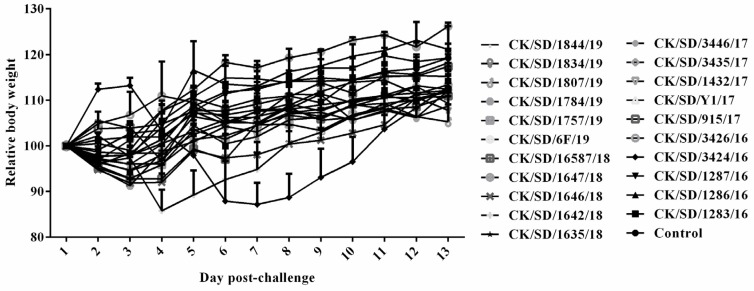
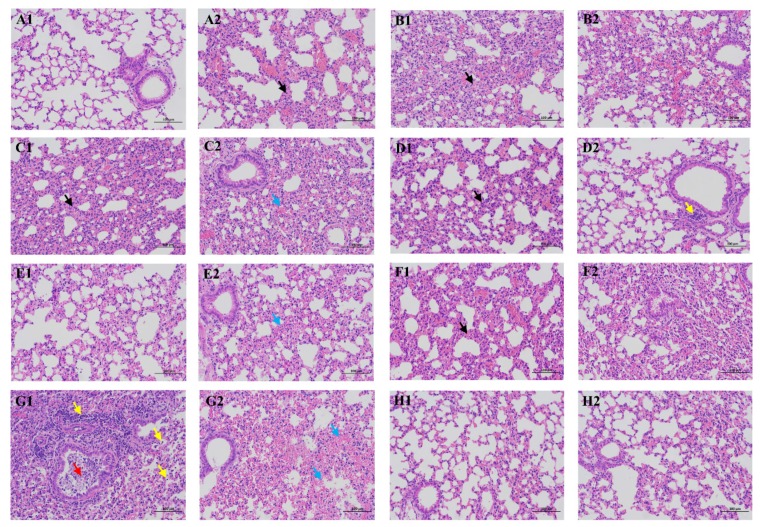
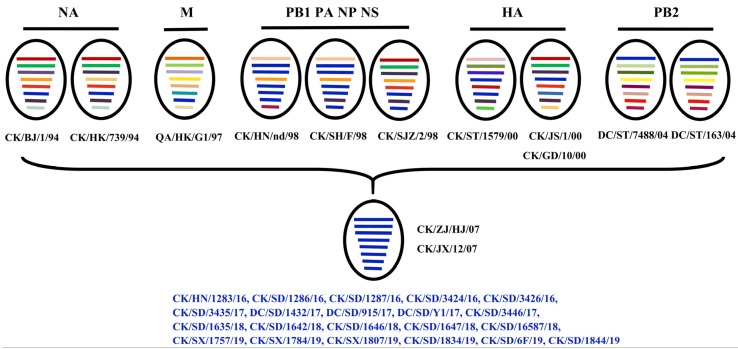
H9N2 subtype avian influenza virus (AIV) is widely prevalent in poultry, and the virus is becoming adaptive to mammals, which poses pandemic importance. Here, BALB/c mice were employed as a model to evaluate the adaption in mammals of 21 field H9N2 viruses isolated from avian species between 2016 to 2019 in China. The replication capacity of the viruses was evaluated in the lungs of mice. The pathogenicity of the viruses were compared by weight loss and lung lesions from infected mice. The whole genomic sequences of the viruses were further characterized to define the associated phenotypes of the H9N2 viruses in vitro and in vivo. The results showed that most viruses could replicate well and cause lesions in the mouse lungs. The propagation capacity in MDCK cells and damage to respiratory tissues of the infected mice corresponded to relative viral titers in the mouse lungs. Further genome analysis showed that all of the H9N2 viruses belonged to the same genotype, G57, and contained a couple of amino acid substitutions or deletions that have been demonstrated as avian-human markers. Additionally, nine amino acids residues in seven viral proteins were found to be correlated with the replication phenotypes of the H9N2 viruses in mammals. The study demonstrated that a well-defined H9N2 AIV genotype with high adaption in mammals was prevalent in China in recent years. Further investigations on the role of the identified residues and continuous surveillance of newly identified mutations associated with host adaption should be strengthened to prevent any devastating human influenza pandemics.
H9N2亚型禽流感病毒(AIV)在禽类中广泛流行,并且该病毒正逐渐适应哺乳动物,这具有大流行的重要性。在此,以BALB/c小鼠为模型,评估2016年至2019年期间从中国禽类中分离出的21株H9N2野毒株在哺乳动物中的适应性。在小鼠肺中评估病毒的复制能力。通过感染小鼠的体重减轻和肺部病变比较病毒的致病性。进一步对病毒的全基因组序列进行特征分析,以确定H9N2病毒在体外和体内的相关表型。结果表明,大多数病毒能够在小鼠肺中良好复制并引起病变。在MDCK细胞中的增殖能力以及对感染小鼠呼吸组织的损伤与小鼠肺中的相对病毒滴度相对应。进一步的基因组分析表明,所有H9N2病毒均属于同一基因型G57,并包含一些已被证明为禽-人标志物的氨基酸替换或缺失。此外,发现七种病毒蛋白中的九个氨基酸残基与H9N2病毒在哺乳动物中的复制表型相关。该研究表明,近年来在中国流行着一种在哺乳动物中具有高适应性的明确的H9N2 AIV基因型。应加强对已鉴定残基作用的进一步研究以及对与宿主适应性相关的新鉴定突变的持续监测,以预防任何毁灭性的人类流感大流行。