Department of Biochemistry and Molecular Biology, Yonsei University College of Medicine, Seoul, South Korea.
Brain Korea 21 PLUS Project for Medical Science, Yonsei University, Seoul, South Korea.
BMC Cancer. 2020 Apr 15;20(1):314. doi: 10.1186/s12885-020-06814-4.
Gastric cancer is a considerable burden for worldwide patients. And diffuse gastric cancer is the most insidious subgroup with poor survival. The phenotypic characterization of the diffuse gastric cancer cell line can be useful for gastric cancer researchers. In this article, we aimed to characterize the diffuse gastric cancer cells with MRI and transcriptomic data. We hypothesized that gene expression pattern is associated with the phenotype of the cells and that the heterogeneous enhancement pattern and the high tumorigenicity of SNU484 can be modulated by the perturbation of the highly expressed gene.
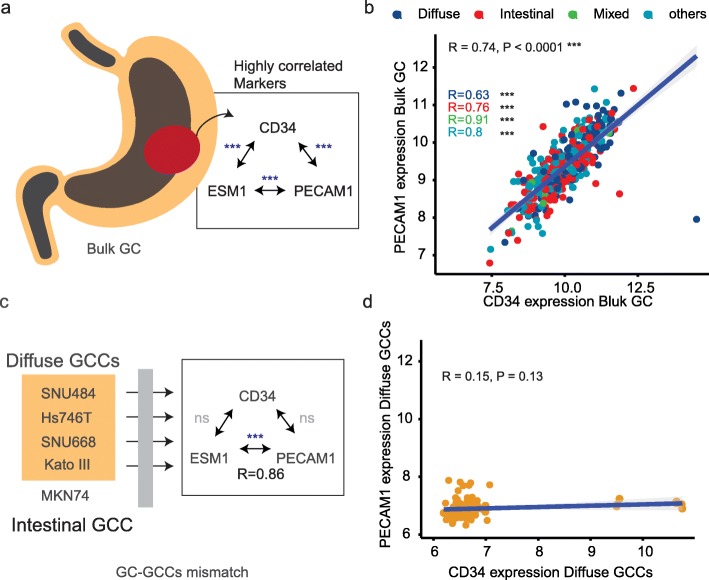
We evaluated the 9.4 T magnetic resonance imaging and transcriptomic data of the orthotopic mice models from diffuse gastric cancer cells such as SNU484, Hs746T, SNU668, and KATO III. We included MKN74 as an intestinal cancer control cell. After comprehensive analysis integrating MRI and transcriptomic data, we selected CD34 and validated the effect by shRNA in the BALB/c nude mice models.
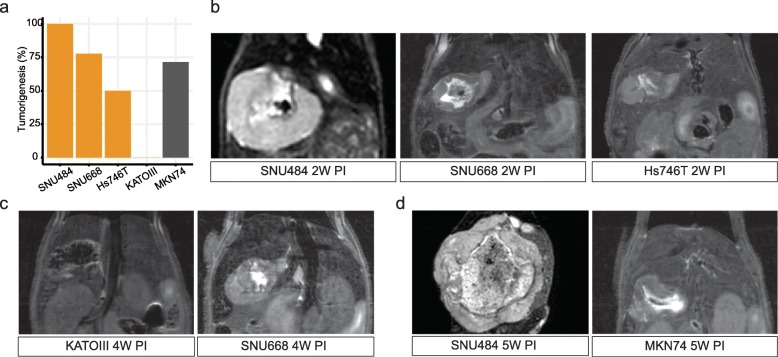
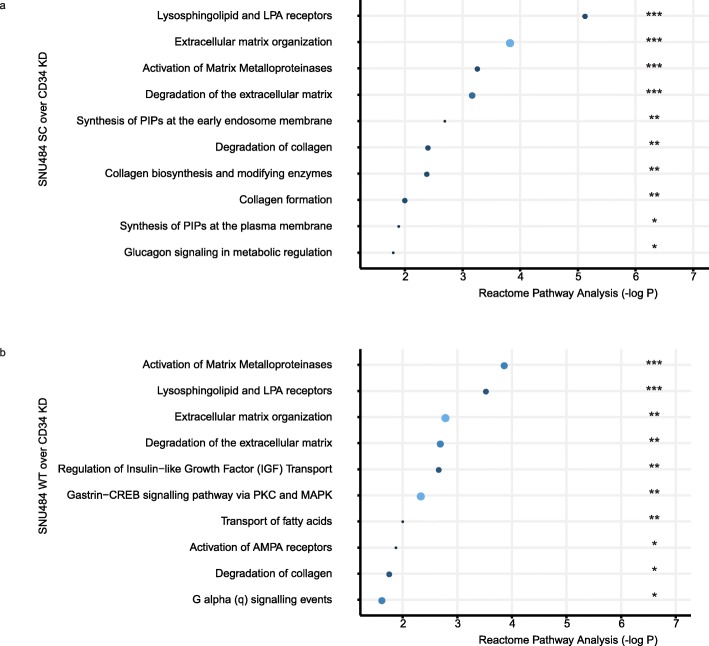
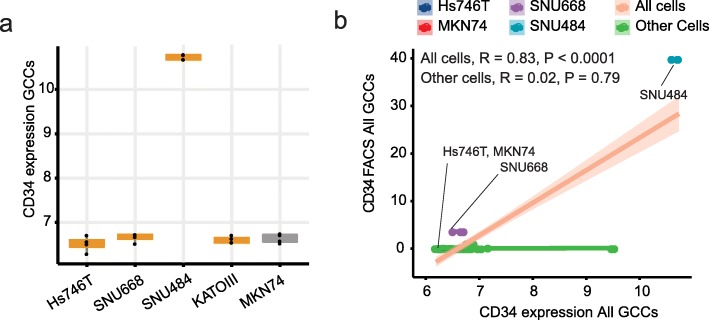
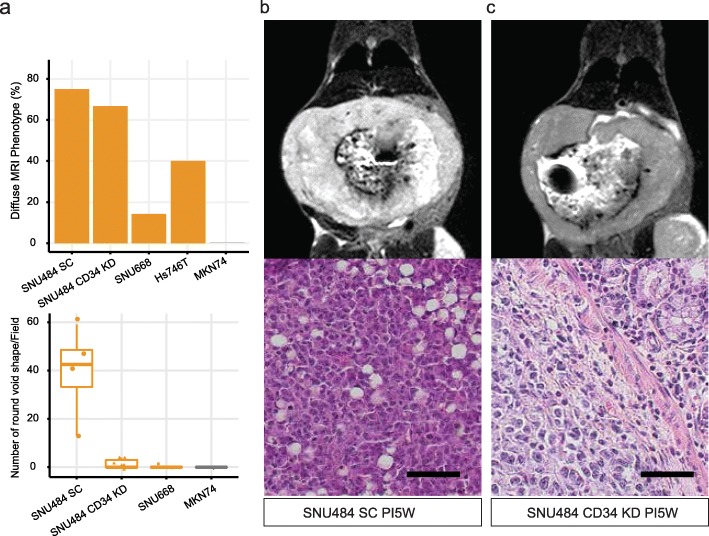
SNU484, SNU668, Hs746T, and MKN74 formed orthotopic tumors by the 5 weeks after cell injection. The diffuse phenotype was found in the SNU484 and Hs746T. SNU484 was the only tumor showing the heterogeneous enhancement pattern on T2 images with a high level of CD34 expression. Knockdown of CD34 decreased the round-void shape in the H&E staining (P = 0.028), the heterogeneous T2 enhancement, and orthotopic tumorigenicity (100% vs 66.7%). The RNAseq showed that the suppressed CD34 is associated with the downregulated gene-sets of the extracellular matrix remodeling.
Suppression of CD34 in the human-originated gastric cancer cell suggests that it is important for the round-void histologic shape, heterogeneous enhancement pattern on MRI, and the growth of gastric cancer cell line.
胃癌是全球患者的沉重负担。弥漫型胃癌是预后最差的亚组。弥漫型胃癌细胞系的表型特征对于胃癌研究人员来说可能是有用的。在本文中,我们旨在通过 MRI 和转录组数据来描述弥漫型胃癌细胞。我们假设基因表达模式与细胞的表型有关,并且 SNU484 的异质性增强模式和高致瘤性可以通过高度表达基因的干扰来调节。
我们评估了来自弥漫型胃癌细胞系(如 SNU484、Hs746T、SNU668 和 KATO III)的原位小鼠模型的 9.4T 磁共振成像和转录组数据。我们将 MKN74 作为肠癌细胞对照。在综合分析 MRI 和转录组数据后,我们选择 CD34 并用 shRNA 在 BALB/c 裸鼠模型中验证其效果。
SNU484、SNU668、Hs746T 和 MKN74 在细胞注射后 5 周形成了原位肿瘤。SNU484 和 Hs746T 表现出弥漫型表型。SNU484 是唯一在 T2 图像上显示异质性增强模式且 CD34 表达水平较高的肿瘤。CD34 的敲低减少了 H&E 染色中的圆形空洞形状(P=0.028)、异质性 T2 增强和原位致瘤性(100%对 66.7%)。RNAseq 显示,受抑制的 CD34 与细胞外基质重塑的下调基因集有关。
在人源性胃癌细胞中抑制 CD34 表明其对于圆形空洞组织学形态、MRI 上的异质性增强模式以及胃癌细胞系的生长非常重要。