Programa de Pós-Graduação em Comportamento e Biologia Animal, Universidade Federal de Juiz de Fora, Juiz de Fora, Minas Gerais, Brazil.
Núcleo de Estudos em Etologia e Bem-estar Animal, Universidade Federal de Juiz de Fora, Juiz de Fora, Minas Gerais, Brazil.
PLoS One. 2020 Apr 15;15(4):e0230999. doi: 10.1371/journal.pone.0230999. eCollection 2020.
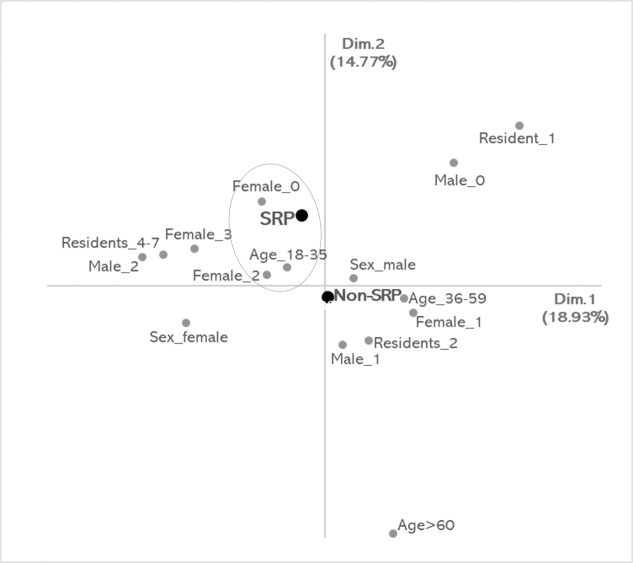
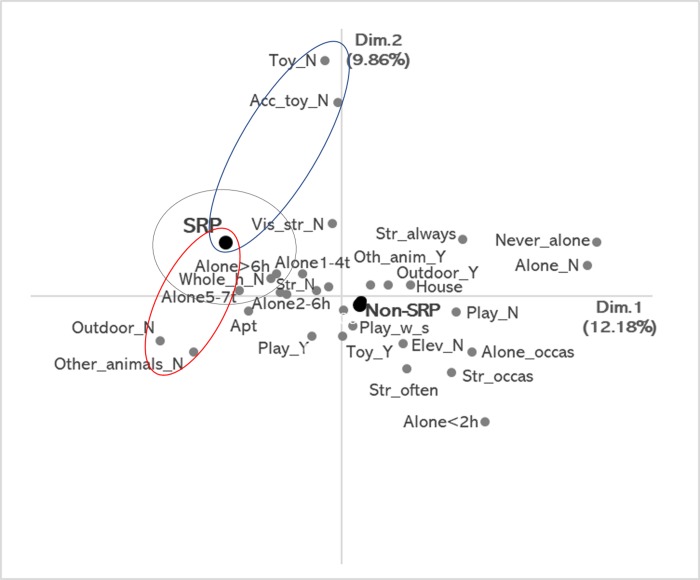
Identifying and preventing the occurrence of separation-related problems (SRP) in companion animals are relevant to animal welfare and the quality of human-pet interactions. The SRP are defined as a set of behaviors and physiological signs displayed by the animal when separated from its attachment person. In cats, SRP has been insufficiently studied. Thus, the objective of this study was to develop a questionnaire for cat owners which identifies behaviors that may indicate SRP, as well as relates the occurrence of SRP to the management practices applied in the sampled cats. The associations of SRP with cats' characteristics, as well as owner, environmental, and management traits were investigated. The questionnaire was developed based on the scientific literature about separation anxiety syndrome in dogs and a few papers in cats, and it was completed by 130 owners of 223 cats. Analysis of owners' answers was done through categorization and acquisition of relative frequencies of each response category, followed by Fisher's exact test, chi-square tests in contingency table and Multiple Correspondence Analysis. Among the sampled animals, 13.45% (30 / 223) met at least one of the behavioral criteria we used to define SRP. Destructive behavior was the most frequently reported behavior (66.67%, 20 / 30), followed by excessive vocalization (63.33%, 19 / 30), urination in inappropriate places (60.00%, 18 / 30), depression-apathy (53.33%, 16 / 30), aggressiveness (36.67%, 11 / 30) and agitation-anxiety (36.67%, 11 / 30) and, in lower frequency, defecation in inappropriate places (23.33%, 7 / 30). The occurrence of SRP was associated with the number of females living in the residence (P = 0.01), with not having access to toys (P = 0.04), and no other animal residing in the house (P = 0.04). Separation-related problems in domestic cats are difficult to identify due to the limited amount of knowledge regarding the issue. The questionnaire developed in this study supported identification of the main behaviors likely related to SRP in cats and could be used as a starting point for future research.
识别和预防伴侣动物的分离相关问题 (SRP) 与动物福利和人类与宠物互动的质量有关。SRP 被定义为动物与其附着人分离时表现出的一系列行为和生理迹象。在猫中,SRP 研究不足。因此,本研究的目的是为猫主人开发一份问卷,该问卷可以识别可能表明 SRP 的行为,并将 SRP 的发生与样本猫中应用的管理实践联系起来。调查了 SRP 与猫的特征、主人、环境和管理特征的关系。该问卷是基于关于犬分离焦虑综合征的科学文献和一些关于猫的论文开发的,由 223 只猫的 130 位主人填写。通过分类和获取每个回答类别的相对频率来分析主人的回答,然后进行 Fisher 精确检验、列联表的卡方检验和多对应分析。在所研究的动物中,13.45%(30/223)至少符合我们用于定义 SRP 的行为标准之一。破坏性行为是最常报告的行为(66.67%,20/30),其次是过度发声(63.33%,19/30)、在不合适的地方排尿(60.00%,18/30)、抑郁-冷漠(53.33%,16/30)、攻击性(36.67%,11/30)和躁动-焦虑(36.67%,11/30),频率较低的还有在不合适的地方排便(23.33%,7/30)。SRP 的发生与居住在住所的雌性数量有关(P=0.01),与无法获得玩具有关(P=0.04),以及与其他动物没有居住在房子里有关(P=0.04)。由于对这个问题的了解有限,家养猫的分离相关问题很难识别。本研究中开发的问卷支持识别与猫的 SRP 相关的主要行为,并可作为未来研究的起点。