Neuroscience Research Institute, Department of Molecular, Cellular, and Developmental Biology, University of California, Santa Barbara, CA, USA.
Division of Biology and Biological Engineering, California Institute of Technology, Pasadena, CA, USA.
Nature. 2020 Apr;580(7803):381-385. doi: 10.1038/s41586-020-2156-5. Epub 2020 Apr 1.
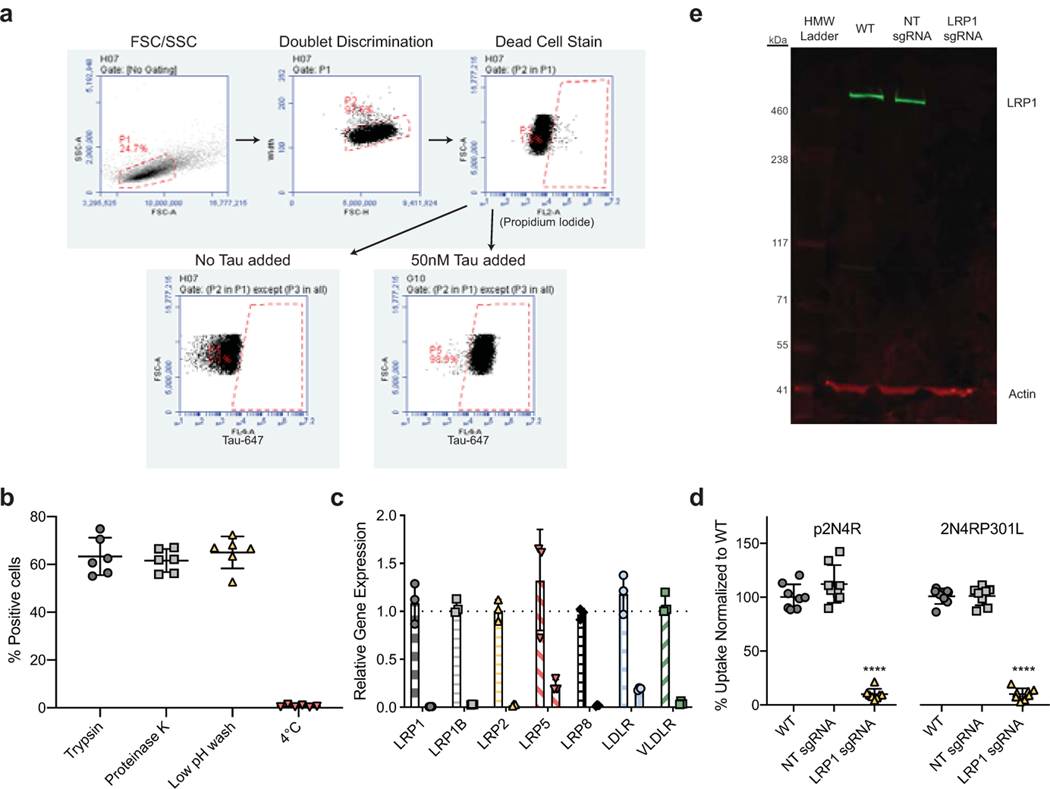
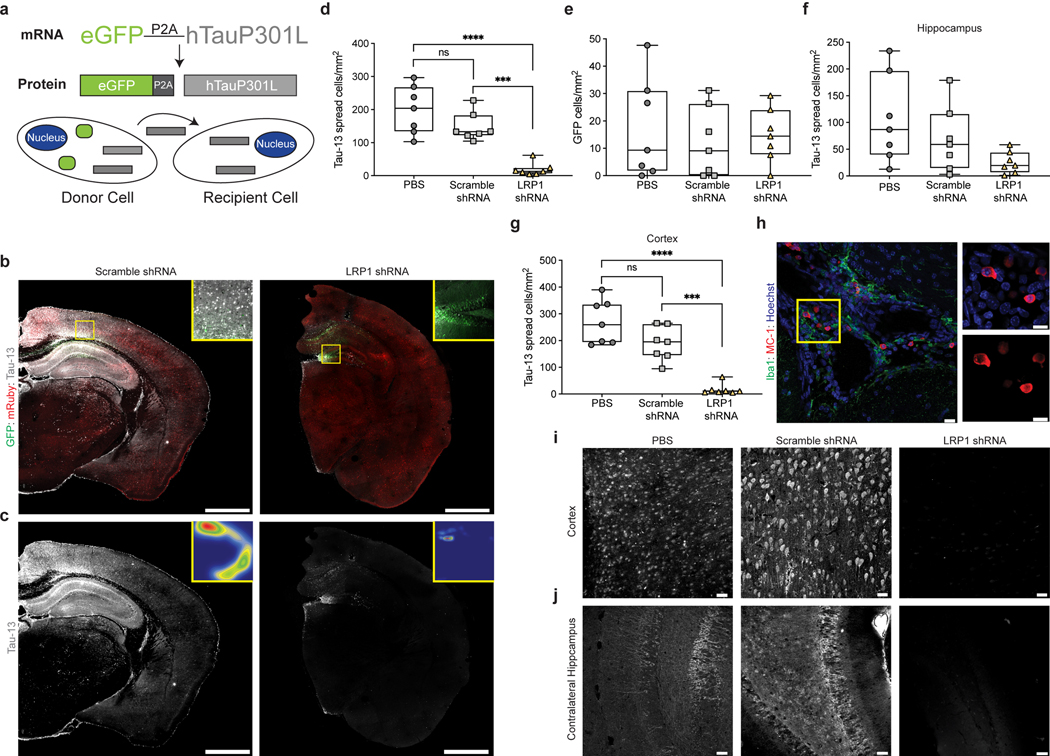
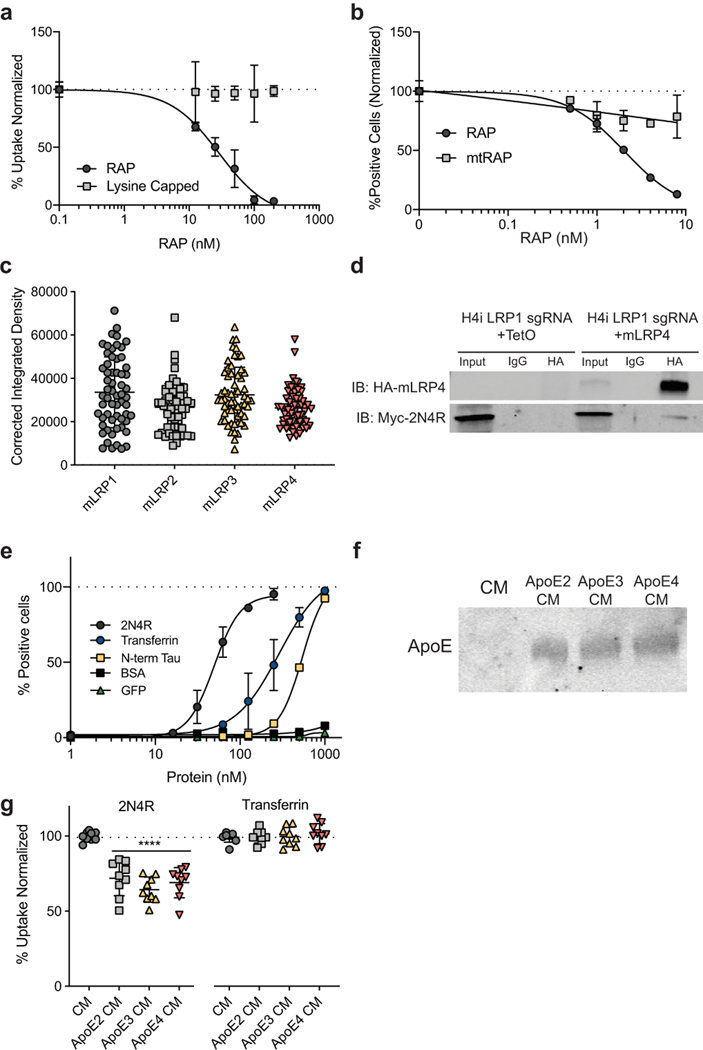
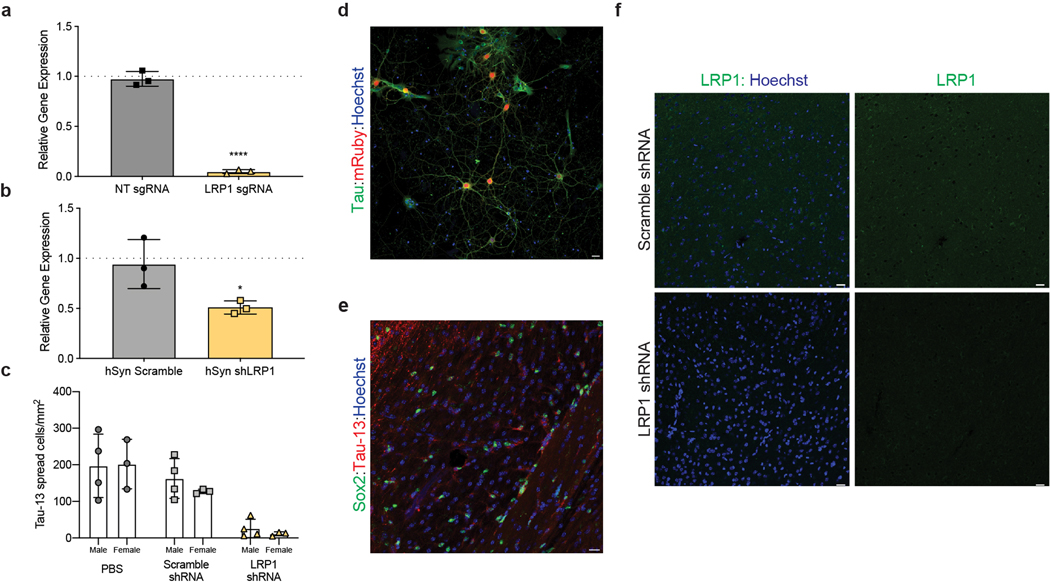
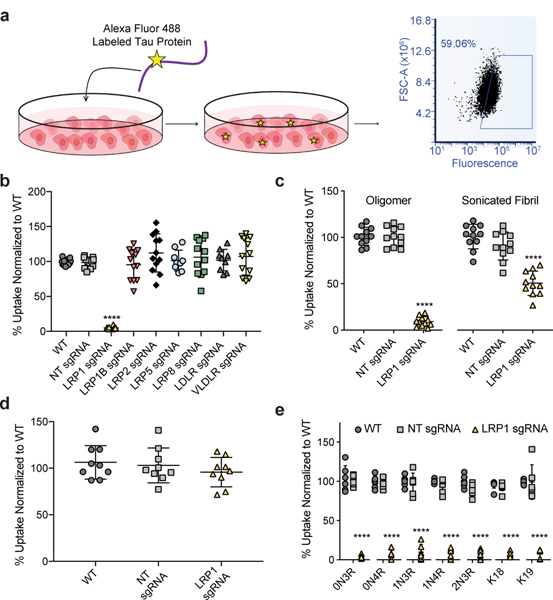
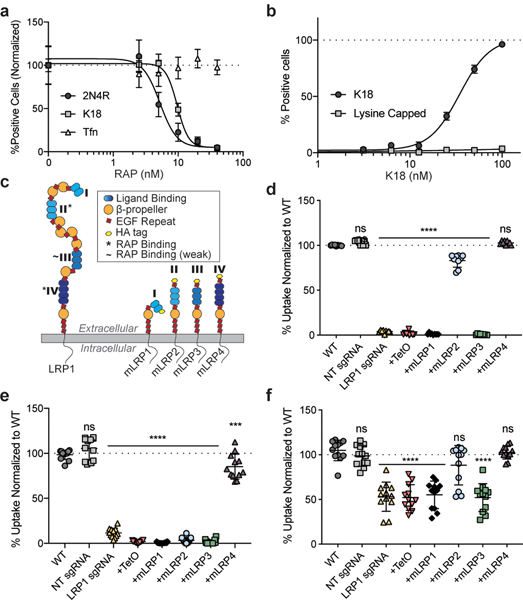
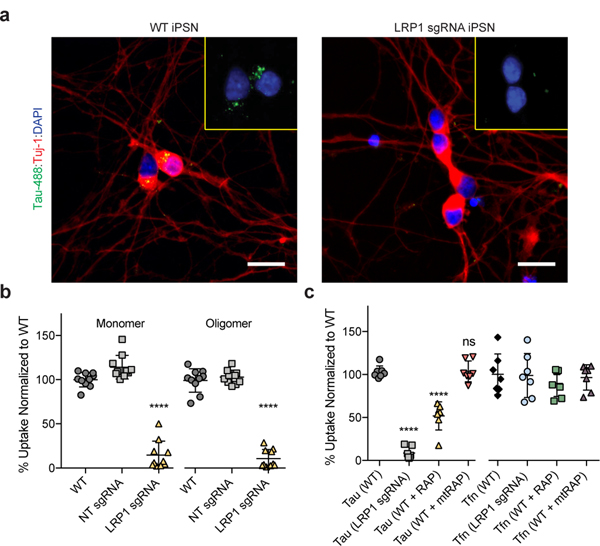
The spread of protein aggregates during disease progression is a common theme underlying many neurodegenerative diseases. The microtubule-associated protein tau has a central role in the pathogenesis of several forms of dementia known as tauopathies-including Alzheimer's disease, frontotemporal dementia and chronic traumatic encephalopathy. Progression of these diseases is characterized by the sequential spread and deposition of protein aggregates in a predictable pattern that correlates with clinical severity. This observation and complementary experimental studies have suggested that tau can spread in a prion-like manner, by passing to naive cells in which it templates misfolding and aggregation. However, although the propagation of tau has been extensively studied, the underlying cellular mechanisms remain poorly understood. Here we show that the low-density lipoprotein receptor-related protein 1 (LRP1) controls the endocytosis of tau and its subsequent spread. Knockdown of LRP1 significantly reduced tau uptake in H4 neuroglioma cells and in induced pluripotent stem cell-derived neurons. The interaction between tau and LRP1 is mediated by lysine residues in the microtubule-binding repeat region of tau. Furthermore, downregulation of LRP1 in an in vivo mouse model of tau spread was found to effectively reduce the propagation of tau between neurons. Our results identify LRP1 as a key regulator of tau spread in the brain, and therefore a potential target for the treatment of diseases that involve tau spread and aggregation.
在疾病进展过程中蛋白质聚集的扩散是许多神经退行性疾病的一个共同主题。微管相关蛋白 tau 在几种称为 tau 病的痴呆症的发病机制中起着核心作用,包括阿尔茨海默病、额颞叶痴呆和慢性创伤性脑病。这些疾病的进展特征是蛋白质聚集物的顺序扩散和沉积,具有可预测的模式,与临床严重程度相关。这一观察结果和补充性的实验研究表明,tau 可以通过传递到幼稚细胞中,以类似于朊病毒的方式进行传播,在幼稚细胞中,tau 模板错误折叠和聚集。然而,尽管 tau 的传播已经得到了广泛的研究,但潜在的细胞机制仍知之甚少。在这里,我们表明低密度脂蛋白受体相关蛋白 1 (LRP1) 控制 tau 的内吞作用及其随后的扩散。LRP1 的敲低显著降低了 H4 神经胶质瘤细胞和诱导多能干细胞衍生神经元中 tau 的摄取。tau 与 LRP1 之间的相互作用是由 tau 的微管结合重复区中的赖氨酸残基介导的。此外,在 tau 扩散的体内小鼠模型中下调 LRP1 被发现可有效减少神经元之间 tau 的传播。我们的研究结果确定了 LRP1 是大脑中 tau 扩散的关键调节剂,因此是治疗涉及 tau 扩散和聚集的疾病的潜在靶点。