Ross Edgar L, Jamison Robert N, Nicholls Lance, Perry Barbara M, Nolen Kim D
Brigham and Women's Hospital, Department of Anesthesiology, Pain Management Center, Chestnut Hill, MA, United States.
Brigham and Women's Hospital, Harvard Medical School, Pain Management Center, Chestnut Hill, MA, United States.
J Med Internet Res. 2020 Apr 16;22(4):e16939. doi: 10.2196/16939.
Although many pain-related smartphone apps exist, little attention has been given to understanding how these apps are used over time and what factors contribute to greater compliance and patient engagement.
This retrospective analysis was designed to help identify factors that predicted the benefits and future use of a smartphone pain app among patients with chronic pain.
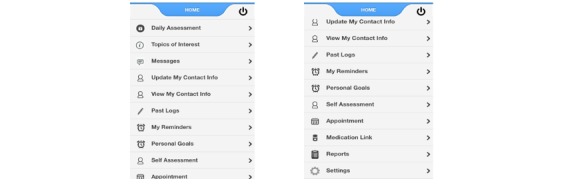
An app designed for both Android and iOS devices was developed by Brigham and Women's Hospital Pain Management Center (BWH-PMC) for users with chronic pain to assess and monitor pain and communicate with their providers. The pain app offered chronic pain assessment, push notification reminders and communication, personalized goal setting, relaxation sound files, topics of interest with psychological and medical pain management strategies, and line graphs from daily assessments. BWH-PMC recruited 253 patients with chronic pain over time to use the pain app. All subjects completed baseline measures and were asked to record their progress every day using push notification daily assessments. After 3 months, participants completed follow-up questionnaires and answered satisfaction questions. We defined the number of completed daily assessments as a measure of patient engagement with the pain app.
The average age of participants was 51.5 years (SD 13.7, range 18-92), 72.8% (182/253) were female, and 36.8% (78/212) reported the low back as their primary pain site. The number of daily assessments ranged from 1 to 426 (average 62.0, SD 49.9). The app was easy to introduce among patients, and it was well accepted. Those who completed more daily assessments (greater patient engagement) throughout the study were more likely to report higher pain intensity, more activity interference, and greater disability and were generally overweight compared with others. Patients with higher engagement with the app rated the app as offering greater benefit in coping with their pain and expressed more willingness to use the app in the future (P<.05) compared with patients showing lower engagement. Patients completing a small number of daily assessments reported less pain intensity, less daily activity interference, and less pain-related disability on average and were less likely to use the two-way messaging than those who were more engaged with the pain app (P<.05).
Patients with chronic pain who appeared to manage their pain better were less likely to report benefits of a smartphone pain app designed for chronic pain management. They demonstrated lower patient engagement in reporting their daily progress, in part, owing to the perceived burden of regularly using an app without a perceived benefit. An intrinsically different pain app designed and targeted for individuals based on early identification of user characteristics and adapted for each individual would likely improve compliance and app-related patient engagement.

尽管存在许多与疼痛相关的智能手机应用程序,但对于这些应用程序如何随时间使用以及哪些因素有助于提高依从性和患者参与度,人们关注甚少。
本回顾性分析旨在帮助确定预测慢性疼痛患者使用智能手机疼痛应用程序的益处和未来使用情况的因素。
布莱根妇女医院疼痛管理中心(BWH-PMC)为慢性疼痛患者开发了一款适用于安卓和iOS设备的应用程序,用于评估和监测疼痛,并与他们的医疗服务提供者进行沟通。该疼痛应用程序提供慢性疼痛评估、推送通知提醒和沟通、个性化目标设定、放松声音文件、带有心理和医学疼痛管理策略的感兴趣主题,以及每日评估的折线图。BWH-PMC随着时间推移招募了253名慢性疼痛患者使用该疼痛应用程序。所有受试者均完成了基线测量,并被要求使用推送通知每日评估来记录他们的进展。3个月后,参与者完成了随访问卷并回答了满意度问题。我们将完成的每日评估次数定义为患者对疼痛应用程序参与度的一项指标。
参与者的平均年龄为51.5岁(标准差13.7,范围18 - 92岁),72.8%(182/253)为女性,36.8%(78/212)报告下背部是其主要疼痛部位。每日评估次数范围为1至426次(平均62.0,标准差49.9)。该应用程序在患者中易于推广,且被广泛接受。在整个研究过程中完成更多每日评估(更高的患者参与度)的患者,与其他人相比,更有可能报告更高的疼痛强度、更多的活动干扰和更大的残疾,且普遍超重。与参与度较低的患者相比,对该应用程序参与度较高的患者认为该应用程序在应对疼痛方面提供了更大的益处,并表示更愿意在未来使用该应用程序(P <.05)。完成少量每日评估的患者平均报告的疼痛强度较低、日常活动干扰较少以及与疼痛相关的残疾较少,并且与对疼痛应用程序参与度较高的患者相比,使用双向消息传递的可能性较小(P <.05)。
似乎能更好地管理疼痛的慢性疼痛患者不太可能报告专为慢性疼痛管理设计的智能手机疼痛应用程序的益处。他们在报告每日进展方面的患者参与度较低,部分原因是由于在没有明显益处的情况下定期使用应用程序所感受到的负担。基于早期识别用户特征并为每个个体量身定制的本质上不同的疼痛应用程序可能会提高依从性和与应用程序相关的患者参与度。