Medway Metabonomics Research Group, University of Greenwich, Chatham Maritime, Kent, ME4 4TB, UK.
Horizon Discovery Ltd., Cambridge Research Park, 8100 Beach Dr, Waterbeach, Cambridge, CB25 9TL, UK.
Metabolomics. 2020 Apr 16;16(4):51. doi: 10.1007/s11306-020-01674-2.
Kirsten Rat Sarcoma Viral Oncogene Homolog (KRAS) mutations occur in approximately one-third of colorectal (CRC) tumours and have been associated with poor prognosis and resistance to some therapeutics. In addition to the well-documented pro-tumorigenic role of mutant Ras alleles, there is some evidence suggesting that not all KRAS mutations are equal and the position and type of amino acid substitutions regulate biochemical activity and transforming capacity of KRAS mutations.
To investigate the metabolic signatures associated with different KRAS mutations in codons 12, 13, 61 and 146 and to determine what metabolic pathways are affected by different KRAS mutations.
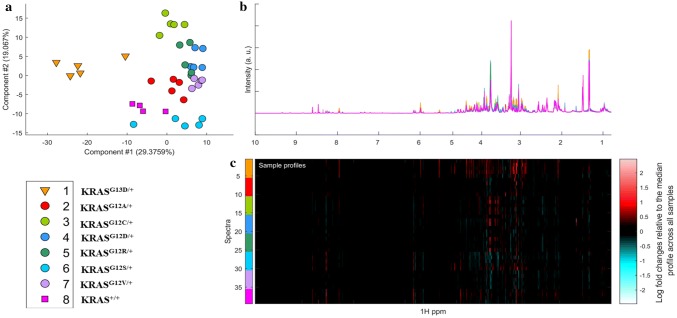
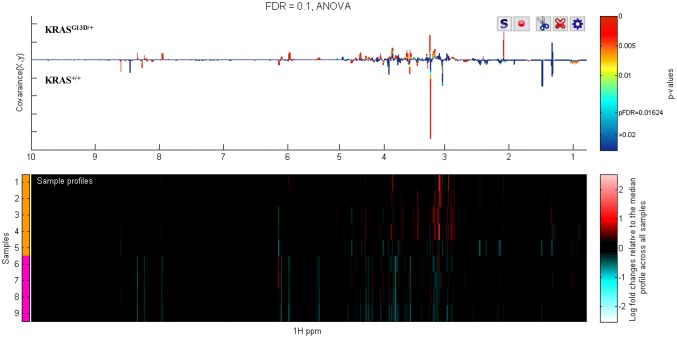
We applied an NMR-based metabonomics approach to compare the metabolic profiles of the intracellular extracts and the extracellular media from isogenic human SW48 CRC cell lines with different KRAS mutations in codons 12 (G12D, G12A, G12C, G12S, G12R, G12V), 13 (G13D), 61 (Q61H) and 146 (A146T) with their wild-type counterpart. We used false discovery rate (FDR)-corrected analysis of variance (ANOVA) to determine metabolites that were statistically significantly different in concentration between the different mutants.
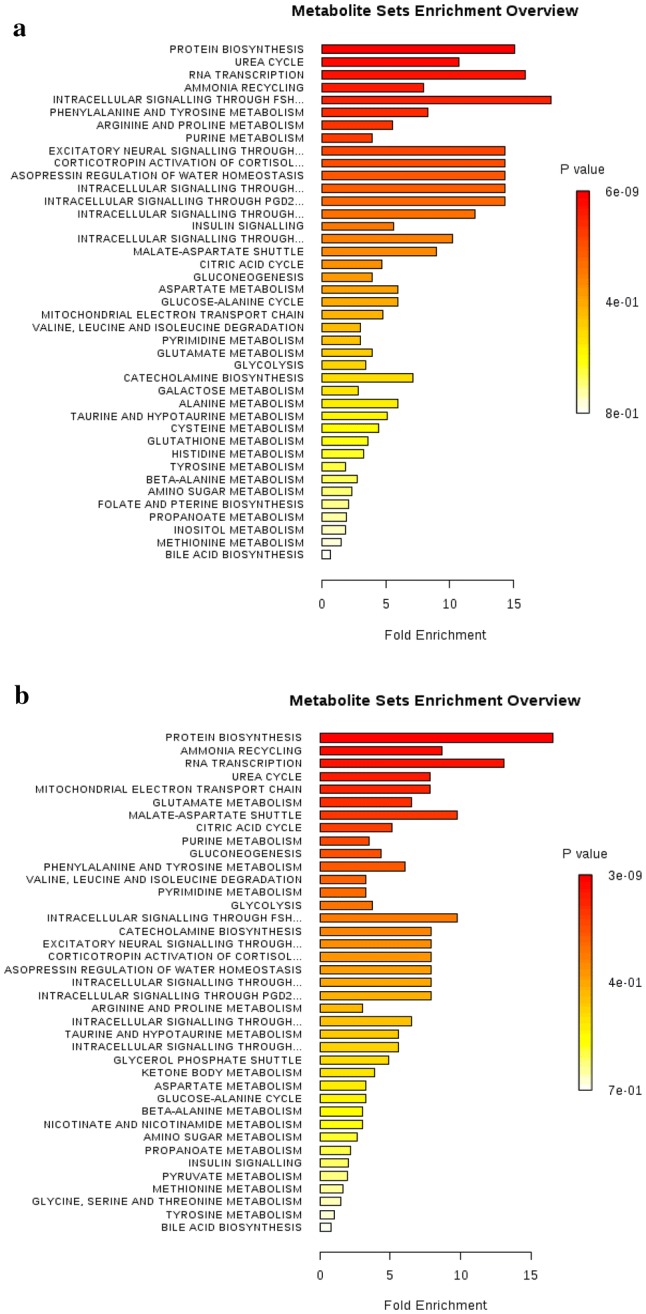
CRC cells carrying distinct KRAS mutations exhibited differential metabolic remodelling, including differences in glycolysis, glutamine utilization and in amino acid, nucleotide and hexosamine metabolism.
Metabolic differences among different KRAS mutations might play a role in their different responses to anticancer treatments and hence could be exploited as novel metabolic vulnerabilities to develop more effective therapies against oncogenic KRAS.
Kirsten 大鼠肉瘤病毒致癌基因同源物(KRAS)突变发生在大约三分之一的结直肠癌(CRC)肿瘤中,并与不良预后和对一些治疗方法的耐药性有关。除了突变 Ras 等位基因众所周知的促肿瘤作用外,还有一些证据表明并非所有 KRAS 突变都是平等的,并且氨基酸取代的位置和类型调节 KRAS 突变的生化活性和转化能力。
研究与密码子 12、13、61 和 146 中不同 KRAS 突变相关的代谢特征,并确定不同 KRAS 突变影响哪些代谢途径。
我们应用基于 NMR 的代谢组学方法比较具有不同 KRAS 突变(密码子 12(G12D、G12A、G12C、G12S、G12R、G12V)、13(G13D)、61(Q61H)和 146(A146T)的同基因人 SW48 CRC 细胞系的细胞内提取物和细胞外培养基的代谢谱,并与它们的野生型对照进行比较。我们使用错误发现率(FDR)校正的方差分析(ANOVA)来确定浓度在不同突变体之间存在统计学显着差异的代谢物。
携带不同 KRAS 突变的 CRC 细胞表现出不同的代谢重塑,包括糖酵解、谷氨酰胺利用以及氨基酸、核苷酸和己糖胺代谢的差异。
不同 KRAS 突变之间的代谢差异可能在它们对抗癌治疗的不同反应中发挥作用,因此可以作为开发针对致癌性 KRAS 的更有效治疗方法的新代谢弱点加以利用。