Renal, Electrolyte, and Hypertension Division, Department of Medicine, Department of Genetics, Perelman School of Medicine, University of Pennsylvania, Philadelphia, PA.
Renal, Electrolyte, and Hypertension Division, Department of Medicine, Department of Genetics, Perelman School of Medicine, University of Pennsylvania, Philadelphia, PA.
Semin Nephrol. 2020 Mar;40(2):199-205. doi: 10.1016/j.semnephrol.2020.01.010.
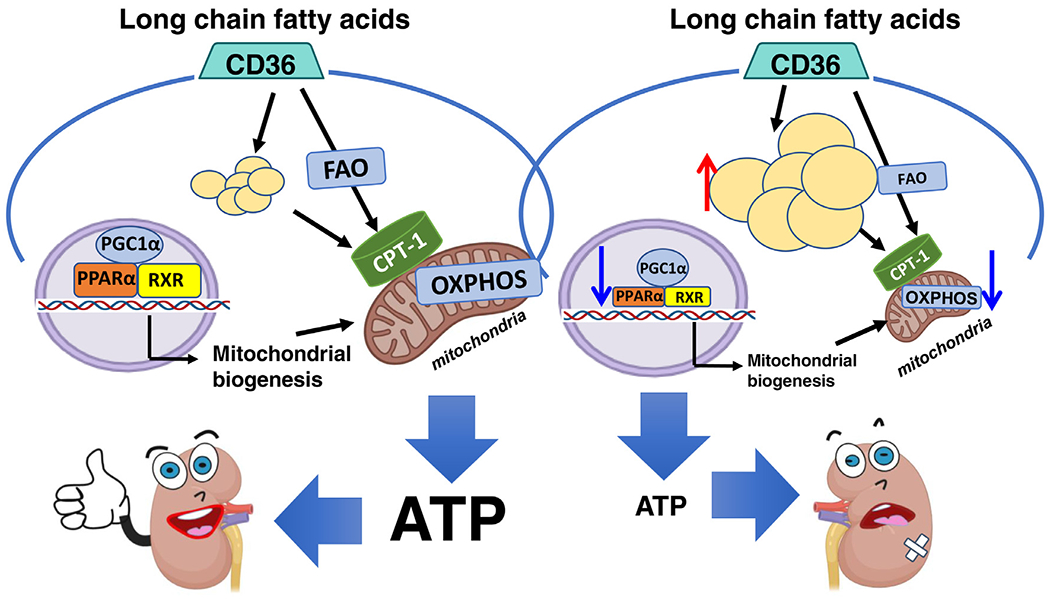
Acute kidney injury is a major contributor of chronic kidney disease development. The pathogenesis of acute kidney injury and chronic kidney disease shows significant similarities. Both conditions are associated with a defect in cellular metabolism, such as fatty acid oxidation and mitochondrial oxidative phosphorylation in kidney tubule cells and a marked increase in infiltrating immune cells. Here, we discuss how inflammatory cytokines and macrophages contribute to epithelial injury and metabolic defects. In addition, we discuss the role of mitochondrial damage and cytosolic leakage of the mitochondrial DNA activating the innate immune pathway such as cyclic guanosine monophosphate-adenosine monophosphate synthase/stimulator of interferon genes. The interplay between inflammation and metabolism appears to be critical for kidney disease development.
急性肾损伤是慢性肾脏病发展的主要原因。急性肾损伤和慢性肾脏病的发病机制有显著的相似性。这两种情况都与细胞代谢缺陷有关,如肾小管细胞中的脂肪酸氧化和线粒体氧化磷酸化,以及浸润性免疫细胞的显著增加。在这里,我们讨论了炎症细胞因子和巨噬细胞如何导致上皮损伤和代谢缺陷。此外,我们还讨论了线粒体损伤和线粒体 DNA 的细胞质渗漏在激活先天免疫途径(如环鸟苷酸-腺苷酸合酶/干扰素基因刺激物)中的作用。炎症和代谢之间的相互作用似乎对肾脏疾病的发展至关重要。