Department of Biology, Indiana University-Purdue University, Indianapolis, IN, USA.
The Francis Crick Institute, London, UK.
Bone. 2020 Jul;136:115367. doi: 10.1016/j.bone.2020.115367. Epub 2020 Apr 17.
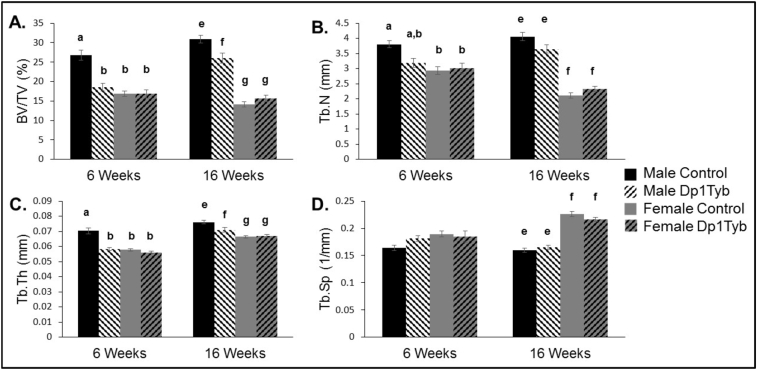
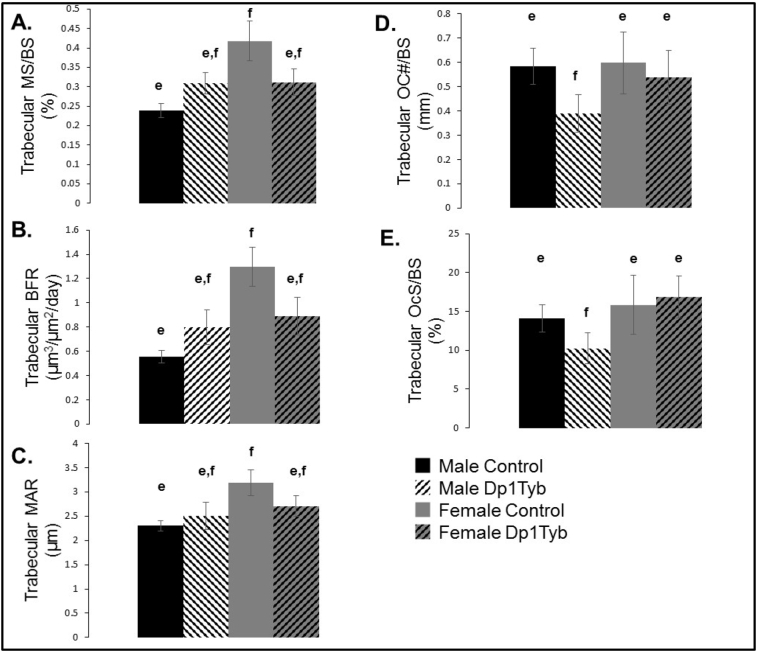
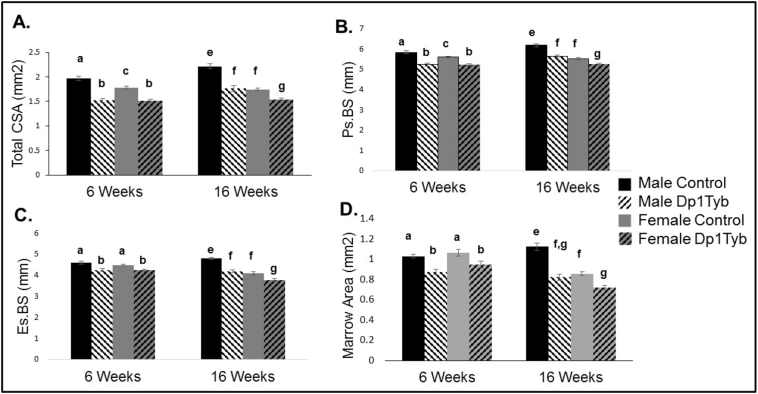
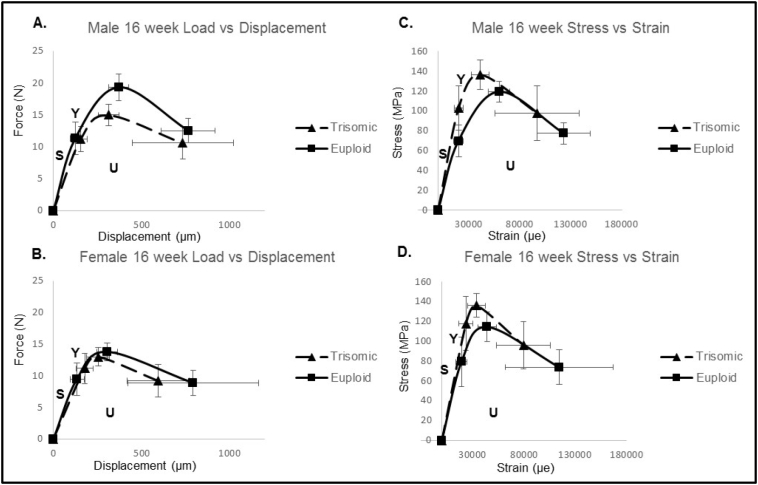
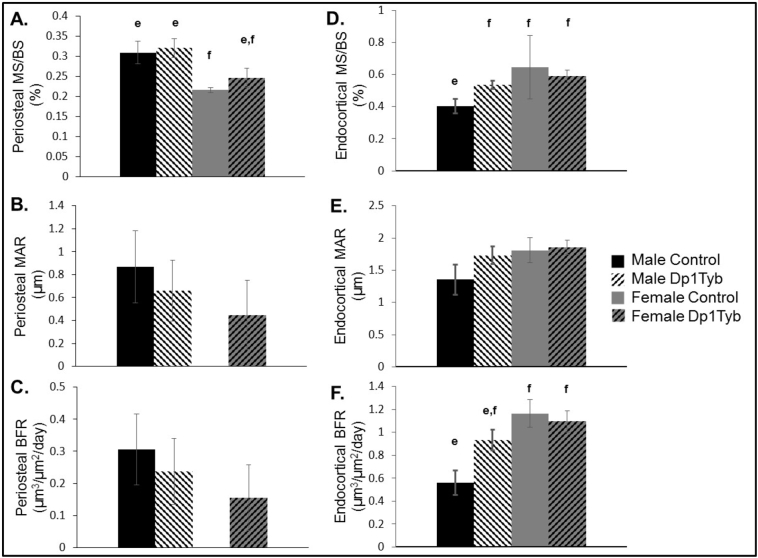
All individuals with Down syndrome (DS), which results from trisomy of human chromosome 21 (Ts21), present with skeletal abnormalities typified by craniofacial features, short stature and low bone mineral density (BMD). Differences in skeletal deficits between males and females with DS suggest a sexual dimorphism in how trisomy affects bone. Dp1Tyb mice contain three copies of all of the genes on mouse chromosome 16 that are homologous to human chromosome 21, males and females are fertile, and therefore are an excellent model to test the hypothesis that gene dosage influences the sexual dimorphism of bone abnormalities in DS. Dp1Tyb as compared to control littermate mice at time points associated with bone accrual (6 weeks) and skeletal maturity (16 weeks) showed deficits in BMD and trabecular architecture that occur largely through interactions between sex and genotype and resulted in lower percent bone volume in all female and Dp1Tyb male mice. Cortical bone in Dp1Tyb as compared to control mice exhibited different changes over time influenced by sex × genotype interactions including reduced cortical area in both male and female Dp1Tyb mice. Mechanical testing analyses suggested deficits in whole bone properties such as bone mass and geometry, but improved material properties in female and Dp1Tyb mice. Sexual dimorphisms and the influence of trisomic gene dosage differentially altered cellular properties of male and female Dp1Tyb bone. These data establish sex, gene dosage, skeletal site and age as important factors in skeletal development of DS model mice, paving the way for identification of the causal dosage-sensitive genes. Skeletal differences in developing male and female Dp1Tyb DS model mice replicated differences in less-studied adolescents with DS and established a foundation to understand the etiology of trisomic bone deficits.
所有唐氏综合征(DS)患者均存在 21 号人类染色体三体(Ts21),其骨骼异常特征包括颅面特征、身材矮小和低骨密度(BMD)。DS 患者的骨骼缺陷在男性和女性之间存在差异,表明三体对骨骼的影响存在性别二态性。Dp1Tyb 小鼠含有与人类 21 号染色体同源的所有 16 号染色体上的基因的三个拷贝,雌雄均具有生育能力,因此是测试基因剂量是否影响 DS 骨骼异常性别二态性的理想模型。与对照同窝仔鼠相比,Dp1Tyb 鼠在与骨量增加(6 周)和骨骼成熟(16 周)相关的时间点上表现出 BMD 和小梁结构缺陷,这些缺陷主要通过性别和基因型之间的相互作用发生,导致所有雌性和 Dp1Tyb 雄性小鼠的骨体积百分比降低。与对照小鼠相比,Dp1Tyb 小鼠的皮质骨随时间表现出不同的变化,这些变化受性别×基因型相互作用的影响,包括两性 Dp1Tyb 小鼠的皮质骨面积减少。机械测试分析表明,全骨特性(如骨量和几何形状)存在缺陷,但雌性和 Dp1Tyb 小鼠的材料特性得到改善。性别二态性和三体基因剂量的影响导致雌雄 Dp1Tyb 小鼠的骨骼细胞特性发生差异改变。这些数据确立了性别、基因剂量、骨骼部位和年龄是 DS 模型鼠骨骼发育的重要因素,为鉴定因果剂量敏感基因铺平了道路。发育中雄性和雌性 Dp1Tyb DS 模型鼠的骨骼差异复制了在研究较少的青少年 DS 患者中的差异,并为理解三体骨骼缺陷的病因奠定了基础。