Emergency Department, Peking Union Medical College Hospital, Chinese Academy of Medical Sciences and Peking Union Medical College, Beijing, China.
Department of Neurology, Peking Union Medical College Hospital, Chinese Academy of Medical Sciences and Peking Union Medical College, Beijing, China.
Orphanet J Rare Dis. 2020 Apr 19;15(1):98. doi: 10.1186/s13023-020-01375-y.
Reversible splenial lesion syndrome (RESLES) is a clinico-radiological syndrome characterized by the presence of reversible lesions specifically involving the splenium of the corpus callosum (SCC). The cause of RESLES is unknown. However, infectious-related mild encephalitis/encephalopathy (MERS) with a reversible splenial lesion remains the most common cause of reversible splenial lesions. Acute intermittent porphyria (AIP) is an autosomal dominant disorder caused by a partial deficiency of porphobilinogen deaminase (PBGD), the third enzyme in the heme biosynthetic pathway. It can affect the autonomic, peripheral, and central nervous system.
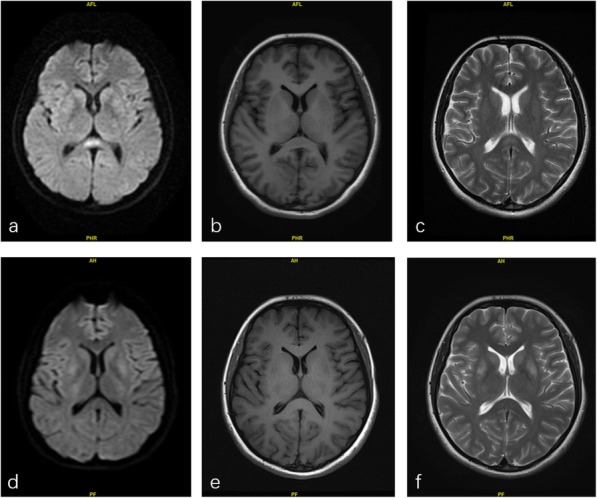
In this study, we report a 20-year-old woman with AIP who presented with MRI manifestations suggestive of RESLES, she had a novel HMBS nonsense mutation, a G to A mutation in base 594, which changed tryptophan to a stop codon (W198*).
To the best of our knowledge, this is only one published case of RELES associated with AIP.
可逆性胼胝体压部病变综合征(RESLES)是一种临床-影像学综合征,其特征为存在特异性累及胼胝体压部(SCC)的可逆性病变。RESLES 的病因不明。然而,感染相关的轻微脑炎/脑病(MERS)伴可逆性胼胝体病变仍然是可逆性胼胝体病变最常见的原因。急性间歇性血卟啉症(AIP)是一种常染色体显性遗传疾病,由卟啉原脱氨酶(PBGD)部分缺乏引起,PBGD 是血红素生物合成途径中的第三种酶。它可以影响自主神经、周围神经和中枢神经系统。
在本研究中,我们报告了一例 20 岁的 AIP 女性患者,其 MRI 表现提示 RESLES,她存在 HMBS 无义突变,即 594 位碱基的 G 到 A 突变,导致色氨酸变为终止密码子(W198*)。
据我们所知,这是唯一一例与 AIP 相关的 RELES 病例。