Abdulla Alan, Rogouti Omar, Hunfeld Nicole G M, Endeman Henrik, Dijkstra Annemieke, van Gelder Teun, Muller Anouk E, de Winter Brenda C M, Koch Birgit C P
Department of Hospital Pharmacy, Erasmus University Medical Center, P.O. Box 2040, 3000 CA, Rotterdam, The Netherlands.
Department of Intensive Care, Erasmus University Medical Center, Rotterdam, The Netherlands.
Eur J Clin Pharmacol. 2020 Jul;76(7):957-967. doi: 10.1007/s00228-020-02873-5. Epub 2020 Apr 19.
To develop and validate a population pharmacokinetic model of ciprofloxacin intravenously in critically ill patients, and determine target attainment to provide guidance for more effective regimens.
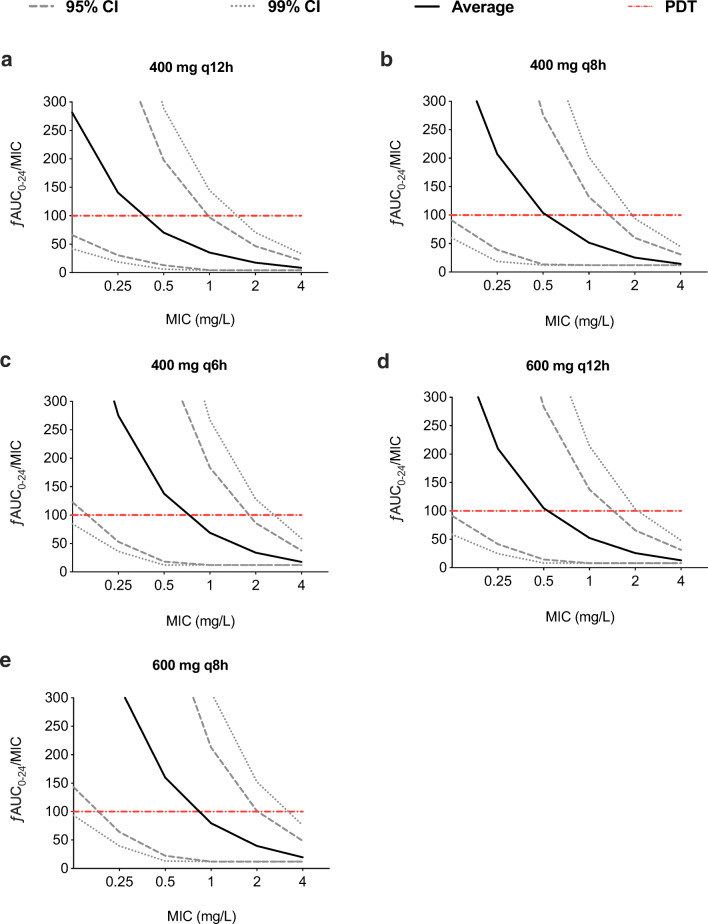
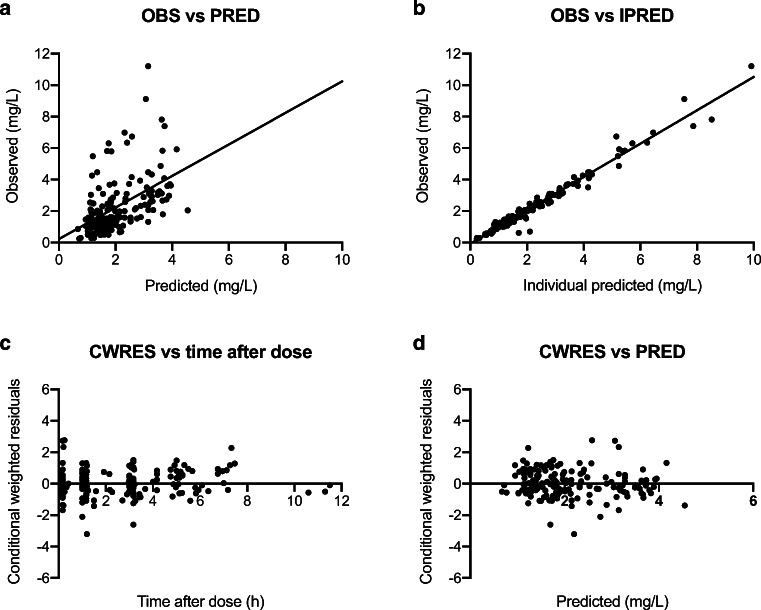
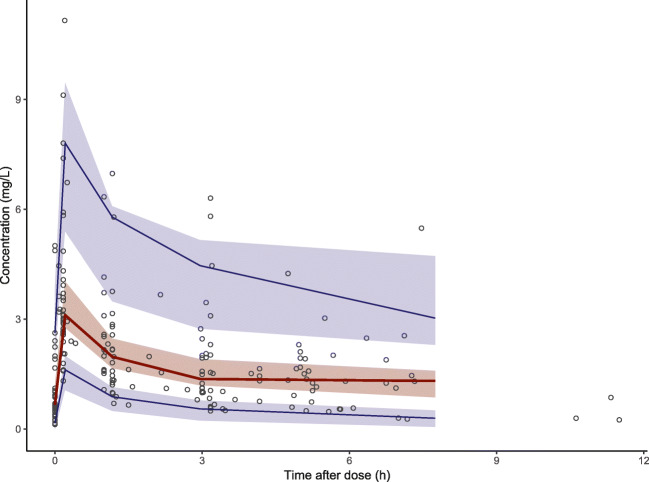
Non-linear mixed-effects modelling was used for the model development and covariate analysis. Target attainment of an ƒAUC/MIC ≥ 100 for different MICs was calculated for standard dosing regimens. Monte Carlo simulations were performed to define the probability of target attainment (PTA) of several dosing regimens.
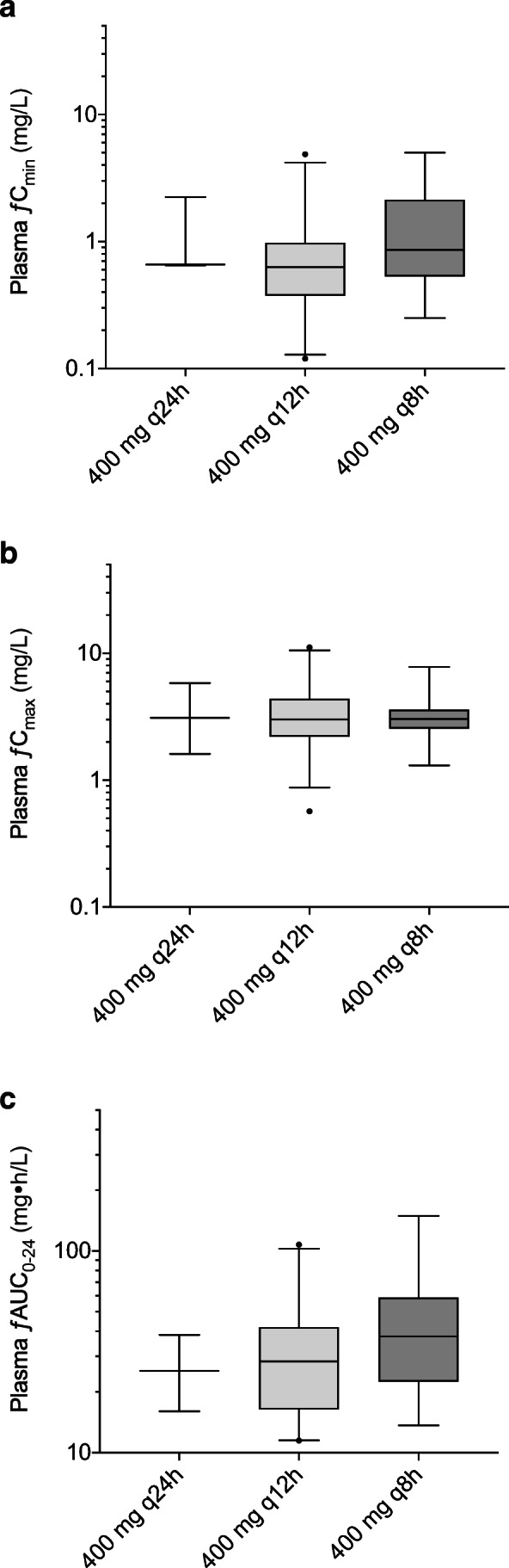
A total of 204 blood samples were collected from 42 ICU patients treated with ciprofloxacin 400-1200 mg/day, with median values for age of 66 years, APACHE II score of 22, BMI of 26 kg/m, and eGFR of 58.5 mL/min/1.73 m. The median ƒAUC and ƒC were 29.9 mg•h/L and 3.1 mg/L, respectively. Ciprofloxacin pharmacokinetics were best described by a two-compartment model. We did not find any significant covariate to add to the structural model. The proportion of patients achieving the target ƒAUC/MIC ≥ 100 were 61.9% and 16.7% with MICs of 0.25 and 0.5 mg/L, respectively. Results of the PTA simulations suggest that a dose of ≥ 1200 mg/day is needed to achieve sufficient ƒAUC/MIC ratios.
The model described the pharmacokinetics of ciprofloxacin in ICU patients adequately. No significant covariates were found and high inter-individual variability of ciprofloxacin pharmacokinetics in ICU patients was observed. The poor target attainment supports the use of higher doses such as 1200 mg/day in critically ill patients, while the variability of inter-individual pharmacokinetics parameters emphasizes the need for therapeutic drug monitoring to ensure optimal exposure.
建立并验证环丙沙星在重症患者中的群体药代动力学模型,并确定目标达成情况,为更有效的治疗方案提供指导。
采用非线性混合效应建模进行模型开发和协变量分析。计算标准给药方案下不同 MIC 时ƒAUC/MIC≥100 的目标达成情况。进行蒙特卡洛模拟以确定几种给药方案的目标达成概率(PTA)。
共收集了 42 例接受环丙沙星 400 - 1200 mg/天治疗的 ICU 患者的 204 份血样,年龄中位数为 66 岁,急性生理与慢性健康状况评分系统 II(APACHE II)评分为 22,体重指数(BMI)为 26 kg/m²,估算肾小球滤过率(eGFR)为 58.5 mL/min/1.73 m²。ƒAUC 和ƒC 的中位数分别为 29.9 mg•h/L 和 3.1 mg/L。环丙沙星药代动力学用二室模型描述最佳。未发现有任何显著协变量可添加到结构模型中。当 MIC 为 0.25 和 0.5 mg/L 时,达到目标ƒAUC/MIC≥100 的患者比例分别为 61.9%和 16.7%。PTA 模拟结果表明,需要≥1200 mg/天的剂量才能达到足够的ƒAUC/MIC 比值。
该模型充分描述了环丙沙星在 ICU 患者中的药代动力学。未发现显著协变量,且观察到 ICU 患者中环丙沙星药代动力学存在较高的个体间变异性。目标达成情况不佳支持在重症患者中使用更高剂量,如 1200 mg/天,而个体药代动力学参数的变异性强调了治疗药物监测以确保最佳暴露的必要性。