Xu Wei, Yan Zeqiang, Hu Fen, Wei Wei, Yang Chao, Sun Zhihua
1Department of Dermatology, Xiangyang Central Hospital, Affiliated Hospital of Hubei University of Arts and Science, Xiangyang, 441021 People's Republic of China.
2Department of Gastroenterology, Xiangyang Central Hospital, Affiliated Hospital of Hubei University of Arts and Science, Xiangyang, 441021 People's Republic of China.
Cancer Cell Int. 2020 Apr 9;20:116. doi: 10.1186/s12935-020-01167-1. eCollection 2020.
The significance of long non-coding RNAs (lncRNAs) in mediating oxidative stress of cancers has been implicated recently. This study proposed a potential therapeutic target lncRNA growth arrest-specific transcript 5 (GAS5) for melanoma, due to its crucial role in oxidative stress and apoptosis of melanoma cells by regulating the enhancer of zeste homolog 2 (EZH2)-mediated CDKN1C expression.
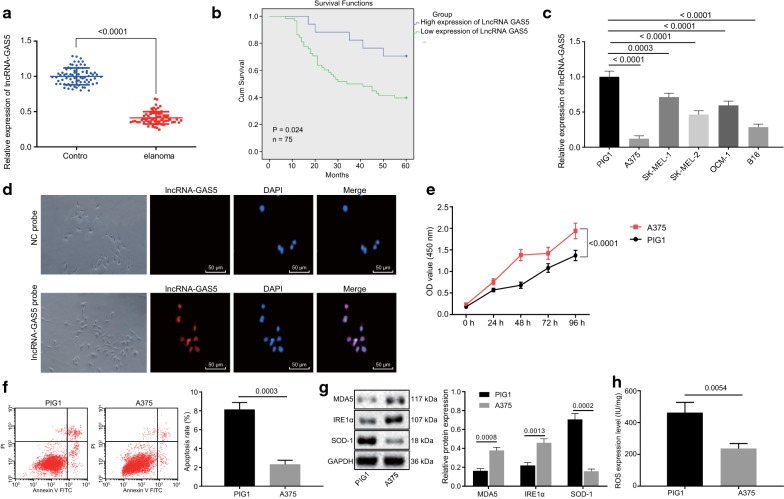
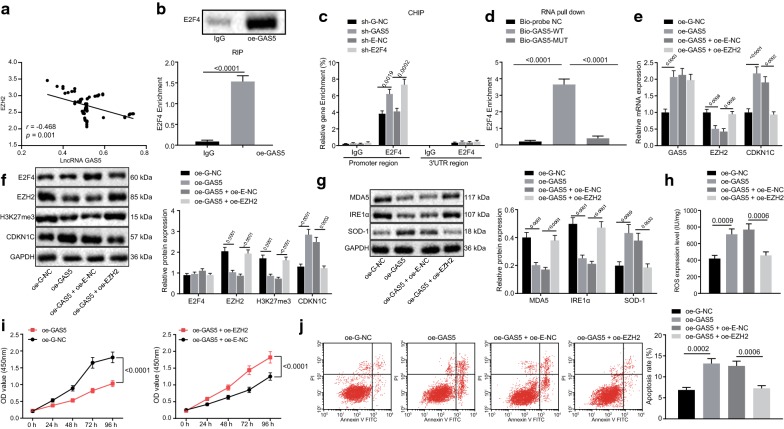
The lncRNA GAS5 expression pattern was examined in melanoma tissues and cells. The correlation of lncRNA GAS5, EZH2, and CDKN1C with survival rate of melanoma patients was analyzed. In melanoma cell lines, lncRNA GAS5 expression was overexpressed or knocked down to clarify its effects on cell viability, apoptosis, and oxidative stress. The interaction between lncRNA GAS5 and EZH2 was examined by RIP and RNA pull-down assays followed by verification of the target relationship between EZH2 and CDKN1C.
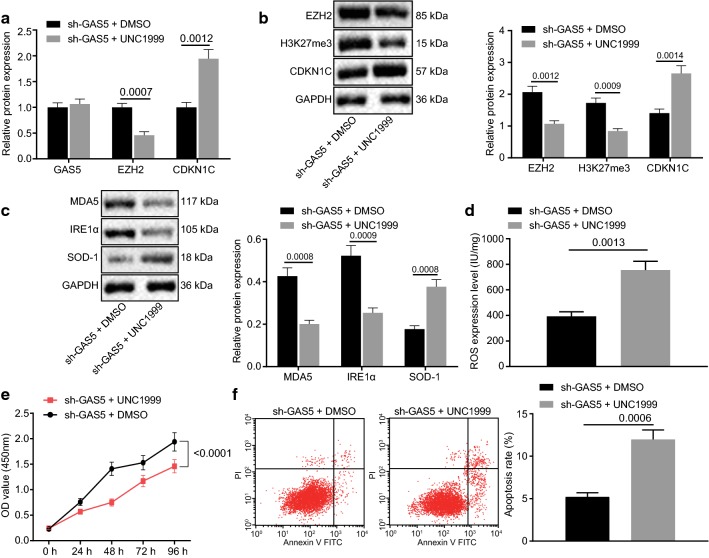
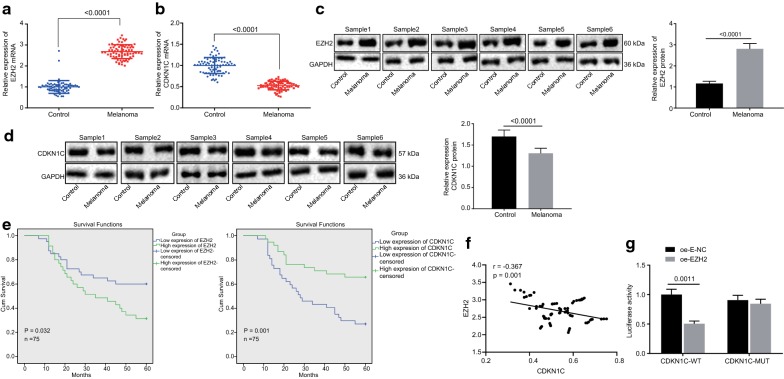
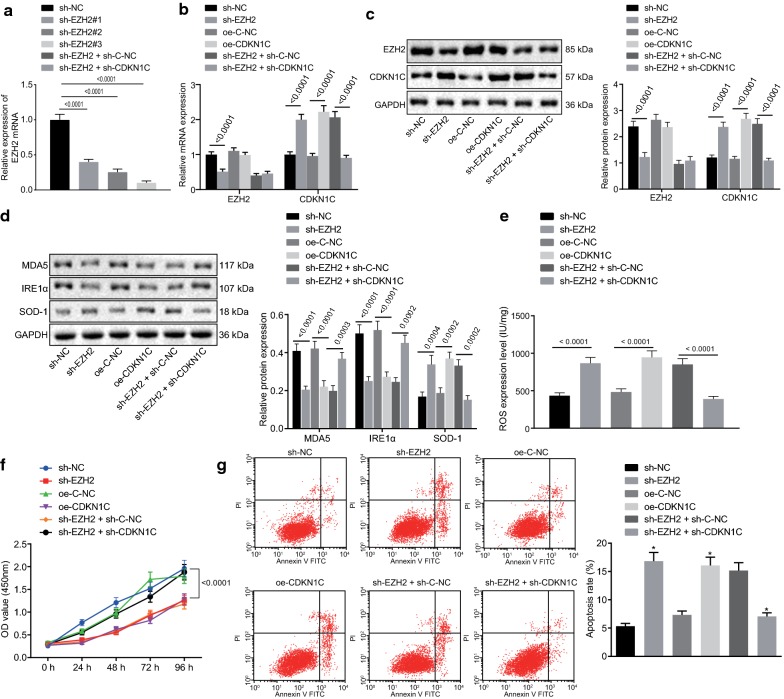
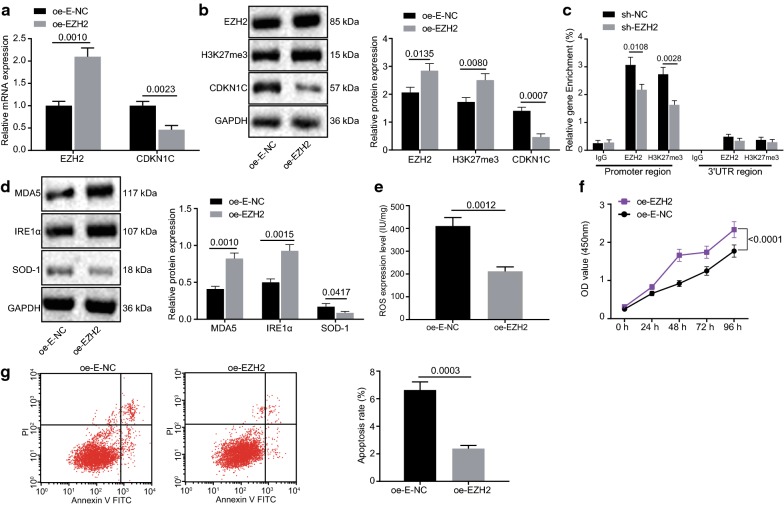
High expression of EZH2 and poor expression of lncRNA GAS5 and CDKN1C was observed in melanoma tissues and found to be correlated with the reduction in survival expectancy of melanoma patients. Overexpression of lncRNA GAS5 or CDKN1C or EZH2 knockdown could inhibit cell viability but enhance melanoma cell apoptosis and oxidative stress. Importantly, lncRNA GAS5 attenuated EZH2 expression by recruiting E2F4 to the EZH2 promoter region and knockdown of EZH2 upregulated CDKN1C expression by inhibiting the H3K27me3.
The evidence provided by our study highlighted the involvement of lncRNA GAS5 in the translational suppression of EZH2 as well as the upregulation of CDKN1C, resulting in the promotion of melanoma cell apoptosis and oxidative stress.
长链非编码RNA(lncRNA)在介导癌症氧化应激中的作用最近已被提及。本研究提出了一种针对黑色素瘤的潜在治疗靶点lncRNA生长停滞特异性转录本5(GAS5),因为它通过调节zeste同源物2(EZH2)介导的CDKN1C表达,在黑色素瘤细胞的氧化应激和凋亡中起关键作用。
检测黑色素瘤组织和细胞中lncRNA GAS5的表达模式。分析lncRNA GAS5、EZH2和CDKN1C与黑色素瘤患者生存率的相关性。在黑色素瘤细胞系中,过表达或敲低lncRNA GAS5表达,以阐明其对细胞活力、凋亡和氧化应激的影响。通过RNA免疫沉淀(RIP)和RNA下拉试验检测lncRNA GAS5与EZH2之间的相互作用,随后验证EZH2与CDKN1C之间的靶向关系。
在黑色素瘤组织中观察到EZH2高表达,lncRNA GAS5和CDKN1C低表达,且发现它们与黑色素瘤患者预期生存期缩短相关。lncRNA GAS5或CDKN1C过表达或EZH2敲低均可抑制细胞活力,但增强黑色素瘤细胞凋亡和氧化应激。重要的是,lncRNA GAS5通过将E2F4募集到EZH2启动子区域来减弱EZH2表达,而EZH2敲低通过抑制H3K27me3上调CDKN1C表达。
我们的研究提供的证据突出了lncRNA GAS5在EZH2翻译抑制以及CDKN1C上调中的作用,从而促进黑色素瘤细胞凋亡和氧化应激。