Elter Elena, Wagner Marita, Buchenauer Lisa, Bauer Mario, Polte Tobias
Department of Environmental Immunology, UFZ-Helmholtz Centre for Environmental Research Leipzig-Halle, Leipzig, Germany.
Department of Dermatology, Venerology and Allergology, Leipzig University Medical Center, Leipzig, Germany.
Front Immunol. 2020 Apr 3;11:550. doi: 10.3389/fimmu.2020.00550. eCollection 2020.
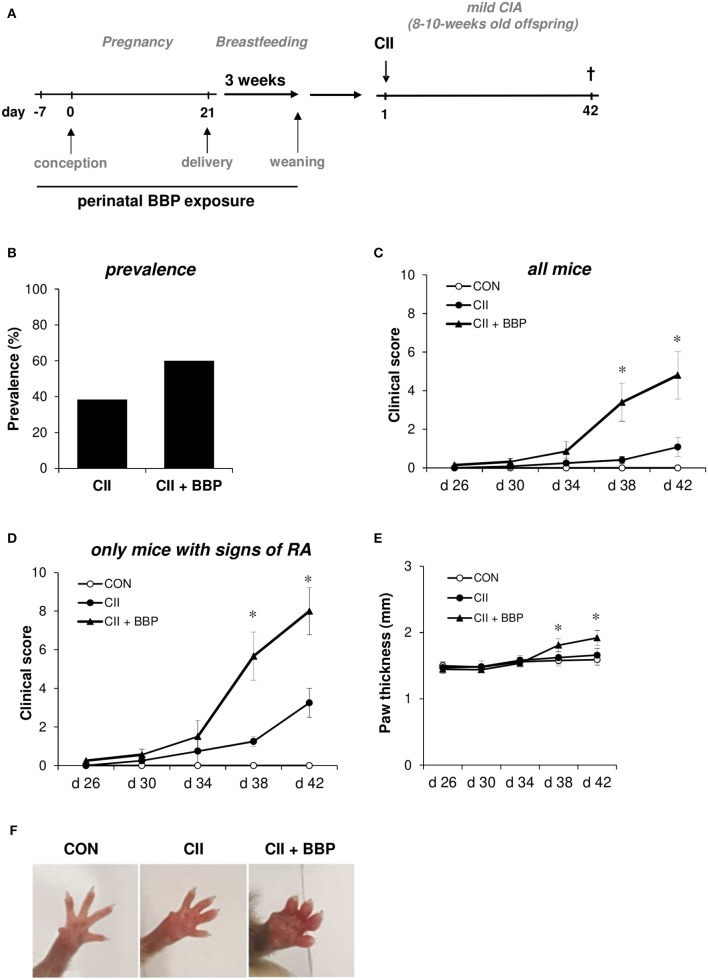
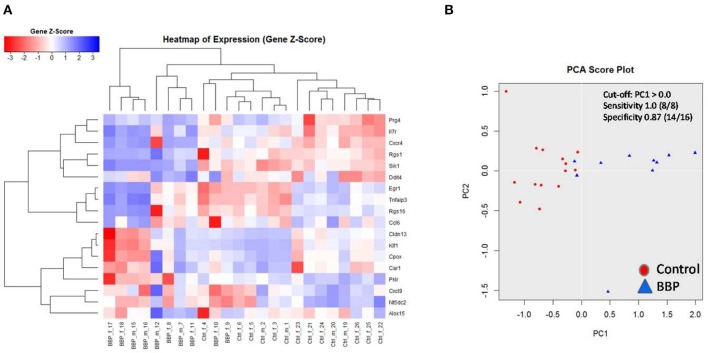
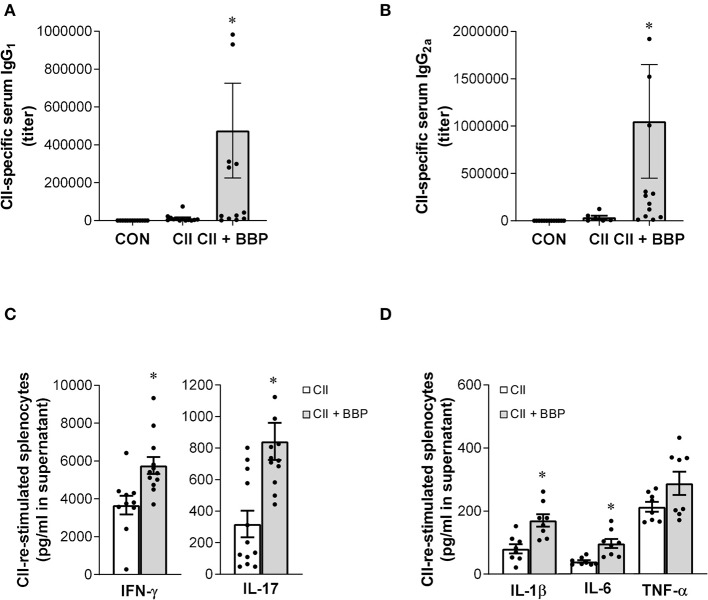
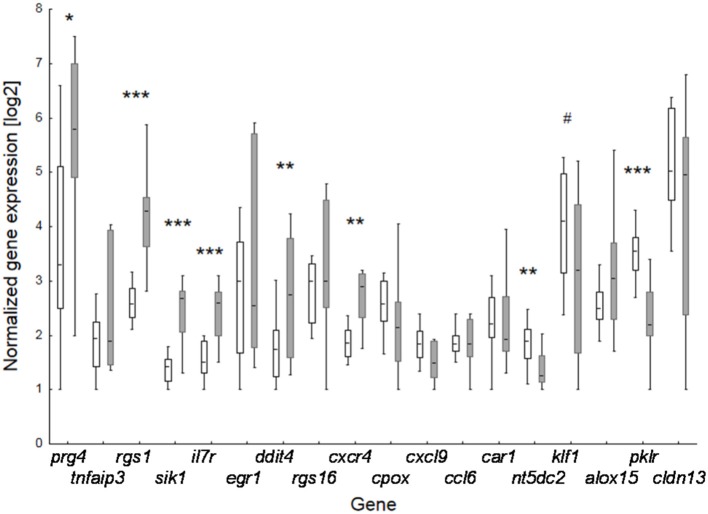
The prenatal and early postnatal period is highly sensitive to environmental exposures that may interfere with the developmental programming of the immune system leading to an altered disease risk in later life. To clarify the role of early influences in activation or exacerbation of autoimmune diseases like rheumatoid arthritis (RA) we investigated the effect of maternal exposure during the prenatal and lactational period of DBA/1 mice to the plasticizer benzyl butyl phthalate (BBP) on the development of RA in the offspring. Using a mild collagen-induced arthritis (CIA) model, maternal BBP-exposure increased both the prevalence and the severity of RA in the progeny compared to un-exposed dams. Additionally, maternal BBP exposure led to elevated serum IgG and IgG level in the offspring and increased the IFN-γ and IL-17 release from collagen-re-stimulated spleen cells. Transcriptome analysis of splenocytes isolated from 3-week-old pups before RA-induction revealed considerable changes in gene expression in the offspring from BBP-exposed dams. Among them were and , all genes that have previously been described as associated with RA pathology. In summary, our results demonstrate that perinatal exposure to BBP increases the susceptibility of the offspring to RA, probably via a phthalate-induced disturbed regulation of RA-relevant genes or signaling pathways.
产前和产后早期对环境暴露高度敏感,这些暴露可能会干扰免疫系统的发育编程,导致日后生活中疾病风险改变。为了阐明早期影响在类风湿性关节炎(RA)等自身免疫性疾病的激活或加重中的作用,我们研究了DBA/1小鼠在产前和哺乳期暴露于增塑剂邻苯二甲酸苄基丁酯(BBP)对其后代RA发展的影响。使用轻度胶原诱导性关节炎(CIA)模型,与未暴露的母鼠相比,母鼠暴露于BBP会增加后代中RA的患病率和严重程度。此外,母鼠暴露于BBP会导致后代血清IgG和IgG水平升高,并增加胶原再刺激的脾细胞中IFN-γ和IL-17的释放。对RA诱导前3周龄幼崽分离的脾细胞进行转录组分析,发现来自暴露于BBP的母鼠的后代基因表达有相当大的变化。其中包括 和 ,所有这些基因先前都被描述为与RA病理学相关。总之,我们的结果表明,围产期暴露于BBP会增加后代对RA的易感性,可能是通过邻苯二甲酸酯诱导的与RA相关基因或信号通路的调节紊乱。