Ambilkar Shubham C, Bansod Naresh D, Kapgate Bharat P, Das Amit, Formanek Petr, Rajkumar Kasilingam, Das Chayan
Department of Chemistry, Visvesvaraya National Institute of Technology, Nagpur 440010, Maharashtra, India.
Indian Rubber Manufacturers Research Association, Thane (W) 400604, Maharashtra, India.
ACS Omega. 2020 Apr 3;5(14):7751-7761. doi: 10.1021/acsomega.9b03495. eCollection 2020 Apr 14.
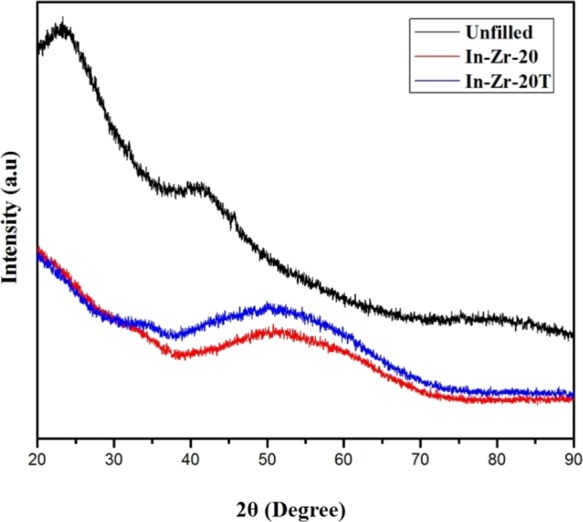
Zirconia particles are generated into a nitrile rubber (NBR) matrix via a solution sol-gel method in a controlled manner. Formation of zirconia particles from their precursor (zirconium(IV) propoxide) occurs under optimized reaction conditions. As a result, the nanoparticles are embedded and well dispersed in the NBR matrix that results in a remarkable improvement in mechanical and thermal properties of the composite. Such reinforcement is not realized when the composites are prepared following the conventional technique of filler loading by physical mixing, although the filler content remains the same. Use of a surface active coupling agent TESPT (bis-(3-triethoxysilylpropyl) tetrasulfide) in the reactive sol-gel system is found to further boost the mechanical performance of the composites. In order to ensure the practical application of the developed composites, a series of studies have been performed that consist of dynamic performance, swelling, thermal degradation, and resistance to oil, ozone, and abrasion. Analysis of the results reveals that zirconia could be an excellent filler for the NBR composites to withstand in a harsh and adverse environment.
通过溶液溶胶 - 凝胶法以可控方式将氧化锆颗粒生成到丁腈橡胶(NBR)基体中。氧化锆颗粒由其前驱体(丙醇锆(IV))在优化的反应条件下形成。结果,纳米颗粒嵌入并良好地分散在NBR基体中,这导致复合材料的机械性能和热性能有显著提高。当按照传统的物理混合填料加载技术制备复合材料时,尽管填料含量相同,但并未实现这种增强效果。发现在反应性溶胶 - 凝胶体系中使用表面活性偶联剂TESPT(双(3 - 三乙氧基甲硅烷基丙基)四硫化物)可进一步提高复合材料的机械性能。为了确保所开发复合材料的实际应用,已经进行了一系列研究,包括动态性能、溶胀、热降解以及耐油、耐臭氧和耐磨性能。结果分析表明,氧化锆可能是NBR复合材料在恶劣和不利环境中使用的优良填料。