Jinxiu Liu, Shuimei Liang, Ming Xue, Jonathan Liu Cs, Xiangju Liu, Wenyuan Duan
Yinfeng Medical Laboratory, Jinan Shandong.
Genetics Diagnostic Lab, Tai'an Maternity and Child Care Hospital, Tai'an, China.
Medicine (Baltimore). 2020 Apr;99(16):e19813. doi: 10.1097/MD.0000000000019813.
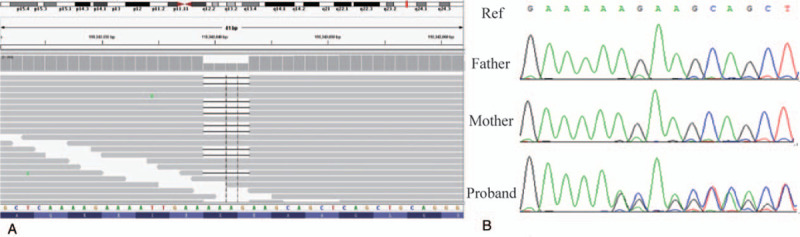
Wiedemann-Steiner syndrome (WDSTS, online mendelian inheritance in man 605130) is a rare autosomal dominant disorder characterized by hypertrichosis cubiti. Here, we report a Chinese boy who do not show the characteristic of hypertrichosis cubiti, and was misdiagnosed as blepharophimosis-ptosis-epicanthus inversus syndrome at first. We found a de novo frameshift mutation (p.Glu390Lysfs*10) in the KMT2A gene, which was not reported before. Our study increases the cohort of Chinese WDSTS patients, and expand the WDSTS phenotypic and variation spectrum.
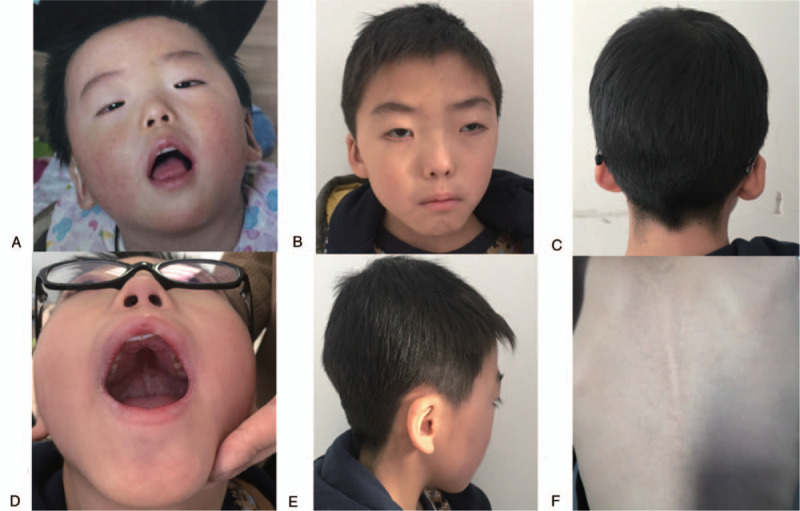
The patient demonstrated typical craniofacial features of blepharophimosis-ptosis-epicanthus inversus syndrome, including small palpebral fissures, ptosis, telecanthus, and epicanthus inversus, besides he had congenital heart disease (ventricular septal defects), strabismus, hypotonia, amblyopia, delayed speech and language development, delayed psychomotor development, and amblyopia (HP:0000646) which was not reported before.
FOXL2 gene was cloned and sequenced, however, there was no mutation detected in this patient. The result of Chromosomal microarray analysis was normal. The patient was diagnosed as WDSTS by whole exome sequencing.
The patient received cardiac surgery, frontalis suspension and regular speech and occupational therapy. He also treated with growth hormone (GH).
The patient's symptoms are improved after cardiac surgery and frontalis suspension, he can express himself well now and had a 10 cm gain in height.
As the relationship between genotype and phenotype becomes more and more clear, WES is incredibly powerful tool to diagnose the disease of WDSTS.
维德曼 - 施泰纳综合征(WDSTS,在线人类孟德尔遗传605130)是一种罕见的常染色体显性疾病,其特征为肘毛过多。在此,我们报告一名中国男孩,他未表现出肘毛过多的特征,起初被误诊为睑裂狭小 - 上睑下垂 - 内眦赘皮综合征。我们在KMT2A基因中发现了一个新发的移码突变(p.Glu390Lysfs*10),此前未见报道。我们的研究增加了中国WDSTS患者队列,并扩展了WDSTS的表型和变异谱。
该患者表现出睑裂狭小 - 上睑下垂 - 内眦赘皮综合征典型的颅面特征,包括睑裂小、上睑下垂、内眦间距增宽和内眦赘皮,此外他还患有先天性心脏病(室间隔缺损)、斜视、肌张力低下、弱视、语言发育迟缓、精神运动发育迟缓以及一种此前未报道过的弱视(HP:0000646)。
对FOXL2基因进行克隆和测序,然而,该患者未检测到突变。染色体微阵列分析结果正常。通过全外显子组测序,该患者被诊断为WDSTS。
患者接受了心脏手术、额肌悬吊术以及定期的言语和职业治疗。他还接受了生长激素(GH)治疗。
心脏手术和额肌悬吊术后,患者症状有所改善,他现在能够很好地表达自己,身高增长了10厘米。
随着基因型与表型之间的关系越来越清晰,全外显子组测序是诊断WDSTS疾病的极其强大的工具。