Department of Orthopedic Surgery, Peking Union Medical College Hospital, Peking Union Medical College, Chinese Academy of Medical Science, Beijing, China.
Department of Plastic Surgery, Peking Union Medical College Hospital, Peking Union Medical College, Chinese Academy of Medical Science, Beijing, China.
BMC Musculoskelet Disord. 2020 Apr 20;21(1):256. doi: 10.1186/s12891-020-03294-2.
In 2013, denosumab was introduced as peri-operative adjuvant treatment for giant cell tumor (GCT) of bone as it inhibits osteoclast activity. It is suggested that denosumab relives pain, facilitate curettage in lesions requiring resection initially. However, controversy remains whether denosumab increases the risk of local recurrence after surgery.
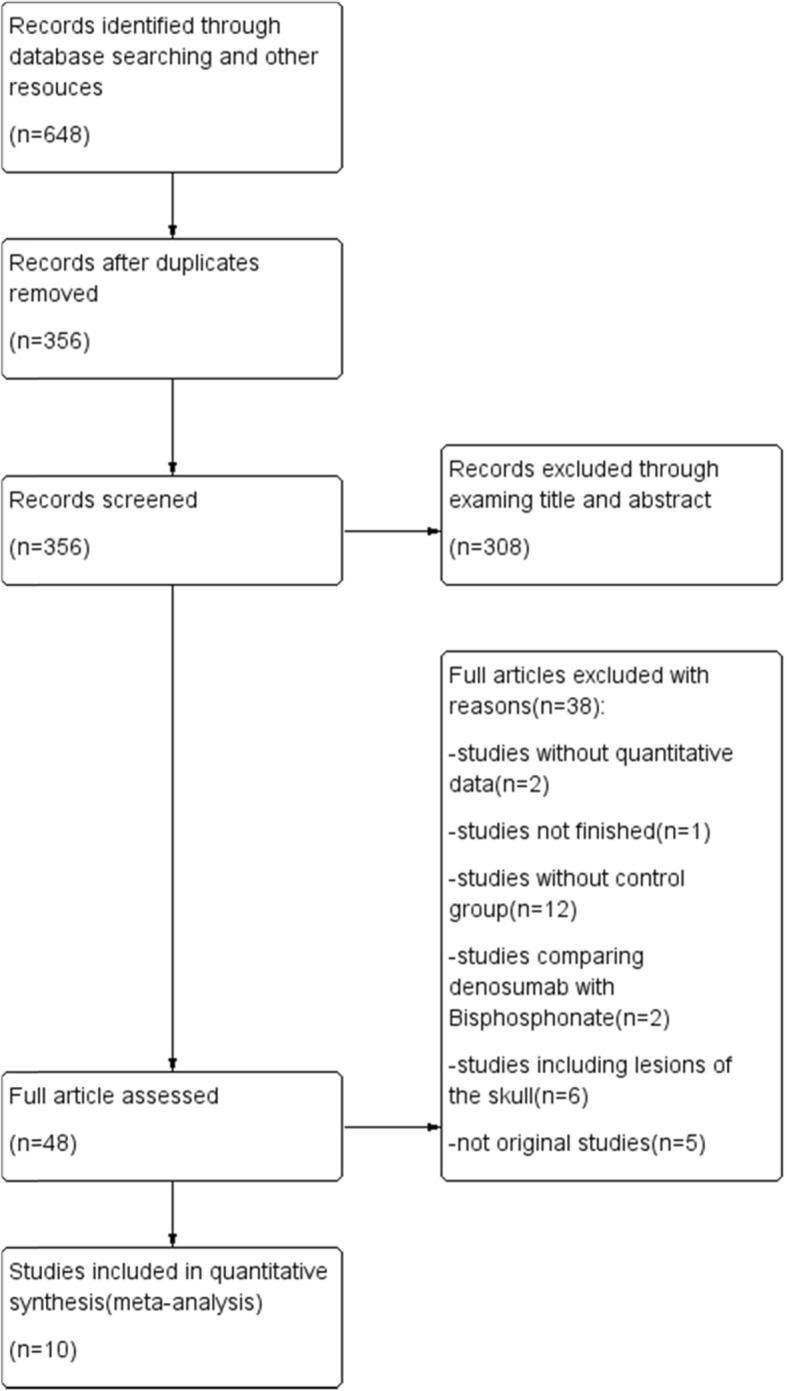
Medline, Embase and the Cochrane Library were comprehensively searched in June 2019 to identify studies investigating the clinical outcome of GCT of bone with and without peri-operative denosumab after surgery. Data were gathered and a meta-analysis was conducted.
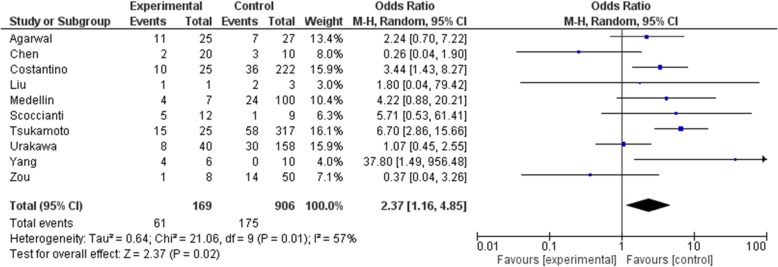
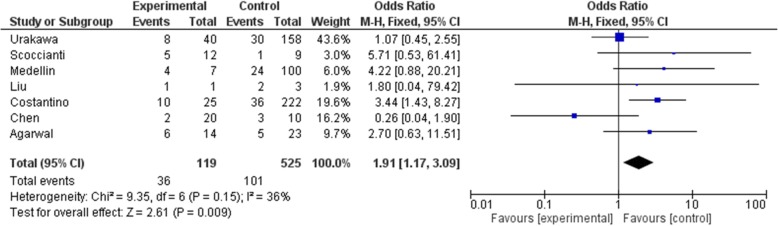
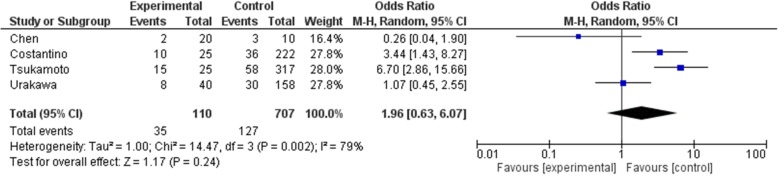
Ten studies with 1082 cases (169 in denosumab group, 913 in control group) were included. Overall, denosumab was associated with significantly higher risk of recurrence(P < 0.02) and inferior 5 year recurrence free survival(P = 0.000). Denosumab and curettage has a relatively higher risk of recurrence comparing to curettage alone(P = 0.07). The risk of recurrence is not significantly increased if denosumab was administered both preoperatively and postoperatively(P = 0.24).
Administration of denosumab is associated with increased risk of recurrence due to a variety of reasons, though it is proven effective in relieving pain, enabling curettage and improved functional outcome. Post-operative denosumab is recommended as it continuously suppress/eliminate residue tumor cells.
2013 年,地舒单抗被引入作为骨巨细胞瘤(GCT)的围手术期辅助治疗药物,因为它可以抑制破骨细胞活性。有研究表明,地舒单抗可以缓解疼痛,使最初需要切除的病变中的刮除术更容易进行。然而,关于地舒单抗是否会增加手术后局部复发的风险仍存在争议。
2019 年 6 月,通过综合检索 Medline、Embase 和 Cochrane 图书馆,以确定研究骨巨细胞瘤围手术期应用地舒单抗治疗后临床结果的研究。收集数据并进行荟萃分析。
共纳入 10 项研究,共 1082 例患者(地舒单抗组 169 例,对照组 913 例)。总体而言,地舒单抗与更高的复发风险相关(P<0.02),5 年无复发生存率较低(P=0.000)。与单独刮除术相比,地舒单抗联合刮除术具有更高的复发风险(P=0.07)。如果术前和术后都使用地舒单抗,复发风险没有显著增加(P=0.24)。
地舒单抗的应用与复发风险的增加有关,这可能是由于多种原因引起的,尽管它在缓解疼痛、促进刮除术和改善功能结果方面已被证实有效。术后应用地舒单抗被推荐,因为它可以持续抑制/消除残留肿瘤细胞。