Department of Biology, Indiana University, Bloomington, IN, 47405, USA.
BMC Biol. 2020 Apr 20;18(1):41. doi: 10.1186/s12915-020-00773-9.
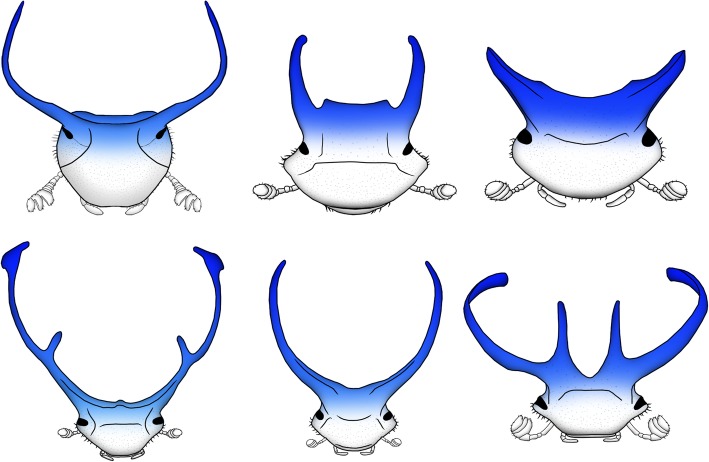
How novel traits integrate within ancient trait complexes without compromising ancestral functions is a foundational challenge in evo-devo. The insect head represents an ancient body region patterned by a deeply conserved developmental genetic network, yet at the same time constitutes a hot spot for morphological innovation. However, the mechanisms that facilitate the repeated emergence, integration, and diversification of morphological novelties within this body region are virtually unknown. Using horned Onthophagus beetles, we investigated the mechanisms that instruct the development of the dorsal adult head and the formation and integration of head horns, one of the most elaborate classes of secondary sexual weapons in the animal kingdom.
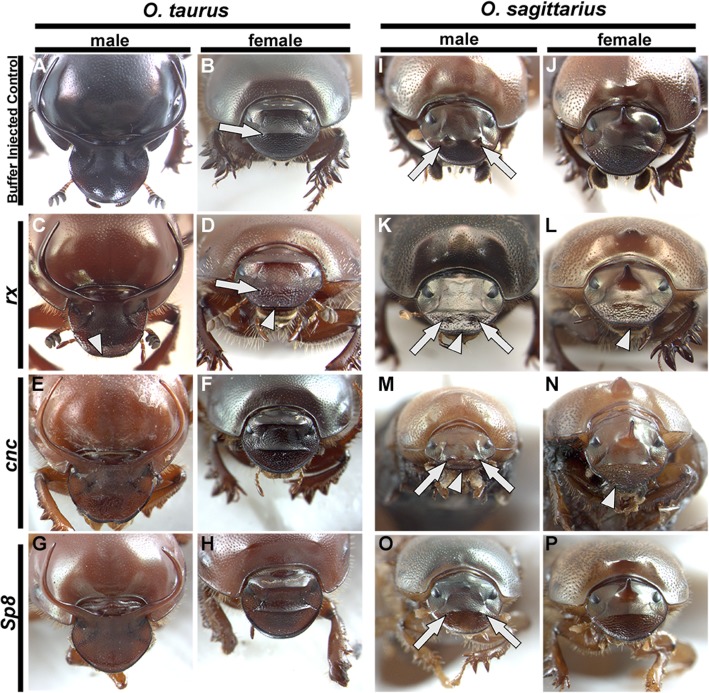
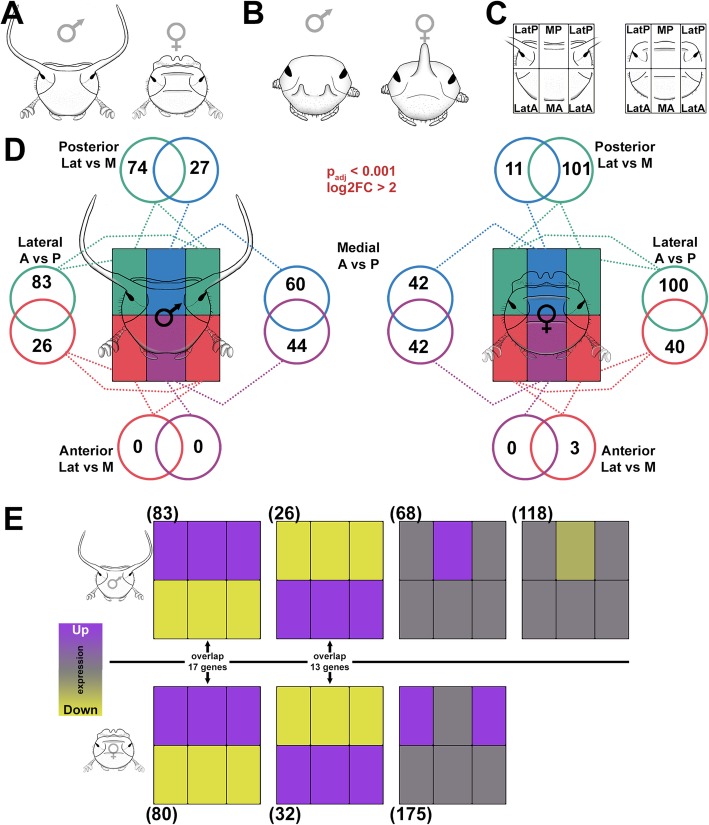
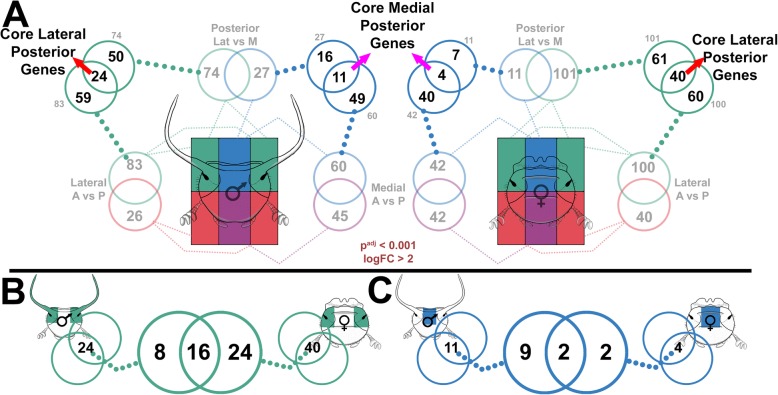
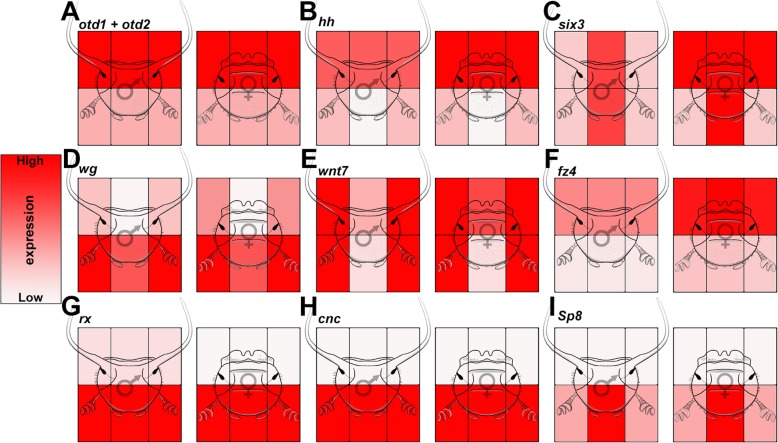
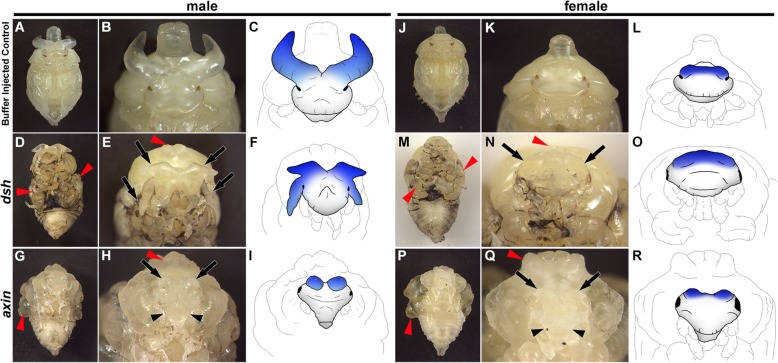
Using region-specific RNAseq and gene knockdowns, we (i) show that the head is compartmentalized along multiple axes, (ii) identify striking parallels between morphological and transcriptional complexity across regions, yet (iii) fail to identify a horn-forming gene module. Instead, (iv) our results support that sex-biased regulation of a shared transcriptional repertoire underpins the formation of horned and hornless heads. Furthermore, (v) we show that embryonic head patterning genes frequently maintain expression within the dorsal head well into late post-embryonic development, thereby possibly facilitating the repurposing of such genes within novel developmental contexts. Lastly, (vi) we identify novel functions for several genes including three embryonic head patterning genes in the integration of both posterior and anterior head horns.
Our results illuminate how the adult insect head is patterned and suggest mechanisms capable of integrating novel traits within ancient trait complexes in a sex- and species-specific manner. More generally, our work underscores how significant morphological innovation in developmental evolution need not require the recruitment of new genes, pathways, or gene networks but instead may be scaffolded by pre-existing developmental machinery.
新特征如何在不影响祖先功能的情况下融入古老的特征复合体,这是进化发育生物学的一个基本挑战。昆虫头部代表了一个由深度保守的发育遗传网络塑造的古老身体区域,但同时也是形态创新的热点。然而,促进该身体区域内形态新特征的重复出现、整合和多样化的机制实际上还不得而知。利用有角的蜣螂,我们研究了指导成虫头部背部发育以及头角形成和整合的机制,头角是动物王国中最复杂的一类次生性武器之一。
使用区域特异性 RNA 测序和基因敲低,我们 (i) 表明头部沿多个轴进行分区,(ii) 发现在形态和转录复杂性方面存在明显的相似之处,但 (iii) 未能确定角形成基因模块。相反,(iv) 我们的结果支持性别偏向调控共享转录本在有角和无角头部的形成中起作用。此外,(v) 我们表明,胚胎头部模式形成基因在后期胚胎发育后仍经常在头部背部表达,从而可能促进这些基因在新的发育环境中重新发挥作用。最后,(vi) 我们确定了几个基因的新功能,包括三个胚胎头部模式形成基因在整合后部和前部头角中的作用。
我们的研究结果阐明了昆虫成虫头部的模式形成方式,并提出了能够以性别和物种特异性的方式将新特征整合到古老特征复合体中的机制。更普遍地说,我们的工作强调了发育进化中显著的形态创新不一定需要新基因、途径或基因网络的招募,而是可以通过预先存在的发育机制来支撑。