Institute of Molecular Biology and Tumor Research (IMT), Center for Tumor Biology and Immunology, Philipps University, Marburg, Germany.
Clinic for Gynecology, Gynecologic Oncology and Endocrinology, Center for Tumor Biology and Immunology, Philipps University, Marburg, Germany.
Cell Death Dis. 2020 Apr 20;11(4):249. doi: 10.1038/s41419-020-2438-8.
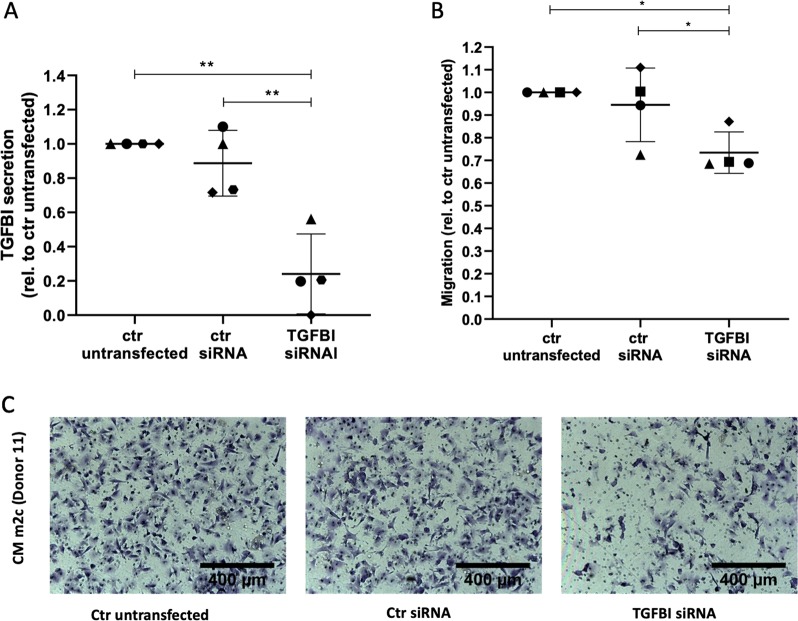
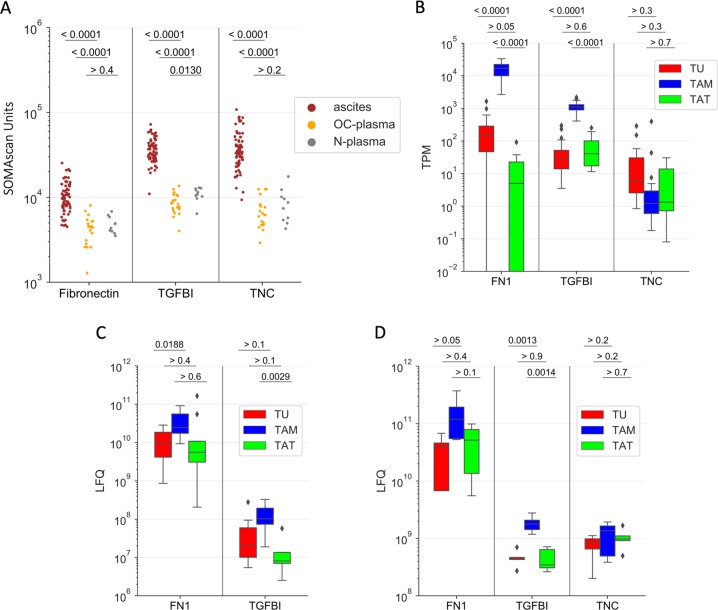
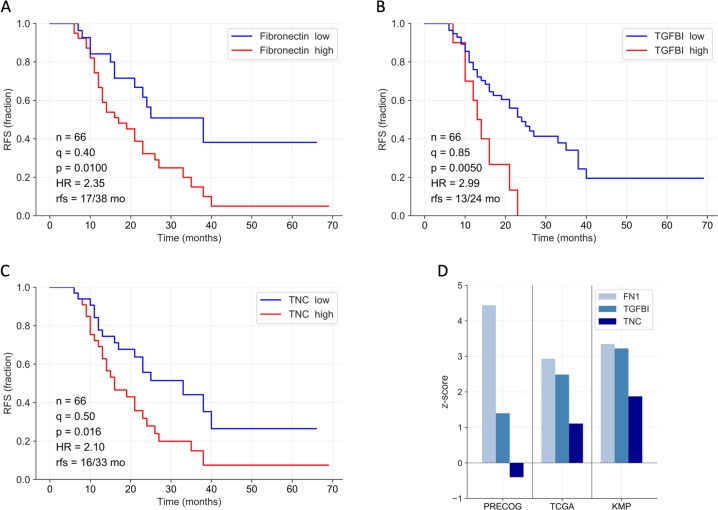
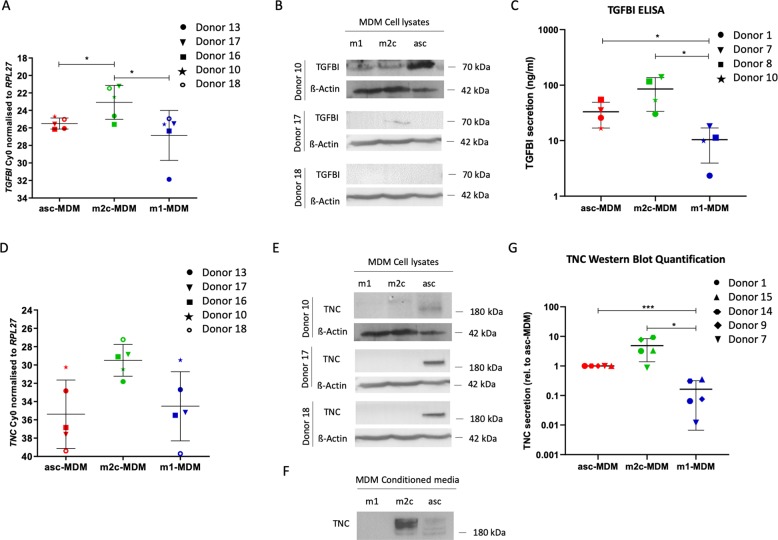
A central and unique aspect of high-grade serous ovarian carcinoma (HGSC) is the extensive transcoelomic spreading of tumor cell via the peritoneal fluid or malignant ascites. We and others identified tumor-associated macrophages (TAM) in the ascites as promoters of metastasis-associated processes like extracellular matrix (ECM) remodeling, tumor cell migration, adhesion, and invasion. The precise mechanisms and mediators involved in these functions of TAM are, however, largely unknown. We observed that HGSC migration is promoted by soluble mediators from ascites-derived TAM, which can be emulated by conditioned medium from monocyte-derived macrophages (MDM) differentiated in ascites to TAM-like asc-MDM. A similar effect was observed with IL-10-induced alternatively activated m2c-MDM but not with LPS/IFNγ-induced inflammatory m1-MDM. These observations provided the basis for deconvolution of the complex TAM secretome by performing comparative secretome analysis of matched triplets of different MDM phenotypes with different pro-migratory properties (asc-MDM, m2c-MDM, m1-MDM). Mass spectrometric analysis identified an overlapping set of nine proteins secreted by both asc-MDM and m2c-MDM, but not by m1-MDM. Of these, three proteins, i.e., transforming growth factor beta-induced (TGFBI) protein, tenascin C (TNC), and fibronectin (FN1), have been associated with migration-related functions. Intriguingly, increased ascites concentrations of TGFBI, TNC, and fibronectin were associated with short progression-free survival. Furthermore, transcriptome and secretome analyses point to TAM as major producers of these proteins, further supporting an essential role for TAM in promoting HGSC progression. Consistent with this hypothesis, we were able to demonstrate that the migration-inducing potential of asc-MDM and m2c-MDM secretomes is inhibited, at least partially, by neutralizing antibodies against TGFBI and TNC or siRNA-mediated silencing of TGFBI expression. In conclusion, the present study provides the first experimental evidence that TAM-derived TGFBI and TNC in ascites promote HGSC progression.
高级别浆液性卵巢癌(HGSC)的一个核心和独特特征是肿瘤细胞通过腹腔液或恶性腹水广泛地穿过细胞层进行转移。我们和其他人在腹水中发现肿瘤相关巨噬细胞(TAM)是促进转移相关过程的促进剂,如细胞外基质(ECM)重塑、肿瘤细胞迁移、黏附和侵袭。然而,TAM 这些功能所涉及的确切机制和介质在很大程度上尚不清楚。我们观察到 HGSC 迁移是由腹水来源的 TAM 的可溶性介质促进的,这种促进作用可以通过在腹水中分化为 TAM 样腹水衍生巨噬细胞(asc-MDM)的单核细胞衍生巨噬细胞(MDM)的条件培养基来模拟。用白细胞介素 10(IL-10)诱导的替代激活的 m2c-MDM 观察到类似的效果,但用脂多糖(LPS)/干扰素 γ(IFNγ)诱导的炎症性 m1-MDM 则没有。这些观察结果为通过对具有不同促迁移特性的不同 MDM 表型(腹水衍生巨噬细胞、m2c-MDM、m1-MDM)的配对三联体进行比较分泌组学分析,来对复杂的 TAM 分泌组进行反卷积提供了基础。质谱分析鉴定出由 asc-MDM 和 m2c-MDM 分泌的一组重叠的九种蛋白质,但 m1-MDM 不分泌。其中,三种蛋白质,即转化生长因子β诱导(TGFBI)蛋白、腱糖蛋白 C(TNC)和纤维连接蛋白(FN1)与迁移相关功能有关。有趣的是,腹水 TGFBI、TNC 和纤维连接蛋白浓度的增加与无进展生存期缩短有关。此外,转录组和分泌组分析表明 TAM 是这些蛋白质的主要产生者,进一步支持 TAM 在促进 HGSC 进展中的重要作用。支持这一假设,我们能够证明 asc-MDM 和 m2c-MDM 分泌组的迁移诱导潜力至少部分被针对 TGFBI 和 TNC 的中和抗体或 TGFBI 表达的 siRNA 介导的沉默所抑制。总之,本研究首次提供了实验证据,证明腹水中的 TAM 衍生的 TGFBI 和 TNC 促进了 HGSC 的进展。