Santana Lisgelia, Kiebzak Gary M, Toomey Nikia, Maul Timothy M
Department of Anesthesiology and Pain Management, Nemours Children's Hospital, Orlando, Florida, USA.
Department of Research, Nemours Children's Hospital, Orlando, Florida, USA.
Saudi J Anaesth. 2020 Apr-Jun;14(2):152-156. doi: 10.4103/sja.SJA_570_19. Epub 2020 Mar 5.
Intraoperative hypotension is frequently encountered during surgery and it can be associated with adverse outcomes. Blood pressure monitoring is critical during surgery, but there are no universally agreed upon standards for interpreting values of hypotension and no consensus regarding interventions.
We performed a retrospective chart review of pediatric patients who underwent idiopathic scoliosis surgery by a single surgeon. We used the arterial line for all measures. Intraoperative hypotension was defined as 20% decrease of the baseline systolic blood pressure (SBP), 30% decrease of baseline SBP, or mean arterial pressure less than 60 mmHg. Use of vasopressor agents was also recorded and correlated with blood pressure definitions.
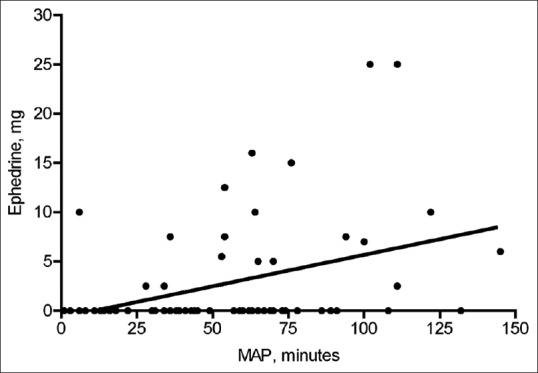
Seventy idiopathic scoliosis patients were retrospectively evaluated. There was a significant correlation between the three measures of hypotension. Sixty percent of the patients received vasopressors. There was a significant correlation between a drop of mean arterial pressure to less than 60 mmHg and the use of the ephedrine. We did not find any changes on neuromonitoring measures during the case and there were no intraoperative or one-month postoperative complications.
Blood pressure is only one of the measures anesthesiologists look to for good perfusion during surgery. Pediatric anesthesiologists and orthopedics agree in trying tight blood pressure control during surgery to decrease blood loss, but what the exact definition of that blood pressure number is, is still unclear. We propose that using mean arterial pressure less than 60 mmHg is perhaps a better definition. We provide recommendations for future studies.
术中低血压在手术过程中经常出现,且可能与不良后果相关。手术期间血压监测至关重要,但对于低血压值的解读尚无普遍认可的标准,对于干预措施也未达成共识。
我们对由单一外科医生实施特发性脊柱侧弯手术的儿科患者进行了回顾性病历审查。所有测量均使用动脉导管。术中低血压定义为基线收缩压(SBP)降低20%、基线SBP降低30%或平均动脉压低于60 mmHg。还记录了血管升压药的使用情况,并将其与血压定义相关联。
对70例特发性脊柱侧弯患者进行了回顾性评估。三种低血压测量方法之间存在显著相关性。60%的患者接受了血管升压药治疗。平均动脉压降至低于60 mmHg与麻黄碱的使用之间存在显著相关性。在该病例中,我们未发现神经监测指标有任何变化,且术中及术后1个月均无并发症发生。
血压只是麻醉医生在手术期间评估良好灌注的指标之一。儿科麻醉医生和骨科医生都认同在手术期间严格控制血压以减少失血,但血压的确切定义仍不明确。我们建议使用平均动脉压低于60 mmHg可能是一个更好的定义。我们为未来的研究提供了建议。