Center for Translational Medicine, Key Laboratory of Birth Defects and Related Diseases of Women and Children (Sichuan University), Ministry of Education, West China Second University Hospital, Sichuan University, Chengdu, Sichuan 610041, China.
Department of Obstetrics and Gynecology, West China Second University Hospital, Sichuan University, Chengdu, Sichuan 610041, China.
J Immunol Res. 2020 Apr 6;2020:6243819. doi: 10.1155/2020/6243819. eCollection 2020.
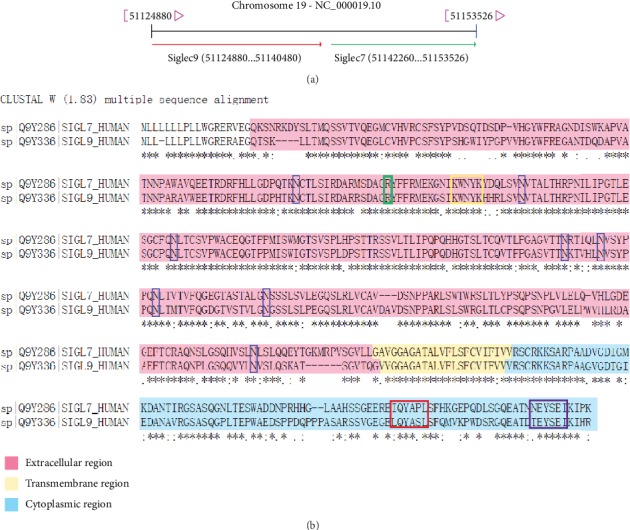
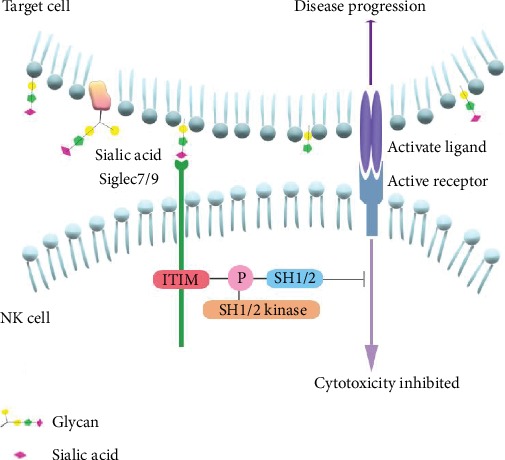
The function of natural killer (NK) cells, defending against virus infection and tumour progression, is regulated by multiple activating and inhibiting receptors expressed on NK cells, among which sialic acid-bind immunoglobulin-like lectins (Siglecs) act as a vital inhibitory group. Previous studies have shown that Siglec7 and Siglec9 are expressed on NK cells, which negatively regulate the function of NK cells and modulate the immune response through the interaction of sialic acid-containing ligands. Siglec7 and Siglec9 are very similar in distribution, gene encoding, protein sequences, ligand affinity, and functions in regulating the immune system against virus and cancers, but differences still exist between them. In this review, we aim to discuss the similarities and differences between Siglec7 and Siglec9 and analyze their functions in virus infection and tumour progression in order to develop better anti-viral and anti-tumor immunotherapy in the future.
自然杀伤 (NK) 细胞的功能是抵御病毒感染和肿瘤进展,这一功能受 NK 细胞表面表达的多种激活和抑制受体调控,其中唾液酸结合免疫球蛋白样凝集素 (Siglec) 作为一个重要的抑制性家族。已有研究表明 NK 细胞上表达 Siglec7 和 Siglec9,它们通过与含唾液酸的配体相互作用,负向调控 NK 细胞的功能,调节免疫反应。Siglec7 和 Siglec9 在分布、基因编码、蛋白序列、配体亲和力和在免疫系统中对病毒和癌症的调节功能上非常相似,但它们之间仍存在差异。本综述旨在讨论 Siglec7 和 Siglec9 的异同,并分析它们在病毒感染和肿瘤进展中的功能,以期未来能开发出更好的抗病毒和抗肿瘤免疫疗法。