Department of Internal Medicine 3, Rheumatology and Immunology, Friedrich-Alexander-University Erlangen-Nürnberg (FAU) and Universitätsklinikum Erlangen, Erlangen, Germany.
Deutsches Zentrum für Immuntherapie (DZI), Erlangen, Germany.
Nat Commun. 2020 Apr 24;11(1):1998. doi: 10.1038/s41467-020-15855-z.
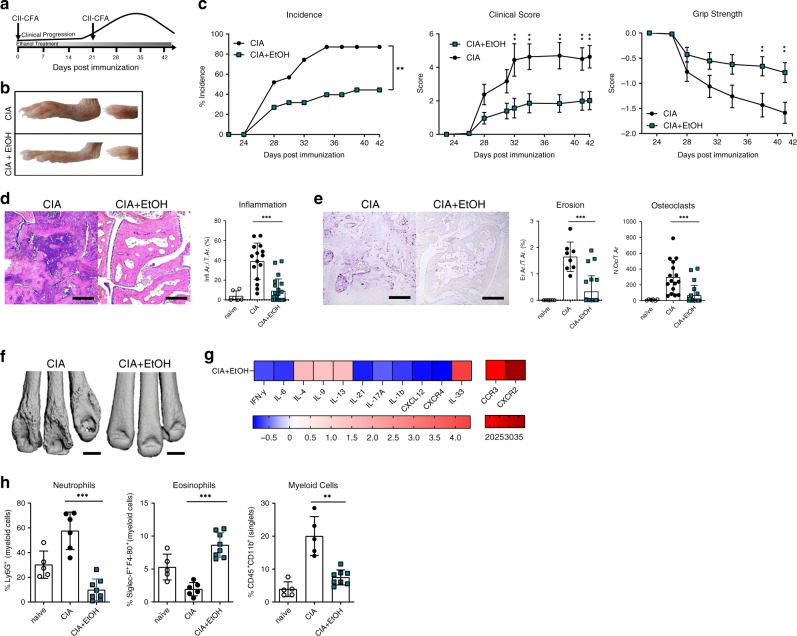
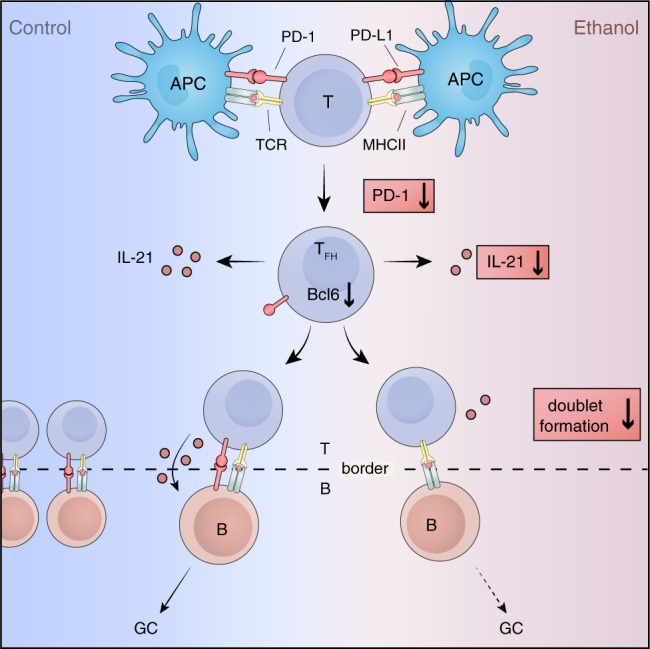
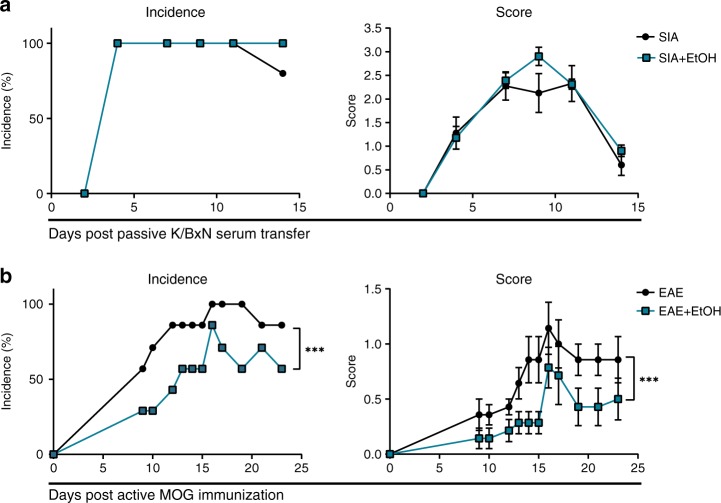
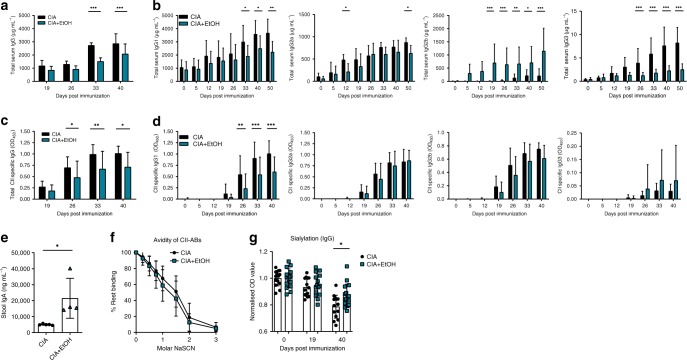
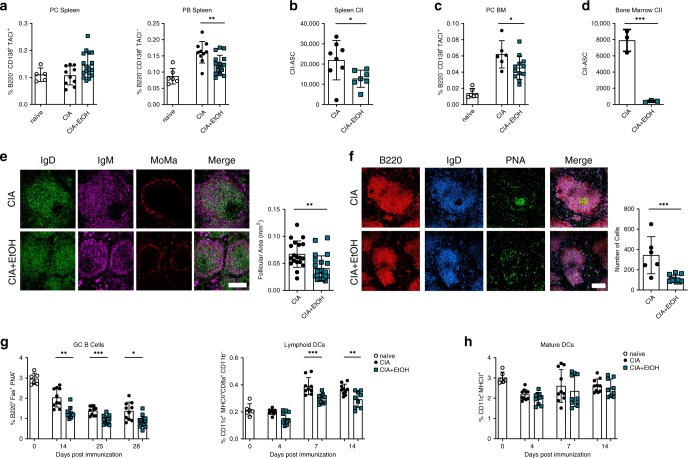
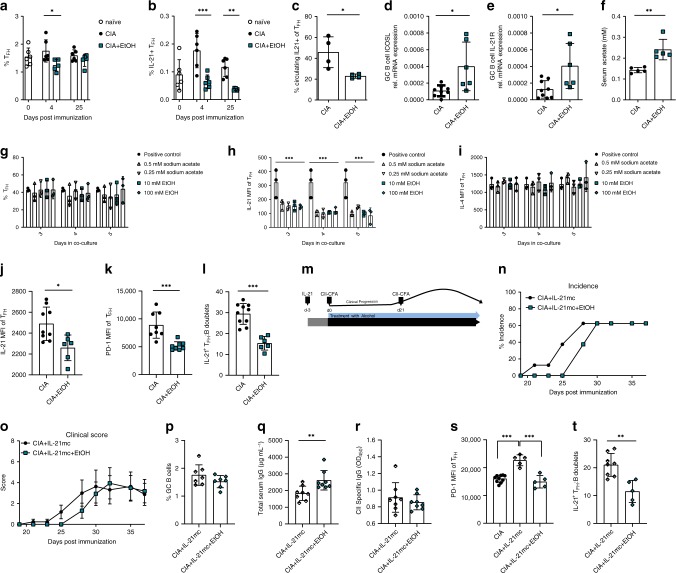
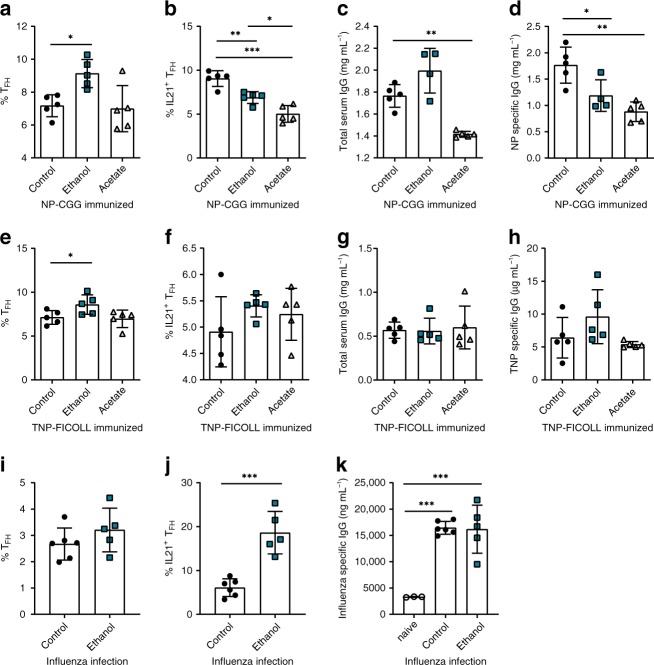
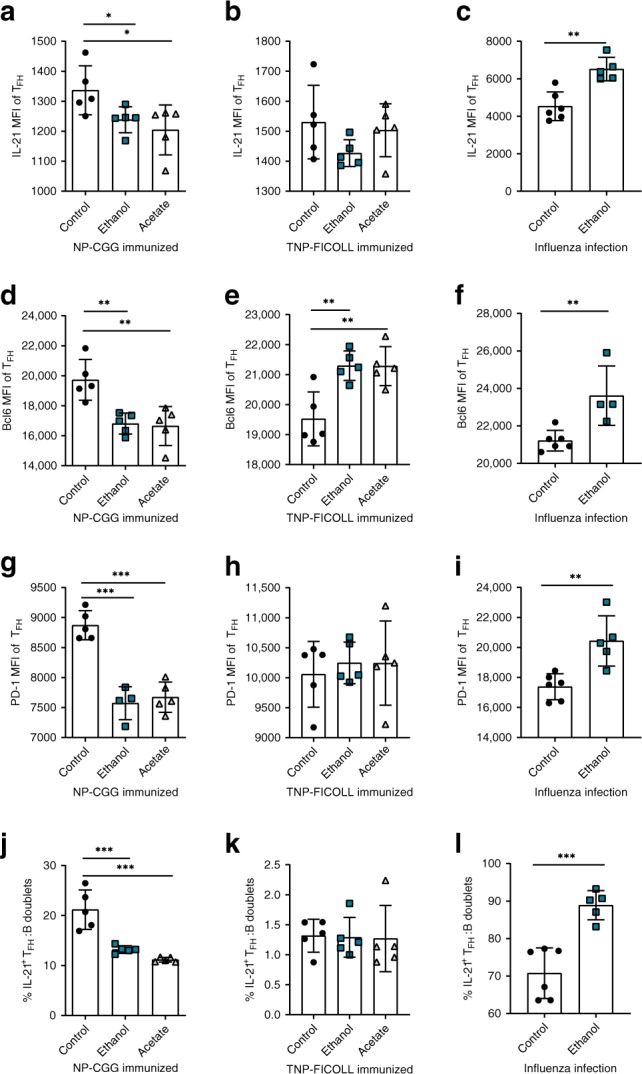
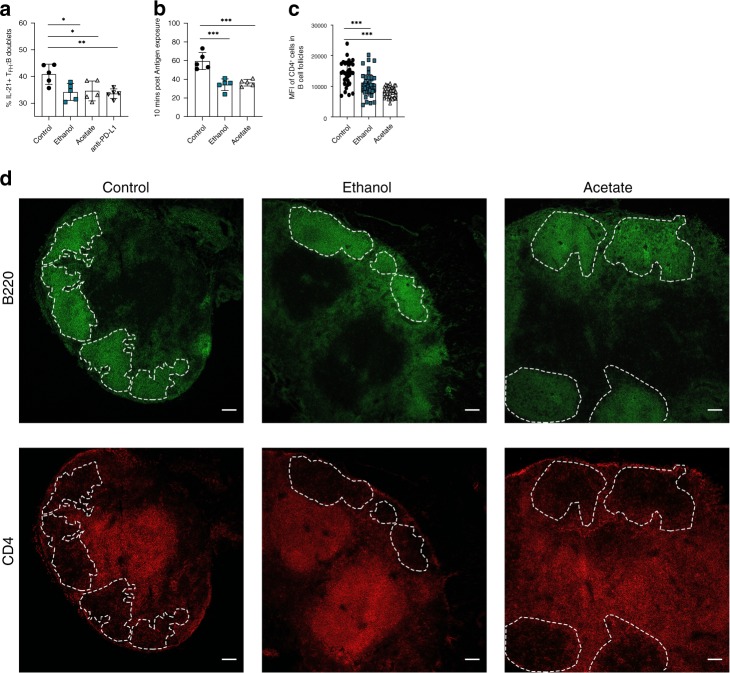
Alcohol consumption is a consistent protective factor for the development of autoimmune diseases such as rheumatoid arthritis (RA). The underlying mechanism for this tolerance-inducing effect of alcohol, however, is unknown. Here we show that alcohol and its metabolite acetate alter the functional state of T follicular helper (T) cells in vitro and in vivo, thereby exerting immune regulatory and tolerance-inducing properties. Alcohol-exposed mice have reduced Bcl6 and PD-1 expression as well as IL-21 production by T cells, preventing proper spatial organization of T cells to form T:B cell conjugates in germinal centers. This effect is associated with impaired autoantibody formation, and mitigates experimental autoimmune arthritis. By contrast, T cell independent immune responses and passive models of arthritis are not affected by alcohol exposure. These data clarify the immune regulatory and tolerance-inducing effect of alcohol consumption.
饮酒是类风湿关节炎(RA)等自身免疫性疾病发展的一个一致的保护因素。然而,这种酒精诱导耐受的潜在机制尚不清楚。在这里,我们表明,酒精及其代谢物醋酸盐改变了滤泡辅助性 T 细胞(Tfh)在体外和体内的功能状态,从而发挥免疫调节和诱导耐受的特性。暴露于酒精的小鼠的 T 细胞中 Bcl6 和 PD-1 的表达以及 IL-21 的产生减少,阻止了 T 细胞在生发中心形成 T:B 细胞共轭的适当空间组织。这种效应与自身抗体形成受损有关,并减轻了实验性自身免疫性关节炎。相比之下,T 细胞非依赖性免疫应答和关节炎的被动模型不受酒精暴露的影响。这些数据阐明了饮酒的免疫调节和诱导耐受作用。