Department of Applied Physics, The Faculty of Science, The Center for nanoscience and nanotechnology, The Hebrew University Jerusalem, 91904, Jerusalem, Israel.
Nat Commun. 2020 Apr 24;11(1):1991. doi: 10.1038/s41467-020-15972-9.
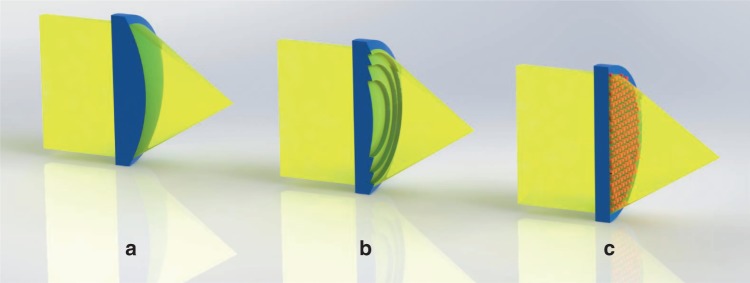
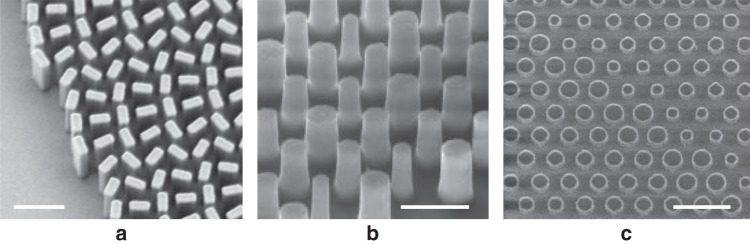
Optical elements play a crucial role in many modern systems, from cellphones to missiles. The miniaturization trend poses a challenge to optics, since classical lenses and mirrors tend to be bulky. One way of dealing with this challenge is using flat optics. For many years flat optics has been implemented using diffractive optics technology, but in the last two decades a new technology called metasurfaces has emerged. This technology does not replace diffractive optics, but rather expands on it, leveraging the new ability to manufacture subwavelength features on optical substrates. For imaging and focusing applications, diffractive lenses and metalenses are used, as a subset of diffractive optics and metasurfaces, respectively. Recently there has been debate over whether metalenses offer any real advantages over diffractive lenses. In this commentary we will try to gain some insight into this debate and present our opinion on the subject.
光学元件在许多现代系统中都起着至关重要的作用,从手机到导弹。微型化趋势对光学提出了挑战,因为传统的透镜和反射镜往往体积庞大。一种应对这一挑战的方法是使用平面光学元件。多年来,平面光学元件一直是通过衍射光学技术来实现的,但在过去的二十年中,出现了一种名为超表面的新技术。这项技术并没有取代衍射光学,而是对其进行了扩展,利用了在光学衬底上制造亚波长特征的新能力。在成像和聚焦应用中,衍射透镜和金属透镜分别作为衍射光学和超表面的子集被使用。最近,人们一直在争论金属透镜是否比衍射透镜具有真正的优势。在这篇评论中,我们将试图深入了解这场争论,并提出我们对此问题的看法。